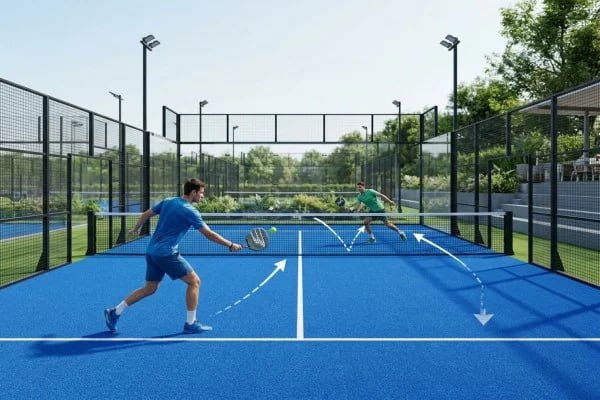

You buy equipment for a new court but mix up the balls. Players complain about bad bounces. I will show you why choosing the right ball fixes this problem.
Yes, padel balls are slightly smaller than tennis balls. A padel ball has a diameter between 6.35 cm and 6.77 cm. A standard tennis ball measures between 6.54 cm and 6.86 cm. Both balls weigh the same, but the size difference gives the padel ball less elasticity.
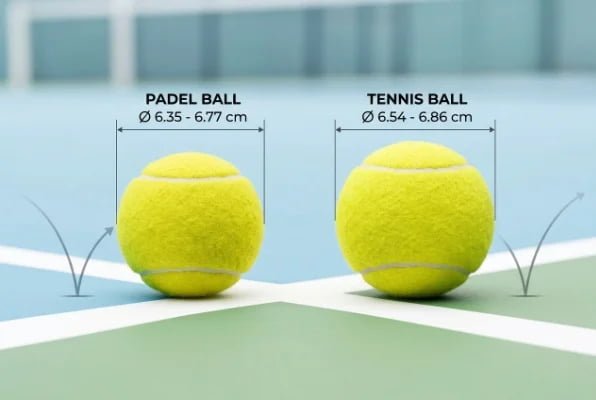
You might think any yellow ball works for your sports club. But if you ignore these small details, your clients will have a terrible game experience. Let us look closely at why these two balls are so different.
What Are the Exact Size and Weight Differences Between Padel and Tennis Balls?
Your players struggle to hit the ball right. Using the wrong ball causes poor control. I will explain the exact measurements so you buy the right equipment every time.
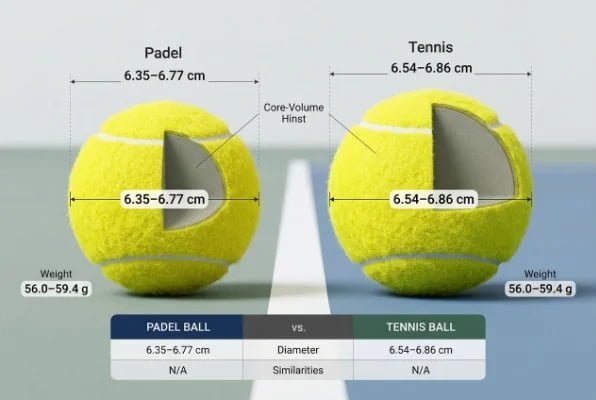
Padel balls and tennis balls share the same weight range of 56.0 to 59.4 grams. However, padel balls are smaller. The smaller diameter of 6.35 cm to 6.77 cm means padel balls have a different core structure. The International Padel Federation requires these exact rules.
Breaking Down the Physical Differences
You can see both balls look like fuzzy yellow spheres. But their physical traits change everything on the court. I learned this when I started working in the artificial turf factory. Many buyers ask me if they can just use tennis balls to save money. I always tell them no.
We must look at the data. The slight difference in size creates a big change in the volume of the ball. The volume affects how the air inside reacts. The padel ball has less space inside.
Measurement Comparison Table
| Feature | Padel Ball | Tennis Ball |
|---|---|---|
| Weight | 56.0 g – 59.4 g | 56.0 g – 59.4 g |
| Diameter | 6.35 cm – 6.77 cm | 6.54 cm – 6.86 cm |
| Visual Look | Fuzzy yellow sphere | Fuzzy yellow sphere |
| Internal Space | Smaller volume | Larger volume |
You need to understand these numbers. As a buyer or a club owner, you must offer the correct items. If you use a tennis ball, the larger size hits the solid padel racket differently. The solid, stringless racket needs a specific ball size. This match between the ball and the racket is a basic rule. We always check these details during our quality control steps at QHPADEL. We want to make sure your one-stop procurement gives you exactly what your players need.
Why Do Padel Balls Have Less Bounce Than Standard Tennis Balls?
Balls that bounce too high ruin a padel match. Players cannot keep the rally going. I will show you how internal pressure controls the bounce and saves the game.
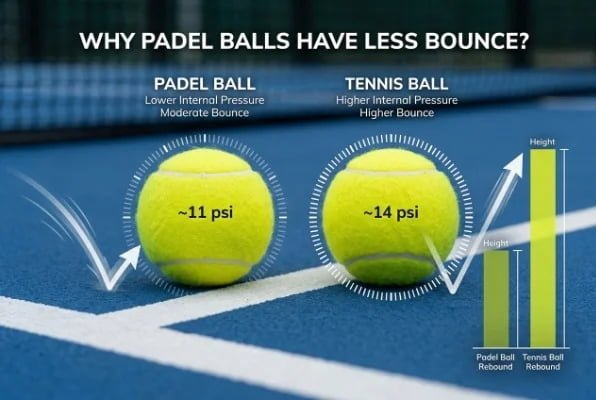
Padel balls have less bounce because they have lower internal pressure. A tennis ball has higher pressure, so it bounces faster and higher. The International Padel Federation requires a lower pressure for padel balls. This lower pressure gives players more control over the ball during the game.
The Science of Internal Pressure
Pressure is the hidden secret inside these fuzzy spheres. A padel ball must be slightly lighter in its bounce feel. This sounds like a very small detail. But it changes the game mechanics completely.
When a tennis ball hits the floor, the high pressure pushes it back up very fast. If you use this ball on a padel court, the game becomes crazy. Rallies stop very fast. The players cannot hit the ball back and forth.
Bounce Dynamics on the Court
| Ball Type | Internal Pressure | Bounce Height | Game Speed Control |
|---|---|---|---|
| Padel Ball | Lower (approx. 11 psi) | Moderate (135-145 cm) | Excellent control |
| Tennis Ball | Higher (approx. 14 psi) | High (135-147 cm+) | Hard to control |
I talk to many company owners who build venues. They worry about the quality of the game. A lower bounce matches the solid, stringless paddle racket. Tennis rackets have strings that absorb heavy impacts. Padel rackets do not have strings. Therefore, the ball must do the work. The low pressure absorbs some of the shock. This design gives the delightful, fast-paced rhythm of attack and defense. If you want your customers to enjoy their venue, you must buy balls with the correct internal pressure. Strict inspections of these products ensure your success.
How Does an Enclosed Padel Court Change the Way the Ball Plays?
Glass walls make normal tennis balls fly out of control. Your players will get frustrated and leave your club. I will explain how the court design requires a specific ball.
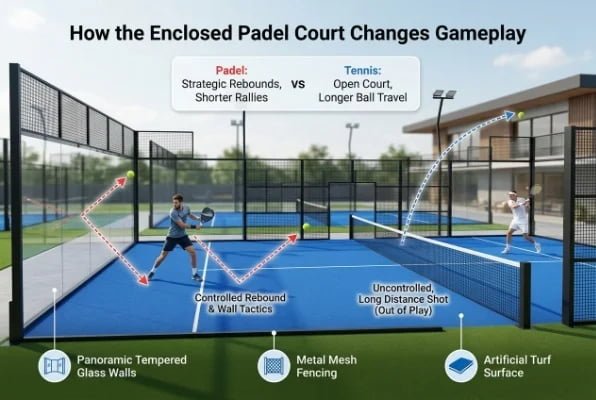
An enclosed padel court uses metal mesh and glass walls. The ball travels shorter distances. Players use the walls for strategic shots, like in squash. A lower bounce padel ball is required to interact correctly with these walls. A tennis ball rebounds too hard off the glass.
Tactical Gameplay With Court Walls
The padel court is smaller than a tennis court. It also has walls on all four sides. This enclosed space is the main reason padel balls must be different.
Players hit the ball against the glass walls to win points. This requires careful planning. If a ball bounces too fast, it will hit the glass and fly too far away. The players cannot reach it.
Court Environment Match
| Court Feature | Impact on Ball | Best Ball Choice |
|---|---|---|
| Short Distance | Less travel time | Padel ball (slower flight) |
| Glass Walls | Hard rebound surface | Padel ball (lower pressure) |
| Artificial Turf | Softer ground | Padel ball (matches turf friction) |
When I manage export sales at QHPADEL, I always look at the whole system. The ball, the racket, the glass, and the artificial turf must work together. The padel ball is engineered for this soft turf and hard glass environment. Tennis focuses on clever angles and volleys in an open space. Padel focuses on keeping pace with the ball speed inside a cage. A padel ball helps you build longer, more strategic rallies. This makes the game easy for beginners to learn. By providing proper one-stop procurement, you give investors and clubs the perfect setup to make money.
Conclusion
Padel balls are smaller and have less pressure than tennis balls. These exact features fit the enclosed court perfectly. Choosing the right ball guarantees a great game and successful business.