Can a tennis player play padel without starting from zero? Yes, but familiar skills can create misleading confidence. Strong groundstrokes and quick movement help, while excessive power, tennis positioning, and avoiding wall rebounds often cause frustration. I recommend treating the first padel session as an adaptation process rather than a test of tennis ability.
A tennis player can play padel and will usually bring useful racket control, ball awareness, and movement skills. However, playing well requires new habits. The player must manage pace, use the glass walls, choose patient shots, maintain doubles positioning, and coordinate with a partner instead of relying mainly on tennis technique.
In my conversations with clubs and court buyers, this question often appears before a venue introduces padel to an existing tennis community. The answer affects more than player confidence. It also influences equipment selection, beginner orientation, coaching arrangements, and how a club presents the new sport.
Can a Tennis Player Start Playing Padel Immediately?
A tennis player may expect the first padel session to feel completely familiar. That assumption can make simple mistakes more frustrating. The racket, enclosed court, serve, and tactical priorities all differ. I find that players enjoy the transition more when they expect competence in some areas and genuine beginner status in others.
A tennis player can start playing padel immediately after learning the basic rules and safety requirements. Previous tennis experience can make initial racket contact and ball tracking easier, but it does not replace padel-specific instruction. A short orientation covering the serve, walls, scoring, positioning, and court access is advisable before play begins.
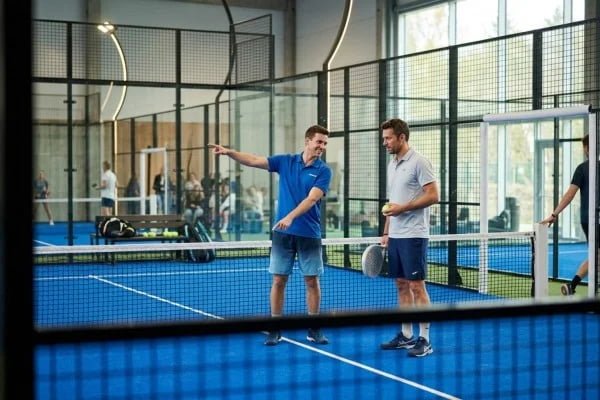
“Able to start” does not mean “able to play well”
I make a clear distinction between basic accessibility and padel proficiency. Most tennis players can enter a padel court, rally, and understand the scoring system quickly. However, they may not yet understand how to build a point within an enclosed space.
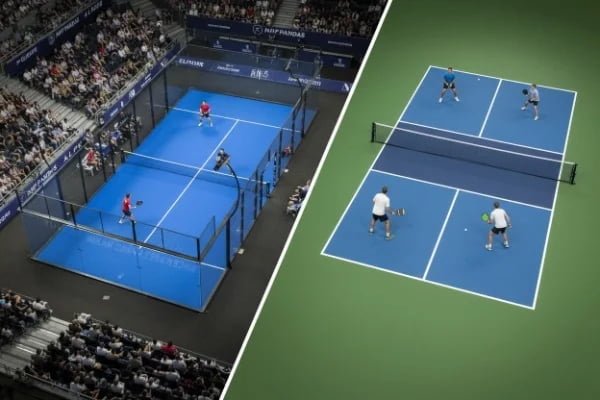
Padel is normally played as doubles on a 10-by-20-metre enclosed court. By comparison, a standard tennis court has a playing length of 23.77 metres and a wider surrounding run-off area. The smaller enclosed padel court changes reaction time, movement, and shot selection. It also keeps many balls in play after they rebound from the glass.
A new player should first understand several basic points:
- Padel commonly uses tennis-style scoring.
- The serve is underarm following a bounce, subject to the applicable rules.
- The ball may remain playable after bouncing on the court and rebounding from an approved wall.
- The side and back enclosures are active parts of many rallies.
- Standard padel is a doubles game1, so partner movement matters constantly.
- Court-entry doors, posts, glass, mesh, and nearby players require basic safety awareness.
Players and venue operators should verify current rules with the relevant national federation or the International Padel Federation. A qualified padel coach should provide application-specific instruction.
Why early expectations matter
A tennis player may hit several impressive shots during a first session while still losing points through poor positioning. This result is normal. Technical familiarity can produce isolated success before the player understands padel tactics.
In customer conversations, I often explain this distinction to club operators who want tennis members to try a new padel facility. If a club promotes padel as merely “easy tennis,” experienced players may become impatient when their usual patterns fail. A better introduction acknowledges their existing ability while explaining that the walls, doubles structure, and slower point construction create a different game.
I view tennis experience as a useful starting toolkit, not as a shortcut around learning padel.
Which Skills Can a Tennis Player Transfer to Padel?
Starting a new racket sport can feel inefficient when a player already has years of training. Fortunately, tennis experience is not wasted. Several fundamental skills transfer well. The main challenge is learning when to use them and when the padel court requires a different technical or tactical response.
A tennis player can transfer hand-eye coordination, racket awareness, split-step timing, ball tracking, basic volley skills, scoring knowledge, and general court movement to padel. These strengths can make early participation easier. However, each skill must be adjusted to the smaller court, padel racket, wall rebounds, doubles spacing, and tactical emphasis on control.
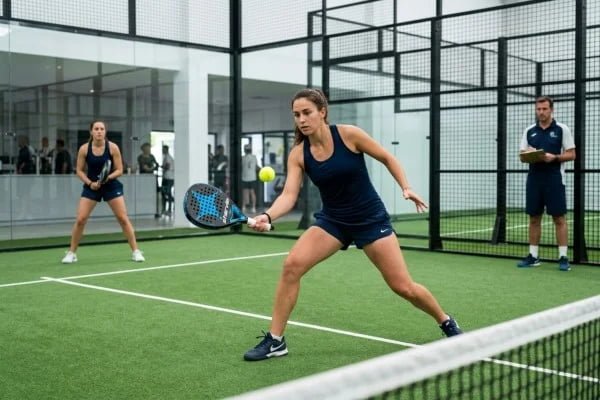
Transferable skills and required adjustments
I use the following comparison when explaining the transition to non-specialist buyers and club teams:
| Tennis experience | Value in padel | Adjustment required |
|---|---|---|
| Hand-eye coordination | Helps with clean ball contact | Shorter reaction distances may require more compact preparation |
| Ball tracking | Supports reading speed, spin, and direction | Tracking must continue through wall rebounds |
| Volley technique | Useful during net play | Placement and control often matter more than maximum force |
| Split-step timing | Supports balanced reactions | Timing must account for the opponent, partner, and enclosure |
| Serve-return experience | Helps with anticipation | The padel serve and return patterns are different |
| Court movement | Provides balance and recovery habits | Both partners usually move forward and backward as a coordinated unit |
| Scoring knowledge | Makes games easier to follow | Local rules, service procedure, and court-play rules still need review |
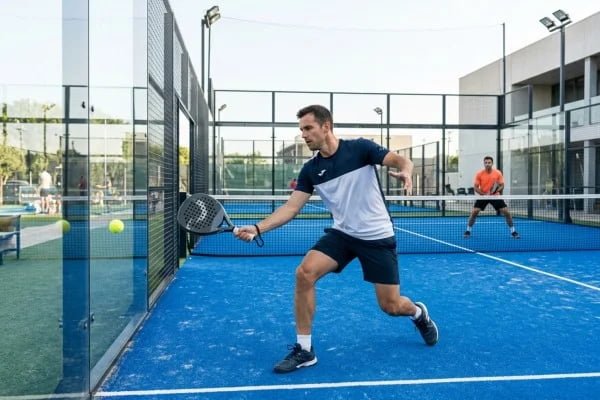
A tennis player often has an immediate advantage in contact quality. The player is already familiar with watching the ball, preparing a racket face, and adjusting footwork around a bounce. These basics can reduce the awkwardness that a first-time racket-sport participant may experience.
Volley experience can also help. Padel places significant tactical value on gaining and maintaining a useful net position. However, I would not assume that every tennis volley transfers unchanged. The shorter distance between opponents can reward compact movements and controlled placement. A large backswing may leave too little time to respond to the next ball.
Movement skills need a new purpose
Tennis players often understand recovery and balance. Those skills remain valuable, but padel uses them differently. A tennis player may be accustomed to defending a larger open baseline and covering space independently. In padel doubles, both partners generally need to preserve their shared formation.
The player should begin noticing:
- The distance between partners.
- Whether both players are moving forward or backward together.
- Open space through the middle.
- Balls that a partner can play more effectively.
- The rebound path from the back or side glass.
I have seen how clear diagrams help non-specialists understand these differences during court project discussions. The same principle applies to players. A simple visual explanation of court zones can be more useful than telling a tennis player to “play normally.”
A qualified coach can refine movement and technique. I would treat general transfer principles as orientation, not as individualized coaching advice.
Which Tennis Habits Must a Tennis Player Change for Padel?
Transferable ability can hide counterproductive habits. A powerful forehand feels like an advantage, but it may create rushed errors or easy rebounds. A player can also occupy familiar tennis positions that expose large gaps in doubles. I recommend identifying these habits early instead of waiting for frustration to reveal them.
A tennis player should usually adjust excessive power, large swings, baseline-focused positioning, and the urge to hit every ball before it reaches the wall. Padel often rewards controlled pace, compact preparation, patient point construction, coordinated net movement, and deliberate use of rebounds. The best adjustment depends on the player and should be guided by a qualified coach.
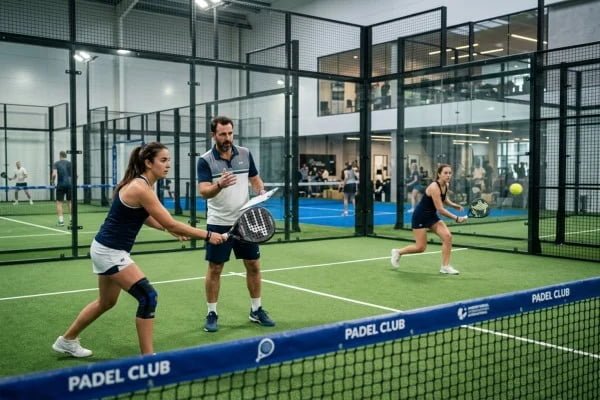
1. Using too much power
Many tennis players are trained to create depth, speed, and pressure from open court positions. On a padel court, a hard shot does not always end the point. The enclosure can return the ball to the opponent2, sometimes in a more manageable position.
This does not mean that power has no place in padel. It means that power needs a tactical purpose. Placement, angle, height, and recovery position may matter more than raw speed during many exchanges.
A new padel player can ask three questions before accelerating:
- Will this shot create pressure or simply rebound back?
- Will I remain balanced for the next ball?
- Will the shot open space for my team or expose it?
2. Taking every ball before the wall
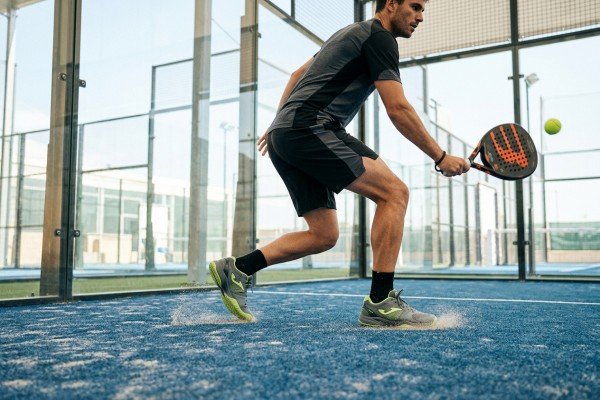
A tennis player may see the back glass as an obstacle. The instinct is often to intercept the ball immediately. That choice can force poor contact behind the body or place the player too close to the bounce.
In padel, the wall can provide more time. A player may allow a suitable ball to bounce and rebound before playing it. However, rebound decisions depend on speed, spin, angle, court position, and skill level. I would ask a qualified instructor to demonstrate safe wall use rather than learning only through trial and error.
3. Remaining in tennis-style positions
Tennis singles encourages individual court coverage. Even tennis doubles can use formations that do not map neatly onto padel. In padel, one partner moving forward while the other remains deep can create exploitable spaces.
I often describe the pair as a connected unit. Both players do not need to stand on an exact horizontal line at all times, but they should understand each other’s position and likely responsibilities.
| Counterproductive habit | Possible consequence | Better adaptation goal |
|---|---|---|
| Staying at the back by default | Opponents may control the net | Learn when the pair can advance together |
| Charging forward alone | Space opens beside or behind the player | Move in response to the partner and ball |
| Swinging with a long preparation | Contact may be late on a compact court | Use controlled, efficient preparation |
| Trying to finish every ball | Errors can rise and formation can break | Construct the point patiently |
| Ignoring the middle | Partners may hesitate or collide | Agree on communication and responsibility |
4. Treating every ball as an attacking opportunity
A tennis player may feel pressure to prove that existing ability transfers. This mindset can turn the first session into a demonstration rather than a learning experience.
I suggest using a simpler goal: keep the team balanced and make one sensible decision at a time. A controlled lob, patient defensive ball, or clear call to a partner may reveal more padel understanding than a single forceful winner.
How Should a Tennis Player Adapt to Glass Walls and Doubles Play?
Glass-wall play may look like a minor rule difference from outside the court. In practice, it changes timing, spacing, defense, and decision-making. Doubles cooperation is equally important. Without those adaptations, a tennis player may strike the ball well but still struggle to participate effectively in sustained padel rallies.
A tennis player should treat the glass walls and doubles partnership as central parts of padel. The player must learn to read rebounds, create space behind the bounce, communicate ownership of central balls, and move with a partner. Early practice should emphasize controlled wall feeds, compact strokes, verbal calls, and coordinated court positioning.
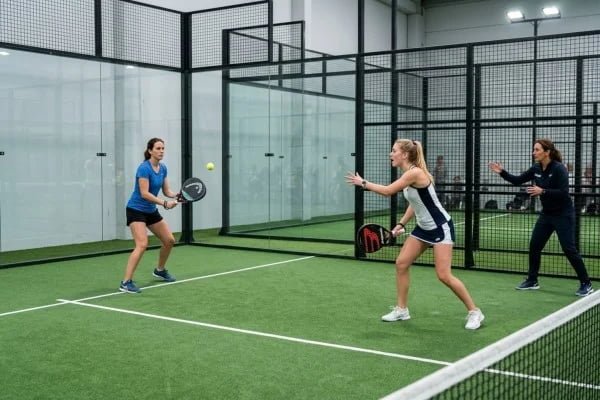
Reading a rebound
The ball’s path after contact with the glass depends on several variables. Speed, spin, angle, and the condition of the ball can all affect the rebound. I avoid giving universal instructions such as “always let this ball hit the wall” because a fixed rule can be misleading.
A beginner can still use a basic observation sequence:
- Watch the ball before its first bounce.
- Estimate where it will contact the enclosure.
- Create enough space for the rebound.
- Continue tracking the ball after wall contact.
- Use a compact response rather than a rushed full swing.
This sequence sounds simple, but it can conflict with years of tennis instinct. A tennis player often moves toward the initial bounce. Wall play may require the player to let the ball travel past and then reposition for its return.
Understanding the enclosure
A well-built padel court should provide consistent dimensions, correctly installed tempered glass, secure structural components, and a suitable artificial turf system. Those features support the intended playing environment, but buyers should not assume that a certificate alone confirms suitability for every project.
For example, a club evaluating a court package should review:
- Glass specifications and supporting test documents.
- Panel identification and installation instructions.
- Structural drawings and local engineering requirements.
- Mesh, posts, fasteners, and connection details.
- Turf specification, infill requirements, and maintenance guidance.
- Door layout and access conditions.
- Lighting design and applicable local electrical requirements.
At QHPADEL, we provide complete court packages and documents such as installation drawings, foundation drawings, packing lists, and maintenance manuals. We also provide available certificates for relevant components. I advise every buyer to verify certificate scope, report validity, model references, and local acceptance with qualified professionals.
Doubles cooperation is not optional
Padel is not simply two individual players sharing one side. Partners should communicate about the middle, lobs, overheads, rebounds, and changes in position. Silence can create hesitation even when both players have strong racket skills.
Useful beginner calls may include:
- “Mine” or “yours” for uncertain balls.
- “Up” when the pair can advance.
- “Back” when both players should retreat.
- A clear warning when a ball may rebound unexpectedly.
- Simple information about opponent position, when appropriate.
A coach may use different terms or a more detailed communication system. The important point is consistency between partners.
For a tennis player, this cooperation can require an attitude change. The player should judge a decision by what it does for the pair, not only by the quality of the individual stroke.
How Can a Tennis Player Prepare for a First Padel Session?
A poorly planned first session can reinforce the idea that padel is confusing or that tennis skills are a disadvantage. Neither conclusion is fair. I find that basic orientation, suitable equipment, modest expectations, and beginner-friendly partners remove much of the unnecessary friction before play begins.
A tennis player should prepare by reviewing basic padel rules, using a padel racket and suitable court footwear, learning the court boundaries, and expecting a tactical doubles game. The first session should prioritize control, wall awareness, communication, and safe movement. A beginner lesson or guided club orientation can make the transition clearer.
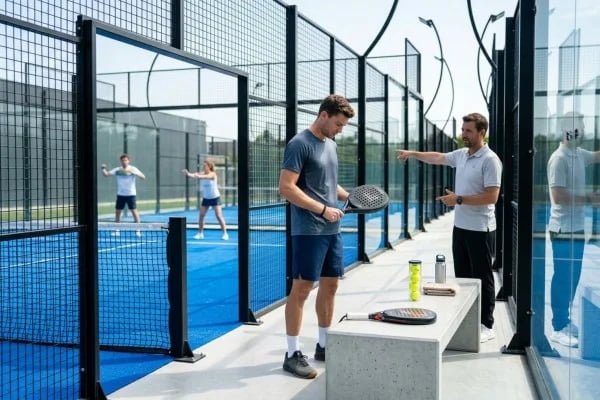
A practical first-session checklist
I recommend the following preparation steps:
- Read the basic rules. The player should understand scoring, service order, legal serve procedure, rebounds, and enclosure use.
- Use a padel racket. A padel racket is solid-faced and does not use the strings found in a tennis racket.
- Use a suitable ball. Padel balls and tennis balls may look similar, but buyers and players should follow the equipment rules of the venue or governing body.
- Wear suitable footwear. The player should select shoes appropriate for the installed surface and seek specialist advice when needed.
- Remove loose items. Phones, keys, or unsecured accessories can interfere with movement.
- Inspect the playing area. The club should ensure that doors, glass, turf, net, lighting, and access areas are in serviceable condition.
- Begin at controlled pace. The first rally does not need to become a power contest.
- Practice one wall exercise. A coach or experienced organizer can introduce a basic back-glass rebound.
- Agree on partner calls. Simple communication reduces uncertainty.
- Ask for qualified guidance. Technical coaching and individual movement advice should come from an appropriate professional.
Choosing padel-specific equipment
The padel racket is shorter and solid-faced, with perforations and a wrist cord. Rackets vary in shape, balance, weight, materials, and intended level. I would not select a racket only because it looks similar to a model used by an advanced player.
A beginner may value manageable handling and control, but the best selection depends on the individual. A specialist retailer or qualified coach can assess the player’s experience, physical requirements, and intended frequency of play. Players with existing pain or medical concerns should consult an appropriate healthcare professional.
The court surface also affects the experience. Artificial turf specifications can differ in fibre type, pile characteristics, density, Dtex, colour, backing, infill requirement, and intended court system. For procurement, I recommend comparing documented specifications rather than choosing turf only by appearance.
How clubs can support tennis-to-padel participation
Clubs, schools, hotels, and community operators can make the first experience easier through simple operational choices. In our customer discussions, I encourage buyers to consider onboarding while they evaluate the physical court.
A beginner-friendly programme may include:
- A 10–15 minute rules and safety briefing.
- A court walk-through explaining glass, mesh, doors, and net areas.
- A padel racket rental or trial system.
- Controlled rallies before competitive scoring.
- Partners grouped by relevant experience rather than tennis ranking alone.
- Access to a qualified padel instructor.
- Clear booking guidance for beginner sessions.
- Visible rules and emergency contact information.
I would avoid advertising that “tennis players need no lessons.” That claim can create unrealistic expectations. A more accurate message is that tennis players bring useful skills and can enjoy padel while learning a different tactical system.
For venue procurement, the operator should also consider practical details beyond the game itself. A complete bill of materials, accurate component numbering, foundation information, spare parts, local structural review, lighting requirements, drainage, installation responsibilities, and maintenance procedures all affect the playing environment. Product certificates should be checked against the supplied model and the destination market’s requirements.
Frequently Asked Questions
Is padel easier than tennis for a tennis player?
A tennis player may find the basic rally and scoring familiar, but “easier” depends on the individual and the standard of play. The smaller court can improve accessibility, while glass rebounds, compact reaction time, doubles coordination, and tactical shot selection create new challenges that require practice.
Can I use a tennis racket to play padel?
I recommend using a padel-specific racket. A padel racket has a solid perforated face, no strings, and a wrist cord. Its dimensions and handling suit the sport’s court and rules. Players should check venue requirements and seek fitting advice from a qualified coach or specialist retailer.
Can a tennis player use tennis balls for padel?
Padel and tennis balls look similar, but their regulated specifications are not necessarily identical. I recommend using balls approved for padel and accepted by the venue or competition organizer. Players and buyers should check the latest rules from the relevant federation rather than relying only on visual similarity.
Does a tennis player need padel lessons?
Lessons are not always mandatory for casual participation, but a beginner orientation can prevent confusion and counterproductive habits. I recommend qualified instruction for learning wall use, court positioning, partner movement, and appropriate technique. Individual coaching advice should come from a recognized padel professional.
How should a club introduce padel to tennis members?
A club should present padel as a distinct racket sport with transferable skills, not as miniature tennis. I suggest a short rules briefing, equipment trials, guided wall practice, balanced doubles groups, and beginner sessions led by a qualified instructor. Clear onboarding can reduce avoidable frustration and improve the first experience.
Conclusion
A tennis player can play padel, but existing racket ability is only the starting point. Tennis contributes coordination, ball awareness, movement, and volley experience. Padel then requires controlled pace, compact preparation, wall use, doubles positioning, and partner communication. I recommend approaching the first session with curiosity rather than expecting instant proficiency.
If your club, school, distributor, or development project is evaluating a padel venue, contact Alice Chen at QHPADEL via alice@grass-supplier.com or WhatsApp +86 185 7566 0746 to discuss court packages, specifications, documentation, and procurement requirements.
-
"RULES OF PADEL INTERNATIONAL PADEL FEDERATION", https://www.padelfip.com/wp-content/uploads/2025/12/FIP_Rules-of-Padel.pdf. The International Padel Federation’s Rules of Padel define a match as play between two pairs, with each pair positioned on opposite sides of the net. Evidence role: definition; source type: institution. Supports: The official rules define play by two pairs of players, one pair on each side of the net.. Scope note: Recreational singles variants exist, but they are not the standard format described in the international rules. ↩
-
"Padel Rules: Scoring, Serving, Walls & Faults", https://www.ltapadel.org.uk/play/how-to-get-started-playing-padel/rules/. Because the International Padel Federation’s rules permit play after a ball bounces in court and rebounds from the enclosure, wall rebounds can prolong rallies rather than automatically ending a point. Evidence role: mechanism; source type: institution. Supports: Padel rules treat the court enclosure as a playable feature after the ball bounces in court, allowing rebounds to extend rallies.. Scope note: Whether a particular powerful shot is recoverable depends on its speed, placement, spin, and the players’ positioning. ↩