Many investors and club owners struggle when choosing the right surface for their new courts. You might wonder if hard courts are an option or if you must follow specific trends. Making the wrong choice can lead to player injuries and courts that no one wants to book.
Yes, currently, all professional Padel tournaments use artificial turf exclusively. It is the only material officially permitted and approved by the International Padel Federation (FIP) for official competitions. Hard courts or concrete surfaces are not used in professional play because they do not offer the necessary grip or safety.
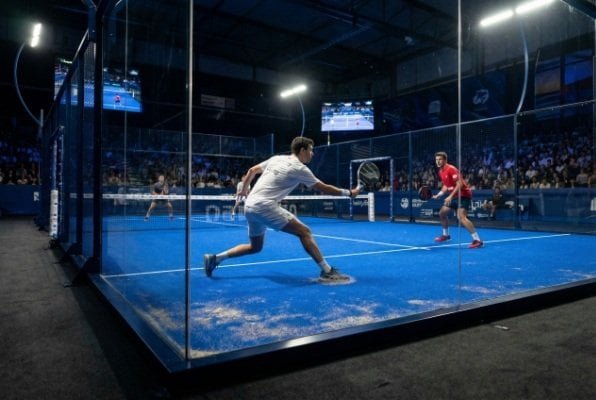
You now know the short answer. Artificial turf is the standard. However, you need to understand the technical reasons behind this global standard. This knowledge will help you buy the right product and avoid complaints from your future customers.
Artificial Turf vs. Hard Courts: How Does Surface Impact Padel Player Performance?
Players hate getting injured on hard surfaces that offer no shock absorption. If your courts are too hard, players will leave and play at a different club. You need to provide a surface that supports their game.
Artificial turf provides the perfect balance between ball speed and player safety. It allows players to slide for the ball without severe abrasion. Hard courts stop the foot too quickly. This sudden stop causes heavy strain on joints and leads to serious knee injuries.
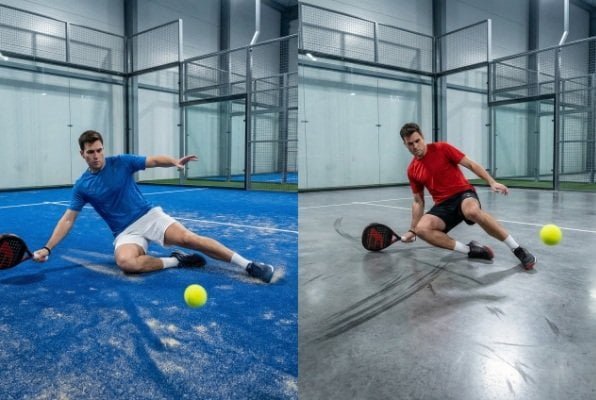
I have seen many changes in this industry during my time as an artificial turf engineer. In the early days, some people tried to build courts with concrete or simple acrylic paint. The results were always bad. Padel is a fast game with many sudden changes in direction. The surface must interact with the shoe and the ball in a specific way.
When we compare artificial turf to hard courts, the differences are clear. Hard courts make the ball bounce too high and too fast. This kills the tactical nature of Padel. Padel requires longer rallies and strategic lobs. Artificial turf, especially with the right sand infill, slows the ball down slightly. This control allows for better matches.
Also, consider the player’s body. On a hard court, the impact travels straight up the leg. On artificial turf, the fibers and the sand cushion the step. I often tell my clients that investing in good turf is investing in their customers’ health. If players feel good after a match, they will come back.
| Feature | Artificial Turf | Hard Court (Concrete/Acrylic) |
|---|---|---|
| Shock Absorption | High (Protects joints) | Low (High impact) |
| Ball Speed | Medium/Controlled | Very Fast |
| Player Movement | Allows controlled sliding | High friction (Stops suddenly) |
| Injury Risk | Low | High (Joints and impact) |
| Professional Use | Standard (100%) | Not used |
What Are the FIP Regulations? Is Artificial Grass Approved for Official Matches?
Building a court that does not meet official standards is a risky investment. You might face problems if you want to host a local tournament or official league match. You must ensure your facility complies with global rules.
The International Padel Federation (FIP) regulations clearly state that artificial grass is the required surface. The rules specify the color, the pile height, and the type of material. For official tournaments, the turf must be one uniform color, usually blue, green, or clay-orange.
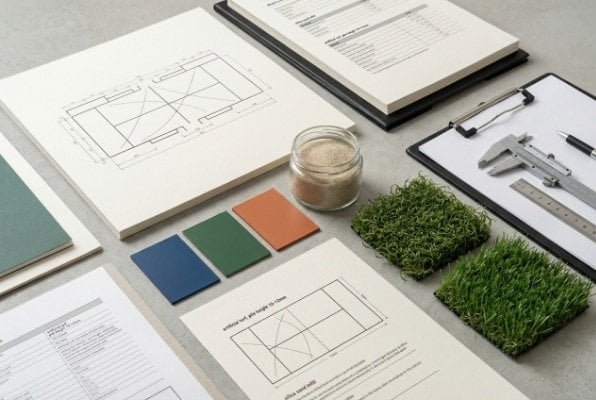
In my experience managing exports, clients often ask if they can customize colors wildly. I always advise them to stick to the standards if they want a professional look. The FIP has very specific technical parameters. This ensures that a game played in Spain feels the same as a game played in the United States or Saudi Arabia.
Here is a breakdown of the critical regulations you need to know:
- Material: The surface must be artificial turf. It must be synthetic and allow for the bounce of the ball to be regular.
- Color: For top-level events like Premier Padel, blue is the preferred color because it offers the best contrast for TV cameras. Green is also very common for club use.
- Infill: The turf must have silica sand infill. This sand holds the fibers up and creates the friction for the ball.
- Fiber Height: The standard pile height is usually between 10mm and 12mm.
Recently, the trend in professional tournaments has shifted to "texturized" turf. This is a curly fiber that holds the sand better. It looks cleaner because you see less sand on the top. When I help clients with bidding projects, I often recommend texturized turf (like our curly monofilament options) because it meets these high FIP standards perfectly. It costs a little more, but the durability and professional feel are worth it.
Is Modern Artificial Grass Safe? Analyzing Safety and Performance for Pro Padel Courts?
Safety concerns are the main reason club owners hesitate when buying imported materials. You fear that cheap turf will be slippery or cause injuries. This could lead to liability issues and a bad reputation for your business.
Modern artificial grass is extremely safe and is engineered specifically to prevent injuries. High-quality turf undergoes strict testing for friction and vertical deformation. It provides a stable grip so players can move confidently without slipping or getting stuck.
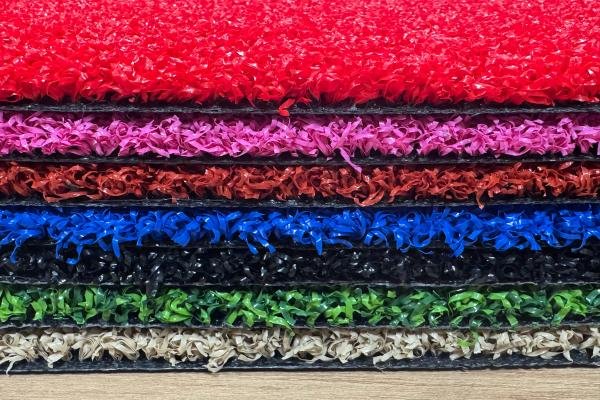
As an engineer, I look at the data behind the product. Safety is not just about softness. It is about "rotational resistance1." This means how easily a player’s shoe can turn on the surface. If the resistance is too high, the foot sticks, and the knee twists. This causes ligament damage. If it is too low, the player slips and falls.
Modern manufacturing processes have solved these problems. We now use advanced polyethylene (PE) fibers. These fibers are soft to the touch but very strong. They do not burn the skin if a player dives for a ball. This is a big improvement over the old, abrasive turf from ten years ago.
Another key factor is the backing of the turf. The backing holds the fibers in place. In my factory experience, I verify that the backing has strong water permeability and tuft lock. If the backing fails, the fibers come loose. This creates holes in the court, which is a major trip hazard.
To ensure safety, you must also maintain the court. Even the best turf in the world becomes dangerous if the sand level is wrong. You need to brush the sand regularly. This keeps the fibers standing straight. It ensures the grip remains consistent across the entire court. When you buy from us, we always provide advice on how to maintain this safety level for years.
Key Safety Indicators for Padel Turf
- Friction Coefficient: Must allow sliding but prevent slipping.
- Vertical Ball Rebound: The ball should bounce naturally, not erratically.
- UV Stability: Prevents the plastic from becoming brittle and sharp under the sun.
- Shock Absorption: Reduces fatigue in players’ legs during long matches.
Conclusion
Professional Padel tournaments use artificial turf exclusively because it offers the best performance and safety. It is the only FIP-approved surface. Hard courts are dangerous and not compliant. Choose high-quality turf to ensure your club succeeds.
-
Learn about rotational resistance and its impact on player safety and performance on artificial turf. ↩