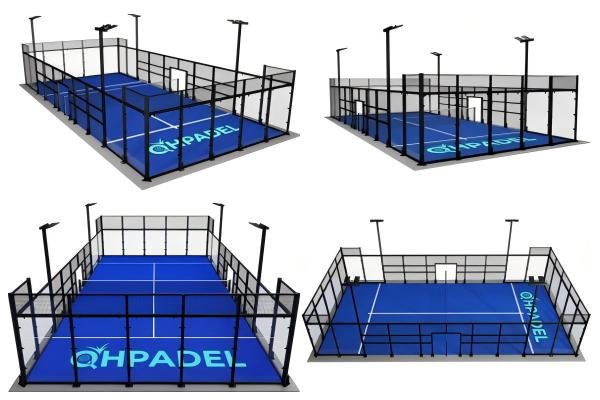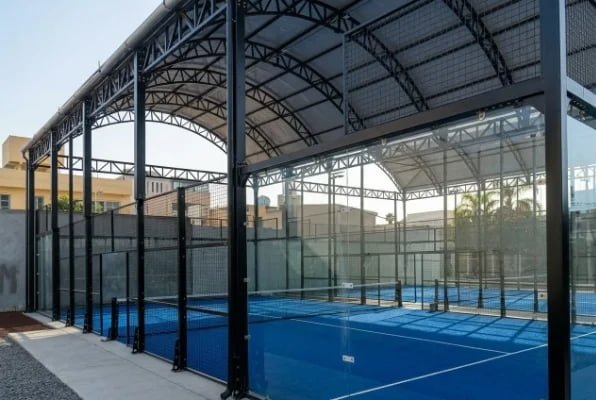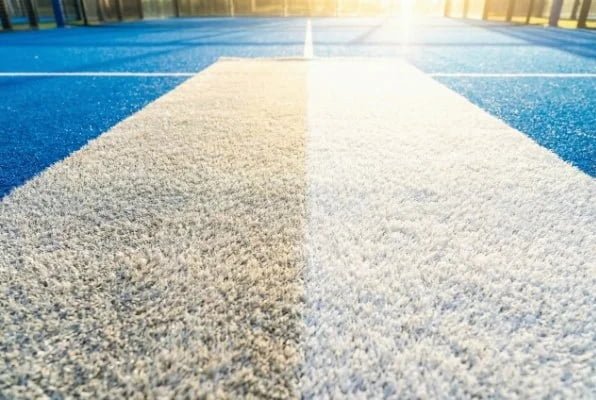
Heavy snow piles up on your courts, making you fear costly structural damage and long-term repairs. Don’t panic; understanding proper winter maintenance saves your investment and keeps courts playable.
Heavy snow generally does not damage padel courts because the materials are designed to be cold-resistant. However, improper removal methods like metal shovels or harsh chemicals can destroy the turf and glass. The safest approach is using plastic tools or allowing natural melting.
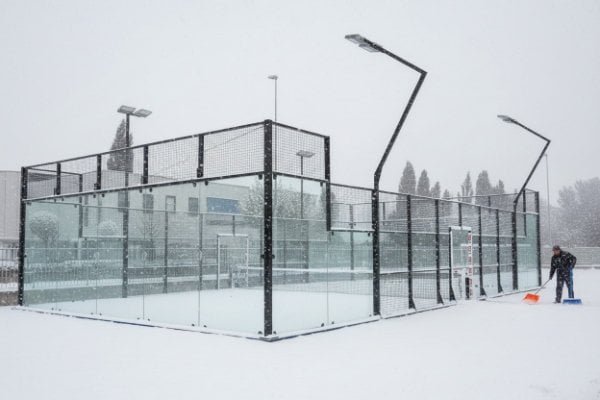
I have seen many club owners make mistakes when the first snow falls. They rush to clear the court to keep their customers happy. Unfortunately, they often end up causing more harm than the weather itself. Let’s look at the specific risks and solutions for your facility.
How Do You Safely Remove Snow from Padel Artificial Turf?
You want to reopen your courts quickly, but using the wrong tools creates permanent scars on the surface that ruin the game.
Use a lightweight plastic shovel or a stiff-bristled brush to gently clear the top layer. Leave a thin layer of snow to protect the fibers, avoiding direct contact with the backing.
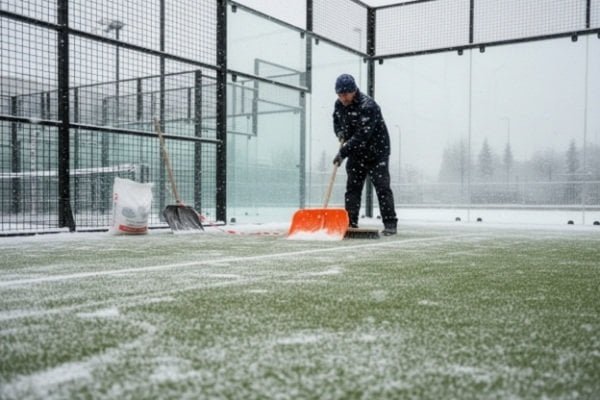
As an artificial turf engineer, I have analyzed many damaged courts. The most common cause of damage in winter is not the cold, but the tools people use. Metal shovels are the biggest enemy of your padel court. When you scrape the ground with metal, you risk cutting the grass fibers. Worse, you can tear the latex backing of the turf. Once the backing rips, the turf loses its stability.
You must also be very careful with chemicals. I often see people trying to melt ice with salt or strong de-icing agents. This is a huge mistake. Salt dissolves in water and seeps into the turf backing. Over time, this salty water corrodes the latex. It also creates a sticky mess that clogs the drainage holes. If the drainage holes are blocked, water stays on the court. When that water freezes again, it expands and rips the turf apart.
Another issue is the UV protection layer in the grass yarn. Strong chemicals strip this layer away. This leads to fading colors and brittle grass in the summer. If you must remove snow, patience and gentle tools are key.
| Tool / Method | Safety Level | Risk Factor |
|---|---|---|
| Metal Shovel | Dangerous | Cuts fibers, tears backing |
| Plastic Shovel | Safe | Low risk if used gently |
| Rock Salt | Dangerous | Corrodes latex, blocks drainage |
| Stiff Broom | Very Safe | Best for light snow |
Can Freezing Temperatures and Ice Break Padel Court Glass?
The glass walls look fragile in the freezing cold, and you worry that one wrong move will shatter them completely.
Tempered glass is strong but sensitive to thermal shock. Never use hot water to melt ice on the glass, as the sudden temperature change causes immediate shattering.
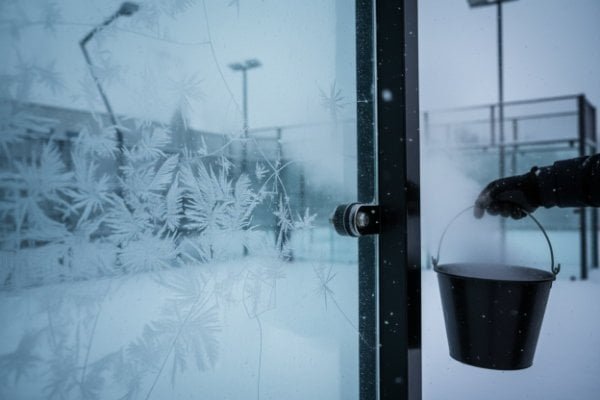
Tempered glass is incredibly strong against impact. It can handle a fast padel ball or a player running into it. However, it has a weakness. This weakness is rapid temperature change, also known as thermal shock. I remember a case where a court owner wanted to clear frost for an early morning match. He threw a bucket of hot water onto the frozen glass. The glass exploded instantly.
This happens because glass expands when hot and contracts when cold. When you pour hot water on a frozen sheet, one part expands while the rest stays contracted. This stress breaks the glass. You must avoid hot water. You should also avoid using heated air blowers directly on the glass surface.
The steel structure of the court also matters here. Steel contracts in the cold. If the temperature drops very low, the metal frame shrinks. This can put extra pressure on the glass anchors. Before winter starts, you should check that all bolts are tight but not overtightened. The rubber gaskets between the glass and the metal must be in good condition. They act as a cushion. If the rubber is old and hard, the glass touches the metal directly. This contact point is where breaks usually happen during a freeze.
Key Risks for Glass in Winter
- Thermal Shock: Sudden heat on cold glass causes explosions.
- Ice Expansion: Water freezing in the joints pushes the glass panels.
- Frame Contraction: Metal shrinking puts stress on mounting points.
What Are the Best Ways to Protect Outdoor Padel Courts During Winter?
Leaving your courts exposed all winter feels risky, yet building a full enclosure seems too expensive for your budget right now.
The most effective protection is installing a roof or canopy to prevent snow accumulation. If a roof is not possible, the best strategy is often doing nothing and letting nature take its course.
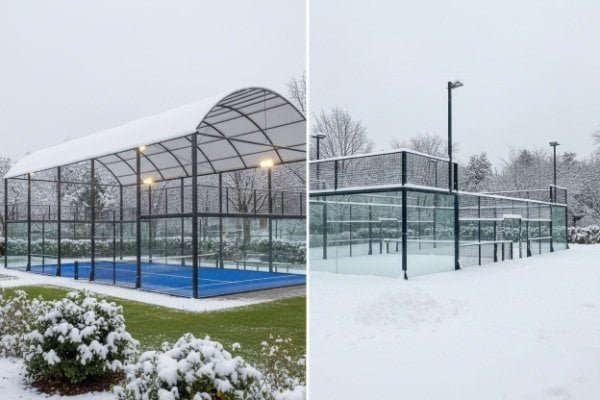
The absolute best way to protect your investment is to keep the snow off the court entirely. A roof structure does this effectively. It prevents heavy snow loads from sitting on the turf. It also keeps the glass dry, reducing the risk of ice forming in the joints. From a business perspective, a roof also allows you to operate on rainy days, increasing your annual profit.
However, not everyone can build a roof immediately. If your court is open to the sky, you have two choices. You can manually clear it, or you can do nothing. Surprisingly, doing nothing is often the best choice for the longevity of the materials. Padel turf and glass are made to be outdoors. They can handle the cold. The snow itself acts as an insulator.
If you choose to do nothing, you simply wait for the temperature to rise. The snow melts and drains away naturally. The risk of damage is zero because no tools touch the court. The downside is lost revenue during the snow days. If you must clear it to generate income, you fall back to the plastic shovel method. But you must weigh the cost of labor and potential damage against the income from a few winter games.
| Strategy | Cost | Protection Level | Playability |
|---|---|---|---|
| Build a Roof | High | Excellent | High |
| Do Nothing | Low | Good | None (until melt) |
| Manual Cleaning | Medium (Labor) | Moderate (Risk of error) | Medium |
Conclusion
Snow rarely destroys padel courts, but bad maintenance does. Use plastic tools, avoid heat on glass, and consider a roof to ensure your investment lasts for years.