Are you confused by steel options for your padel courts? Making the wrong choice leads to quick rust and lost money. I will show you the right steel to buy.
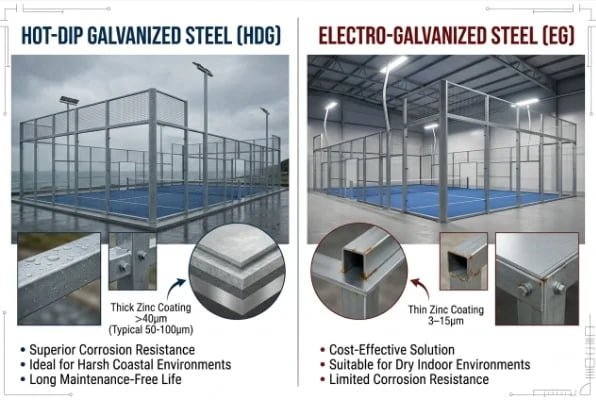
Hot-dipped galvanized steel is better for outdoor padel court structures. It has a thick zinc layer over 40μm that stops rust completely. Electro-galvanized steel has a thin 3-15μm layer. It is only safe for indoor dry courts to cut costs.
Choosing steel for your padel club is a big decision. Let us look closely at how these two steel types work so you never make a bad buy.
What Is the Difference Between Hot-Dipped and Electro-Galvanized Steel?
Do you fear fake steel promises from suppliers? Bad steel ruins your club reputation fast. Knowing the exact production process helps you spot the truth quickly.
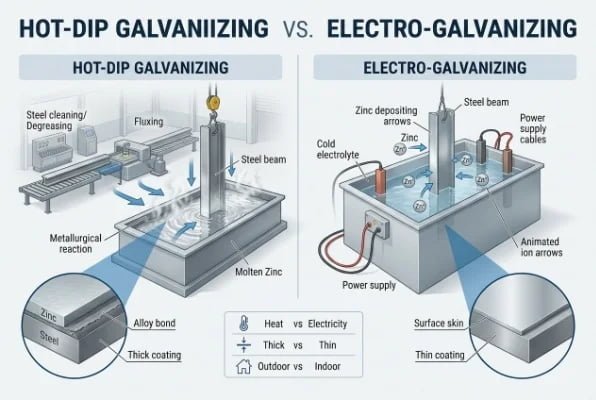
Hot-dip galvanizing dips clean steel into hot melted zinc to form a thick, strong alloy layer. Electro-galvanizing uses electricity and a liquid bath to put a very thin zinc layer on the steel. They use totally different methods to stop rust.
I started my career in an artificial turf factory. I learned early that quality control is everything. The steel frame is just as important as the turf for your padel court. I want to break down how factories make these two types of steel.
Hot-Dip Galvanizing Process
Factories heat solid zinc until it melts into a liquid. Then, they clean the steel and drop it straight into this hot liquid pool. A real metallurgical reaction happens here. The iron in the steel mixes with the liquid zinc. This creates a hard zinc-iron alloy layer1. The zinc actually fuses with the steel metal.
Electro-Galvanizing Process
This process is much colder. Factories put the steel into a liquid bath full of an electrolyte. They do not melt the zinc. Instead, they use electric current. The electricity moves zinc ions from the liquid onto the steel surface. This just creates a very thin zinc skin.
Side by Side Look
Let me show you a simple breakdown:
| Feature | Hot-Dip Galvanized | Electro-Galvanized |
|---|---|---|
| Method | Hot melted liquid dip | Cold electric bath |
| Connection | Chemical alloy bond | Surface skin layer |
| Strength | Very strong | Weak |
| Main Use | Rough outdoor areas | Dry indoor spaces |
I always tell my buyers to ask the factory about their exact process. You need to know exactly what you buy.
Why Does Zinc Coating Thickness Matter for Rust Prevention?
Does thin steel paint keep you awake at night? Thin layers chip off and let rust eat the metal. Thick zinc is your only real shield.
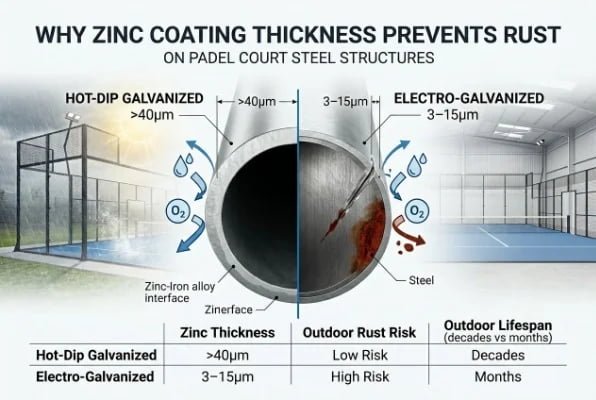
A thick zinc coating matters because it physically blocks water and air from touching the steel frame. Hot-dip coatings are over 40μm thick and survive harsh weather. Electro-galvanized coatings are only 3 to 15μm thick. They rust very quickly outside.
As a sales manager, I talk to many buyers from places like the USA, UAE, and Mexico. These buyers want a one-stop, worry-free procurement process. They hate rust. Rust kills profits. This is why thickness is the secret to good steel.
The Heavy Duty Protection
At QHPADEL, all our standard steel uses a hot-dip galvanized coating. This coating is always thicker than 40μm. The thick layer takes all the damage from rain, wind, and sun. It sacrifices itself so the steel inside stays perfect. This thick wall means excellent corrosion resistance for many years.
The Thin Skin Risk
Electro-galvanized coatings are very thin. They usually measure between 3μm and 15μm. This thin skin scratches very easily. Once it scratches, water gets inside right away. The steel starts rusting from the inside out.
Thickness Comparison Chart
Here is what you need to remember:
| Steel Type | Zinc Thickness | Rust Risk Outside | Lifespan Outside |
|---|---|---|---|
| Hot-Dipped | >40μm | Very Low | Decades |
| Electro-Galvanized | 3-15μm | Very High | Months |
Never trust a supplier who says a thin coating works outdoors. You must demand strict quality control during production. I always check the exact micron numbers for my clients to keep their clubs safe.
How Should Investors Choose the Right Galvanization for Outdoor Padel Courts?
Are tight budgets forcing you to make bad steel choices? Cheap steel causes expensive repairs later. You need a clear plan to balance your budget and safety.
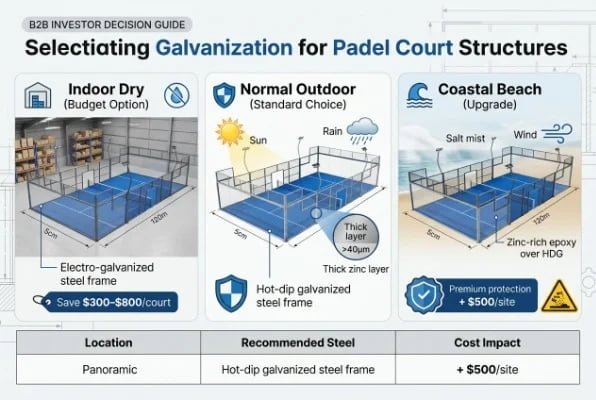
Investors must match the steel to the court location. Always choose hot-dip galvanized steel for outdoor courts. You can pick electro-galvanized steel only for dry, indoor courts to save money. Coastal courts need an extra zinc-rich epoxy paint over hot-dip steel.
I help many clients bid for construction projects. I know price matters a lot. But you must be smart about where you cut costs. I want to share my personal advice for your next big project.
The Indoor Budget Option
Sometimes, clients have a very low bid price. In this case, I tell them they can use custom-made electro-galvanized steel. This can reduce your costs by about $300 to $800 per court. But there is a strict rule. You must only use this for indoor, dry environments. I always explain this clearly to the site owner beforehand.
The Standard Outdoor Choice
If your court is outside, you must buy hot-dip galvanized steel. Do not try to save that $300 here. The sun and rain will destroy cheap steel fast.
The Coastal Upgrade
Many investors build padel courts near the ocean. Salt in the air eats metal quickly. For coastal areas, I add a special step. I use hot-dip steel and then add a zinc-rich epoxy coating on top. This upgrade usually increases the quote by $500 per site. This gives you maximum protection against salt and wet air.
Investment Guide
| Court Location | Recommended Steel | Extra Cost or Savings |
|---|---|---|
| Indoor Dry | Electro-Galvanized | Save $300 – $800 |
| Normal Outdoor | Hot-Dip Galvanized | Base Price |
| Coastal Beach | Hot-Dip + Epoxy | Add $500 |
You must tell your supplier your exact location. This helps us give you consistent quality and competitive pricing.
Conclusion
Hot-dip galvanizing gives the best rust protection for outdoor padel courts. Electro-galvanizing is only for indoor use. Always pick the right steel to protect your club investment and profits.
-
Discover the importance of the zinc-iron alloy layer in enhancing steel’s resistance to corrosion. ↩