Sourcing padel courts from overseas feels risky. Delays and poor quality can ruin your reputation. You need a reliable checklist to find a partner who delivers consistent results.
A trustworthy supplier must demonstrate a certified quality control system (ISO 9001, CE), flexible customization capabilities for branding, and transparent logistics solutions. Look for clear warranty terms that cover manufacturing defects and a responsive support team that prioritizes your business growth over one-time sales.
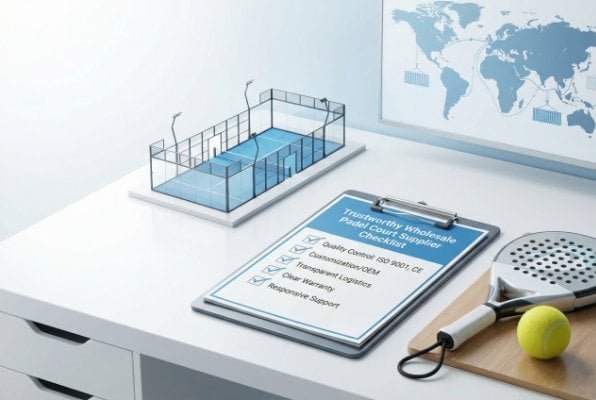
Finding the right factory is hard work. Many suppliers promise the world but fail to deliver. I have seen many clients lose money due to bad choices. Let us look at the specific details you must check before you sign a contract.
What Manufacturing Indicators Guarantee Court Durability and Safety?
Unsafe courts lead to injuries and lawsuits. You cannot afford structural failures. Proper manufacturing standards ensure your investment lasts for years.
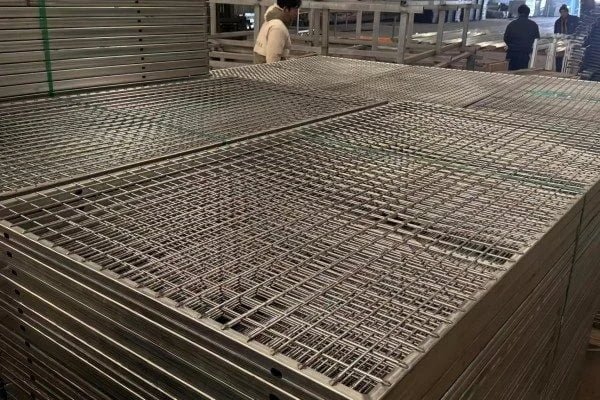
Verify that the factory holds ISO 9001 for management and CE or RoHS certifications for materials. Inspect their steel frame thickness, galvanization process, and glass tempering quality. These specific technical indicators prove the supplier follows strict safety and durability protocols.
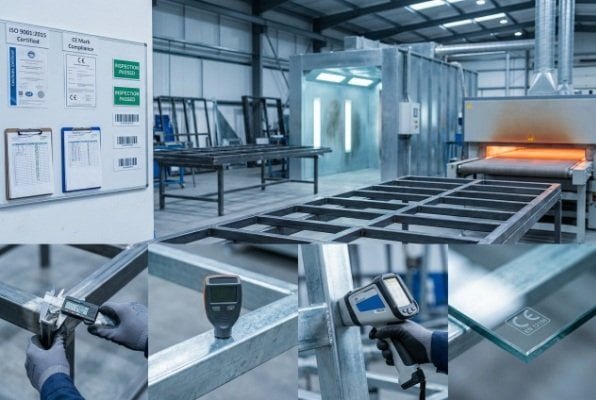
To comprehensively evaluate a padel court factory, you must systematically examine their production capacity and quality control system. I always tell my clients to look past the sales pitch and look at the documents. You must verify their ISO 9001 quality management system certification. This shows that the factory has a process to fix problems when they happen.
You also need to check specific product certifications like CE and RoHS. These are not just pieces of paper. They prove the materials are safe and meet international standards. For example, the steel must be strong enough to handle wind loads, and the paint must not contain lead.
When I worked in the technical department, I learned that strict inspections are vital. You should demand to see their quality control steps. This includes how they test the raw materials and how they monitor the daily production.
Here is a simple checklist for evaluating factory quality:
| Indicator | What to Check | Why it is Important |
|---|---|---|
| Management | ISO 90011 Certificate | Ensures consistent production processes. |
| Safety | CE Certification2 | Proves the structure is safe for public use. |
| Materials | RoHS Compliance3 | Ensures no hazardous substances are used. |
| Glass | Tempering Standards4 | Prevents dangerous breakage and injury. |
If a supplier cannot show you these proofs, do not trust them with your money.
Can the Factory Provide Customized Designs for Brand Differentiation?
Generic courts look boring and cheap. Your club needs to stand out. Custom designs attract players and build your unique brand identity.
A professional factory offers more than standard green or blue courts. They should allow customization of steel frame colors, and placement of your logo on frames, nets, and glass. Look for suppliers who provide free 3D design renderings5 to visualize your ideas before production begins.
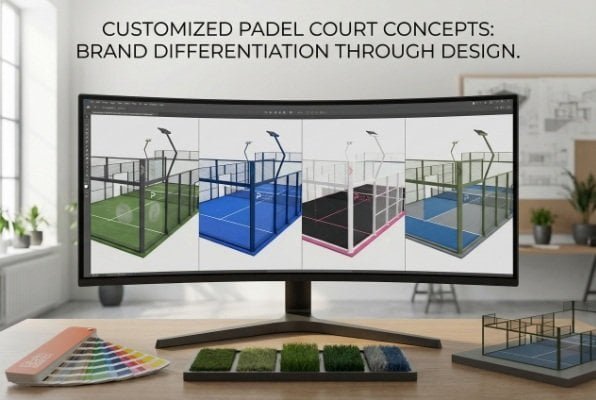
Every client wants their site to be unique. In a competitive market, you cannot just install the same product as everyone else. I believe customization is the key to brand success. At QHPADEL, we do not just sell metal and glass; we help you build an image.
You need to ask if the factory can customize the color of the steel frame. But you should go deeper. Ask if they can customize your logo on the frame, the net, and the glass. These small details make your club look premium. I remember working with a client named Carlos. He wanted his courts to match his local football team’s colors. We adjusted the powder coating and added his logo to the corner pillars. The result was fantastic.
If you have cool ideas, a good supplier will help you visualize them. We provide free 3D design renderings. This lets you see the final result before we start production. This step prevents misunderstandings.
Here are the areas you should be able to customize:
- Steel Structure: Custom colors (RAL codes) and laser-cut logos.
- Artificial Turf: Different colors beyond green and blue (like pink or black).
- Corner Posts: Branding stickers or metal cutouts.
- Nets: Printed bands with your club name.
Do not settle for a standard product when you can have a tailored solution.
What Logistics and After-Sales Support Should a Professional Exporter Offer?
Late shipments destroy project schedules. Poor support leaves you stranded with broken parts. You need a partner who handles shipping and fixes problems fast.
Professional exporters provide tailored shipping strategies: economical routes for inventory stocking and direct, fast routes for urgent installation projects. Reliable after-sales support includes a clear warranty covering manufacturing defects and responsive communication, ensuring you are not ignored after the final payment is made.
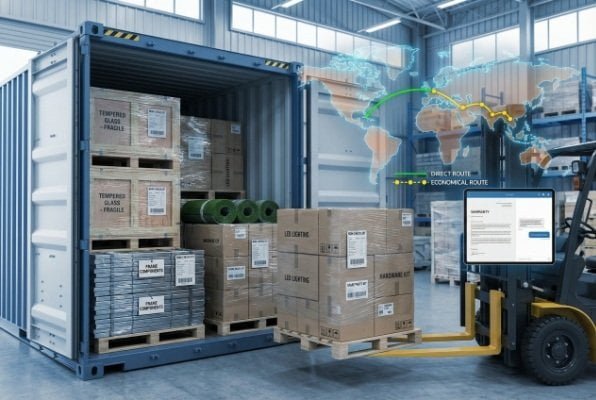
A professional factory manages logistics through reliable container shipping and a clear transportation strategy. Shipping is not one-size-fits-all. It depends entirely on your business model. I always advise my clients based on their specific goals.
For Import Wholesalers:
If you are stockpiling inventory for resale, your primary goal is to maximize profit margins. In this case, I always recommend choosing routes with longer transit times. These routes are generally less expensive because they may involve transshipment and stops at intermediate ports. The savings in freight will directly translate into your profits. You do not need the goods tomorrow, so save the money.
For Project Contractors:
If you have a clear installation deadline, time is your most valuable resource. Even a week’s delay can have a ripple effect on the entire project schedule. Therefore, I recommend direct shipping. While the cost may be slightly higher, the shorter transit time provides a much-needed buffer. This gives you more flexibility in scheduling installation and project acceptance.
Sales do not end with installation. A true partnership is reflected in the support you receive long after payment. In my experience, the quality of factory after-sales support is a key indicator of their confidence in their products. While big brands may offer long-term warranties on paper, getting a response from their large corporate structures is often slow and frustrating. We are committed to being a partner you can truly communicate with.
A comprehensive warranty should clearly cover premature damage caused by exposure to sun and rain and manufacturing defects. However, you must be realistic. No warranty covers everything.
Common warranty exclusions usually include:
- Damage caused by improper installation.
- Lack of routine maintenance (such as cleaning and scrubbing).
- Use of inappropriate chemicals.
- Vandalism or natural disasters.
Good suppliers will be honest about these exclusions from the outset. Transparency builds trust.
Conclusion
To find a trustworthy supplier, verify their certifications, demand flexible customization, and ensure they offer strategic shipping and honest, responsive after-sales support. This protects your investment.
-
Understanding ISO 9001 can help you ensure that your supplier maintains high-quality management standards. ↩
-
Exploring CE certification will clarify how it guarantees safety and compliance for products in the market. ↩
-
Learning about RoHS compliance will inform you about the safety of materials used in manufacturing. ↩
-
Discovering tempering standards will help you understand how they prevent dangerous breakage in glass products. ↩
-
Learn how 3D renderings can visualize your ideas and prevent production misunderstandings. ↩