You invest a lot of money into your Padel courts, but neglecting them hurts your profits. Dirty glass and worn-out turf scare away loyal players. Proper maintenance ensures safety and keeps your courts full every day.
To maintain a Padel court, perform daily debris checks and weekly glass cleaning. Inspect structural bolts and fencing monthly for safety. Brush artificial turf every few weeks to redistribute silica sand. Schedule deep cleaning every 6 months and plan for turf resurfacing every 5 to 6 years to ensure consistent playability.
I have seen many club owners lose money because they ignore small problems until they become big disasters. Do not let this happen to you. I will show you exactly how to keep your courts in top condition for years.
How Should You Properly Care for Padel Court Glass and Fencing?
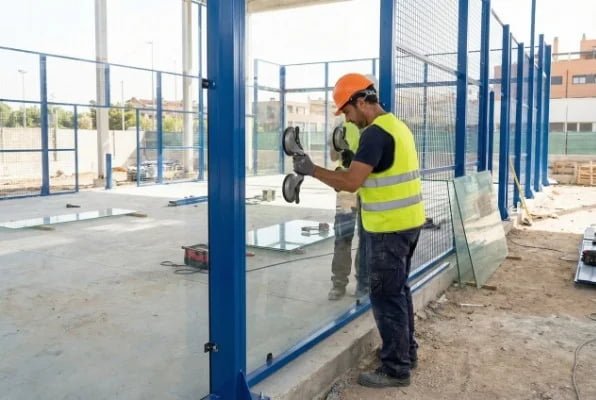
Loose screws lead to dangerous accidents that can injure your players. Glass breaks easily if you ignore sudden temperature changes. You must check the structure regularly to protect your players and your business reputation.
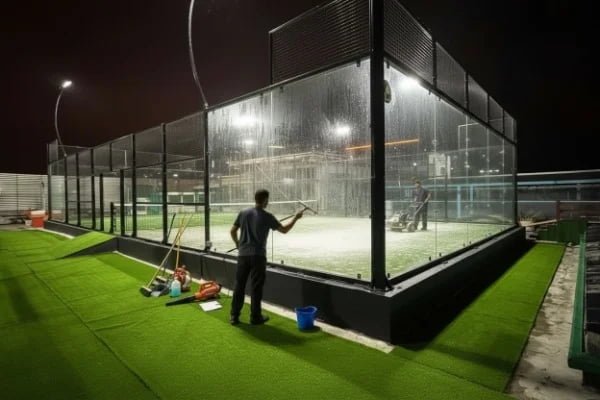
Inspect screws, bolts, and glass panels monthly. Tighten any loose fixings immediately. Clean glass weekly with water that matches the air temperature to avoid thermal shock. Never use hot water on frozen glass or cold water on hot glass, as this causes cracks.
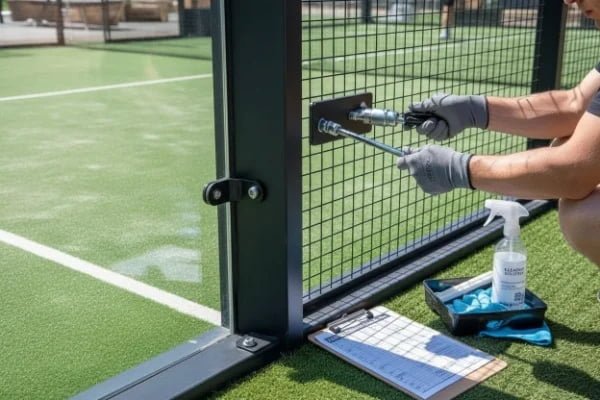
The structure holds the court together. I always tell my clients that safety comes first. You need to look closely at the metal mesh and the glass walls. I have visited clubs where the glass looked fine, but the screws holding it were rusting away. This is very dangerous.
Tempered glass is strong but sensitive. Sweat and dust build up fast on the walls. You should clean it every week if the court is busy. Be very careful with the water temperature. If it is a hot summer day, cold water can shatter the hot glass instantly. In winter, hot water on cold glass does the same thing. This is thermal expansion. Always use water that feels close to the outside temperature.
The ball hits the fence hard during a game. Players hit the fence too. This vibration loosens screws over time. You must check every bolt.
Here is a simple checklist I use:
| Component | Action | Frequency |
|---|---|---|
| Glass Panels | Clean and check for small cracks | Weekly |
| Bolts & Screws | Tighten and inspect for rust | Monthly |
| Fence Mesh | Check for sharp edges or deformation | Monthly |
| Net Post | Verify tension mechanism | Monthly |
This routine prevents lawsuits and keeps players safe. You do not want a glass panel falling on a customer. A quick check saves you from a nightmare scenario.
What Are the Best Practices for Maintaining and Brushing Padel Artificial Turf?
Uneven turf causes bad bounces and creates a terrible experience for players. If you do not brush the grass, the sand clumps together and hardens. Proper brushing keeps the game fair and fun.
Brush your artificial turf every two to three weeks to keep silica sand loose and even. This prevents compaction and hardening. Add more sand if you see bare spots. Regular brushing maintains the correct ball bounce and protects the turf fibers from premature wear.
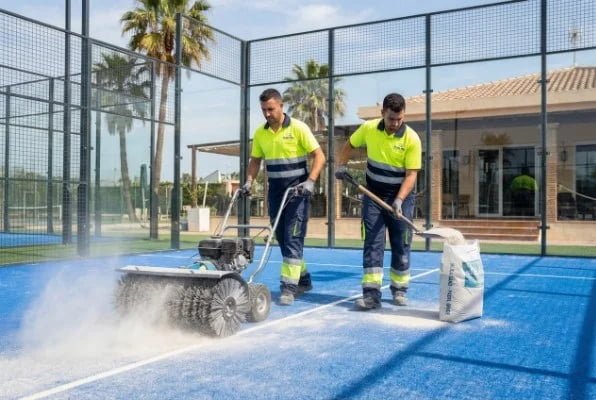
Artificial turf is the heart of the game. I know from my engineering background that the sand is vital. The sand supports the grass blades. If the sand is low, the grass falls flat. Once the grass is flat, the ball slides instead of bouncing.
You do not need to mow or water this turf. But you must brush it. Use a hard brush. Drag it across the court. This moves the sand back into the fibers. The sand protects the roots of the grass from the sun. UV rays destroy plastic over time. The sand blocks these rays.
Here is why brushing matters:
- Grip: Players need sand to stop and turn without twisting an ankle.
- Bounce: Even sand means even bounce. Piles of sand create bad bounces.
- Protection: Sand stops the sun from destroying the grass roots.
Check the sand levels every month. You usually need a refill every 12 to 24 months. If you see "bald" spots near the service line or the net, add sand immediately. Do not wait. Waiting destroys the turf fibers quickly. I see owners wait too long, and they have to replace the whole carpet years too early. Keep the sand level high, and your turf lasts longer.
Why Is Scheduled Deep Cleaning Essential for Preventing Long-Term Damage?
Surface cleaning is not enough to stop serious drainage problems. Dust and organic matter clog the tiny pores of your turf backing. Deep cleaning stops water from pooling on your court after rain.
Deep cleaning removes fine dust, leaves, and compacted debris that regular brushing misses. You should perform this every 6 months. It restores drainage capacity and prevents moss or algae growth, ensuring the court remains playable even after heavy rain.
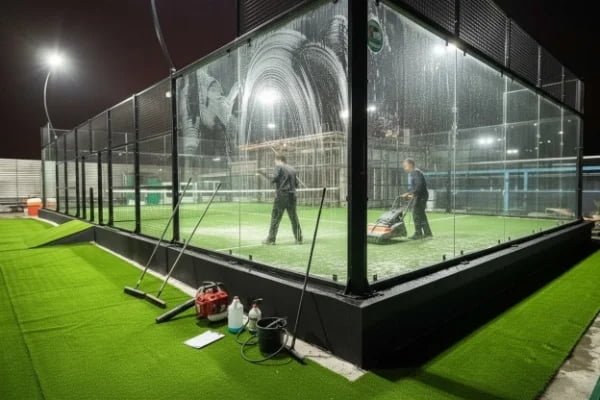
I have visited courts that look clean on top but flood when it rains. This happens because deep dirt blocks the holes in the backing. Regular brushing fixes the top layer. But dust, skin cells, and broken fibers sink to the bottom. This creates a hard layer like cement. Water cannot pass through this layer.
You need a specialized machine or a professional service for this deep clean. They de-compact the sand. They filter out the dirt. Then they put the clean sand back. This process breathes new life into the court.
Here are the benefits of deep cleaning:
- Better Drainage: No puddles mean you can sell more hours of play time.
- Softer Feel: The ground feels less hard for players’ knees. Hard courts cause injuries.
- Longer Life: It stops the fibers from rotting at the base.
Do this twice a year. If your court is outdoors under trees, do it more often. Leaves rot and turn into mud quickly. This mud is the enemy of artificial turf. I always advise clients to cut back overhanging branches. It reduces the amount of organic waste that falls on the court. Preventing the dirt is cheaper than cleaning it later.
When Is the Right Time to Resurface or Replace Your Padel Court Turf?
Old turf ruins the game experience and looks unprofessional to your customers. Players hate unpredictable bounces and slippery spots that cause falls. Knowing when to replace it saves your club’s reputation.
Plan to replace artificial turf every 5 to 6 years for outdoor courts. Look for signs like flattened fibers that do not stand up after brushing, loose seams, or uneven playing characteristics. Indoor courts may last longer, but performance usually drops after 5 years of heavy use.
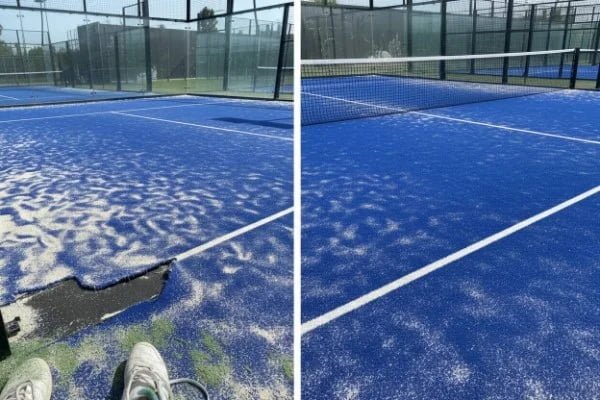
As a turf engineer, I see this mistake often. The court looks green, so the owner thinks it is fine. But the players know it is bad. They stop booking that specific court.
Most high-quality turf loses its "curl" texture after about 5 years. The UV protection fades. The fibers become brittle. They break off like dry hair. You will see green dust on players’ shoes. That is your turf disintegrating.
You might not see big holes initially. But watch the ball. Does it slide too fast? Does it bounce low? These are signs of age. The friction changes.
Look at these critical zones:
- The Service Line: Players pivot here constantly.
- The Net Area: Quick stops wear down the fiber.
Follow this replacement strategy:
- Budget Early: Start saving for new turf in year 3.
- Check Friction: If players slip often, the fiber is too worn.
- Inspect Seams: If glue fails and seams open, it is a trip hazard.
Do not wait until the black backing shows. Replace it when the playability drops. This keeps your customers happy and paying. A fresh blue or green court also looks great in marketing photos. It shows you care about quality.
How Long Does a Professional Padel Court Last With Proper Care?
You need to know the return on your investment for your business plan. A well-built court lasts a long time if you maintain it regularly. Neglect cuts the lifespan in half.
A well-maintained outdoor Padel court structure typically lasts 6 to 8 years before major refurbishment. Indoor courts can last over 10 years due to weather protection. However, the turf component has a shorter cycle and is the main consumable part of the facility.
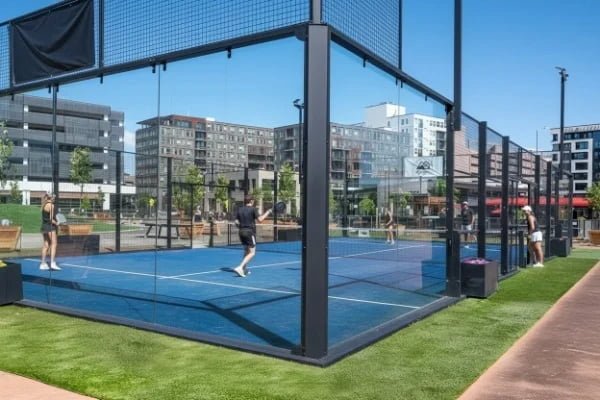
Let us break down the lifespan of the whole system. My experience in export and construction gives me real data on this. The location matters the most.
Outdoor vs. Indoor:
- Outdoor: Rain, sun, and temperature changes attack the materials. Expect 6 to 8 years for the main structure if you control rust.
- Indoor: No sun or rain. These can last 10+ years easily.
Here is a component lifespan breakdown based on my observations:
| Item | Estimated Life | Condition |
|---|---|---|
| Steel Structure | 10-20 years | Needs rust treatment/painting |
| Glass Walls | 20+ years | If not broken by impact |
| Artificial Turf | 5-7 years | Depends on usage hours |
| LED Lights | 5 years | Depends on driver quality |
You cannot just build it and forget it. I help clients succeed by planning for these dates. Regular checks extend these times. If you fix a small rust spot today, you save the whole post from rotting tomorrow.
Also, consider the location environment. Coastal areas have salt in the air. This eats steel very fast. You need galvanized steel and frequent washing in these areas. Your maintenance schedule directly affects how many years your court makes money.
Conclusion
Regular maintenance extends your court’s life and ensures player safety. Clean glass carefully, brush turf monthly, check screws, and plan for turf replacement every 5 years to maximize your profits.