Your hotel guests are tired of the same old swimming pools and empty gyms. If you do not offer something new and exciting, you will lose them to competitors who do. Padel courts are the solution to attract more bookings today.
To choose the best court, you must prioritize outdoor durability and stability. I recommend Panoramic or Classic courts because they withstand wind better than Ultra-panoramic models. You should insist on hot-dip galvanized steel, 304 stainless steel screws, and high-wear resistance turf to ensure low maintenance and high aesthetics for your resort.
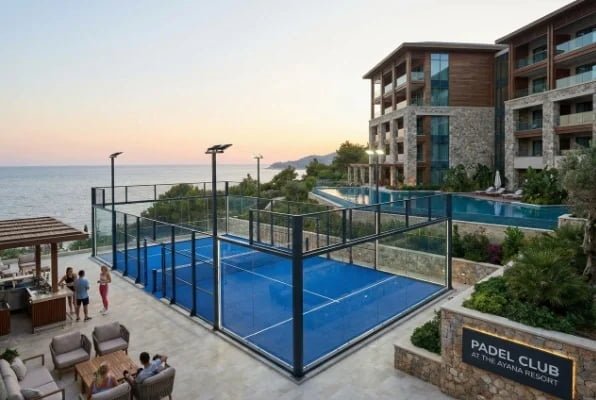
I have seen many resort owners hesitate because they worry about the cost, but they often ignore the long-term value. Let me explain why this investment changes your business.
What Are the Top Advantages of Installing Padel Tennis Courts in Your Hotel or Resort?
Low occupancy rates during off-peak seasons can destroy your annual profits. If your amenities do not appeal to the younger generation, your resort will feel outdated. Padel courts bring a vibrant, high-spending demographic directly to your door.
The main advantage is attracting the 20-40 age group, who now make up 70% of padel enthusiasts. This amenity increases occupancy rates, creates a social atmosphere, and offers a quick return on investment through court rentals, equipment sales, and hosting events.
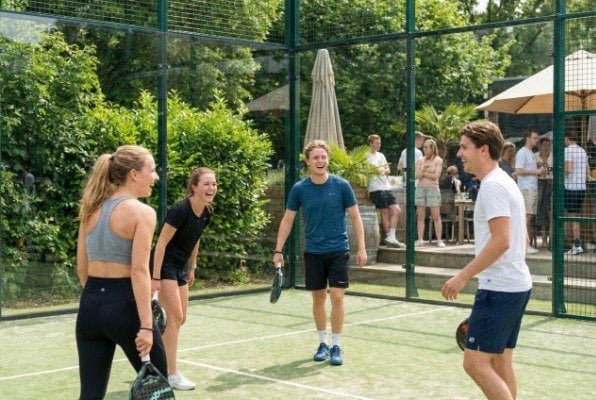
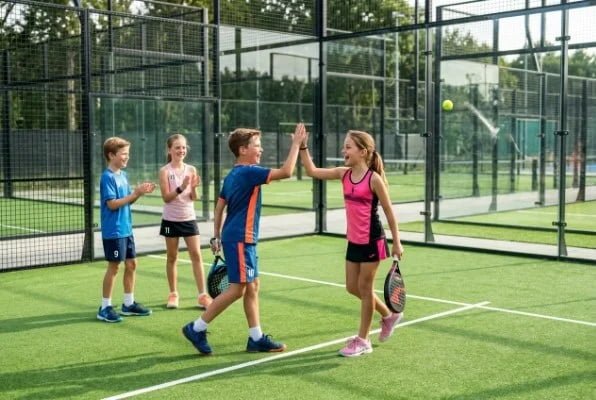
Based on my experience in the industry, the hospitality market is shifting. Young people between the ages of 20 and 40 are no longer satisfied with just lying on a beach. They want interactive, energetic, and novel experiences. Padel meets these needs perfectly because it is highly social. Unlike a gym where people work out alone, a padel court creates a community vibe in your hotel.
I have looked at incomplete statistics from 2025, and they show that up to 70% of padel players are under 40 years old. Google Trends data confirms that popularity is rising every single year. This demand translates directly to money for you. For example, one of my clients who runs a resort in Indonesia told me that his bookings increased by a significant 10% in the first year after he installed a court.
You can improve your Return on Investment (ROI)1 in several smart ways. You do not just make money from the room bookings. You can charge an hourly rental fee for the venue. You can offer free play as a perk for your elite members to build loyalty. You can also sell branded padel rackets and clothes in your gift shop. Some hotels even host light sporting events or mixers, which drives food and beverage sales.
| Revenue Channel | Description |
|---|---|
| Room Bookings | Attracts active tourists who specifically filter hotels for sports facilities. |
| Venue Rentals | Hourly fees for guests or outside visitors. |
| Retail Sales | Selling balls, rackets, and sportswear at the front desk. |
| Events | Hosting tournaments or social mixers that boost food and drink orders. |
What Does QHPADEL Recommend You Consider for Low-Maintenance and High-Aesthetics Hotel Courts?
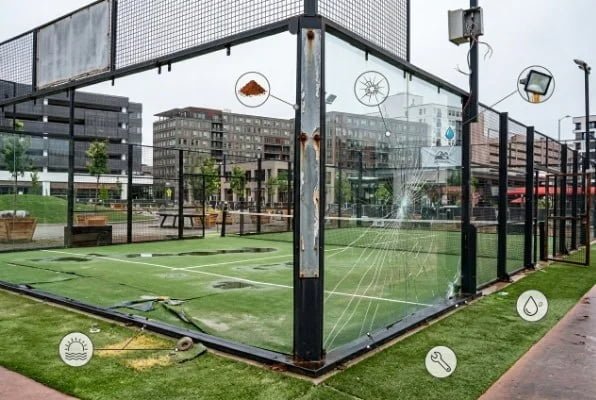
Rusty fences and faded turf will ruin the premium image of your hotel. Cheap materials lead to constant repairs that frustrate your maintenance team and your guests. Selecting the right specifications now prevents expensive headaches later.
I recommend using hot-dip galvanized steel with electrostatic polyester powder coating for maximum protection. For coastal resorts, you must add a zinc-rich epoxy primer. Use 12mm tempered glass for safety and install high-dtex artificial turf with two-component adhesive to resist heavy rain and wear.
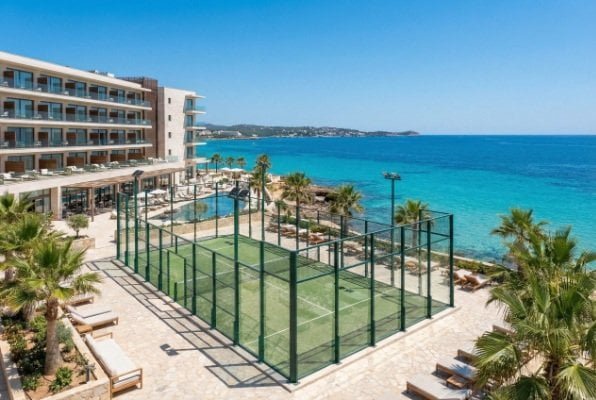
When you build outdoors, you are fighting against the weather. Most hotels and resorts place their courts outside, so durability and stability are the most important factors. I always tell my clients to be careful with the design they choose. Panoramic courts are the most popular choice because they look great and are stable. Classic courts are also good for very windy areas. However, I only recommend Ultra-panoramic courts for indoor use or windless outdoor areas. They look beautiful, but you have to weigh that against stability issues in a storm.
At QHPADEL, we do not cut corners on the steel structure. Our basic models use hot-dip galvanized steel2. We finish this with an electrostatic polyester powder coating. This ensures the paint sticks and the rust stays away. All our screws are made of 304 stainless steel, which is vital for outdoor longevity.
If your hotel is near the sea, the salty air is a killer for metal. I strongly recommend you add a layer of zinc-rich epoxy primer3. It only costs about $500 more per site. This small investment extends the life of your court significantly. If you skip this to save money, you will pay much more in maintenance later.
You also need to check the glass and turf. We use 12mm tempered glass that complies with EN12150-2:2004 standards. Laminated glass is safer, but the price is much higher, so tempered is the standard choice. For the ground, high-dtex artificial turf ensures the grass stands up longer under heavy use. Finally, the installation quality matters. We use PET seam fabric and two-component adhesive4. This type of glue is strong and does not lose adhesion when it rains, unlike cheaper single-component glues.
| Component | QHPADEL Recommendation | Why is it important? |
|---|---|---|
| Structure Type | Panoramic or Classic | Best balance of aesthetics and wind resistance. |
| Steel Treatment | Hot-dip galvanized + Powder coating | Prevents rust and corrosion. |
| Coastal Add-on | Zinc-rich epoxy primer | Essential protection against salt spray. |
| Glass | 12mm Tempered (EN12150) | Ensures guest safety and structural integrity. |
| Adhesive | Two-component glue | Will not fail during rainy seasons. |
In Which Countries and Markets Is Padel a Must-Have Amenity for the Hospitality Industry?
You might think Padel is just a passing trend in specific regions. If you ignore its global expansion, you will miss out on international travelers. Understanding where this sport is booming helps you capture the right market.
Padel is a must-have in South Asia, Australia, and established markets like Spain and Argentina. It is rapidly becoming standard in resorts in Indonesia, Thailand, and the Maldives. Recent data even shows high demand in colder climates like Iceland, Russia, and the UK.

The demand for Padel is not limited to one place. In the past, it was mostly a Spanish or Latin American sport. Now, it is a global phenomenon. If you operate a high-end four or five-star hotel in South Asia, specifically in Indonesia, Thailand, Malaysia, or the Maldives, you almost have to have a court. It is becoming as standard as a swimming pool.
I have also seen a huge surge in Australia and New Zealand. The lifestyle there is very outdoor-oriented, and Padel fits perfectly. Of course, in regions where Padel is already a religion, like Spain and Argentina, you cannot compete without one. But what surprises me is the new data.
Based on our latest QHPADEL order data in 2026, we are shipping courts to places I did not expect. We see orders from Iceland, Russia, and the United Kingdom. This tells me that even in countries with colder weather or different sports cultures, people want Padel. Travelers from these countries expect to find Padel courts when they go on vacation to warmer places.
This growth is driven by the "experience economy." Guests do not just want a bed to sleep in. They want a lifestyle. In resort destinations, Padel provides that lifestyle. It is a social magnet. If you are in these regions, or if you cater to tourists from these regions, installing a court is a safe bet. It shows you understand what the modern traveler wants. It positions your hotel as a modern, premium destination.
Conclusion
Choosing the right padel court requires focusing on durability, particularly galvanized steel and proper glass. Investing in quality now attracts the profitable 20-40 demographic and secures your hotel’s future revenue.
-
Explore strategies that maximize profits and enhance guest experiences through innovative amenities. ↩
-
Explore the advantages of hot-dip galvanized steel for durability and corrosion resistance in outdoor settings. ↩
-
Learn how zinc-rich epoxy primer protects structures from salt damage, extending their lifespan. ↩
-
Find out why two-component adhesives are superior for outdoor applications, especially in wet conditions. ↩