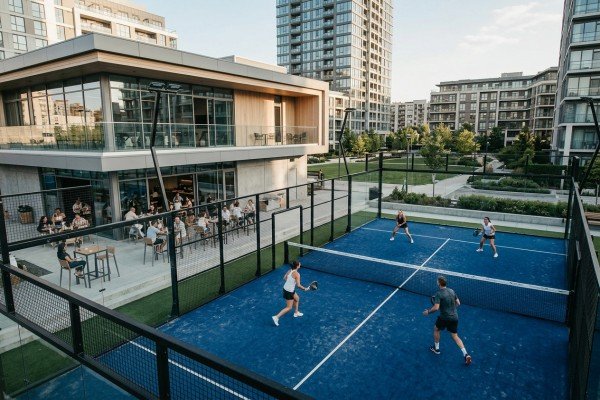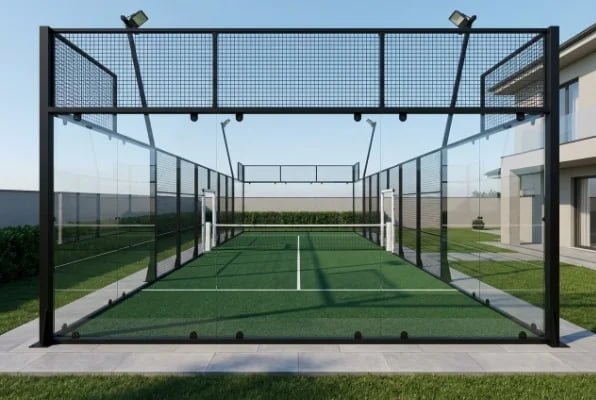

You might worry that putting money into a new sport is risky and could lead to financial loss. However, padel is not a fleeting trend; it is a high-growth opportunity for stable returns.
Building a padel court is a highly profitable investment due to the sport’s exploding popularity and low barrier to entry. With diversified revenue streams like court rentals, coaching, and corporate sponsorships, owners can achieve a quick ROI. Success depends on location, quality facilities, and community building.
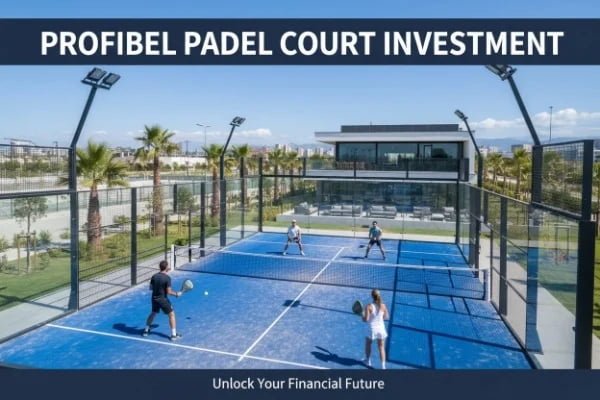
Many people ask me if the initial excitement for padel will last or fade away. Let’s look at the numbers and facts that prove why this industry is just getting started.
Are padel courts profitable?
Many potential owners fear that court rental fees alone won’t cover their operational costs. This fear stops them from seeing the bigger financial picture.
Padel courts are extremely profitable because they do not rely solely on rental income. Successful venues generate significant revenue through memberships, training academies, tournaments, and value-added services1 like cafes or pro shops. Corporate sponsorships on glass walls also create steady passive income.
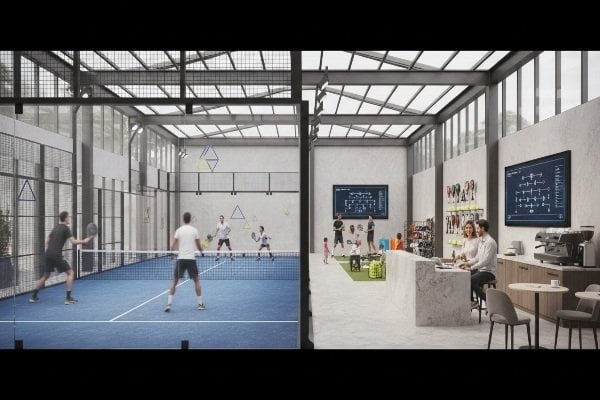
As the founder of QHPADEL, I see padel as a "gold mine" because it hits the sweet spot of the "health + social" trend. Modern people want scientific exercise that is also fun. Unlike tennis, which requires years to master, padel is easy to pick up, meaning your user base is huge. This high engagement creates a massive commercial potential for you.
However, you must not rely on court rental fees alone. A successful business model requires a system of diversified income2. I always advise my clients to view their court as a platform for multiple revenue streams. For example, you can sell advertising space on the court fences, electronic screens, and entrance passages. These are excellent resources for local businesses or beverage brands to reach active customers.
To help you visualize this, here is a breakdown of potential revenue channels:
| Revenue Channel | Description | Commercial Value |
|---|---|---|
| Rentals & Memberships | Basic hourly fees and recurring monthly dues. | Base Income |
| Coaching & Academies | Private lessons, group clinics, and kids’ camps. | High Margin |
| Sponsorships | Branding on glass walls, nets, and court names. | Passive Income |
| Events | Corporate team building and local tournaments. | Community Builder |
| Retail & F&B | Selling rackets, balls, and operating a cafe. | Value-Add |
By establishing long-term partnerships with fitness brands or local companies, you enhance the commercial value of your venue. This strategy turns a simple sports facility into a profitable community hub.
How much money does it take to make a padel court?
Hidden costs in construction can destroy your budget before you even open your doors. You need a transparent breakdown to avoid nasty financial surprises during the build.
Building a single padel court typically costs between $15,000 and $50,000. This range includes the court structure ($6,500-$12,000), site preparation, installation, and shipping. Prices vary based on customization, such as choosing panoramic designs or adding roof systems for all-weather play.
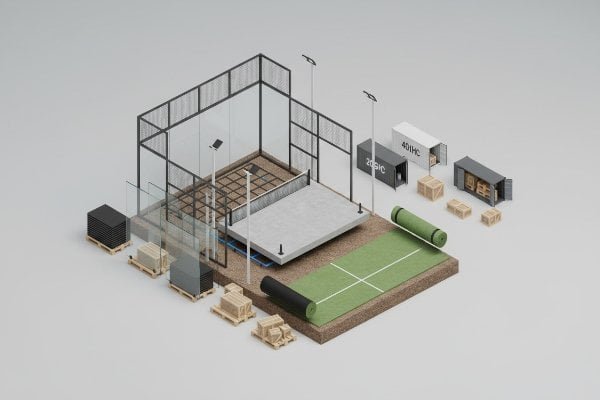
Let’s break down the wallet impact. The core structure—the steel, glass, and turf—usually runs between FOB $6,500 and $9,000 if you purchase directly from a manufacturer like us. However, the "invisible" costs are where you need to be careful. Site preparation, such as ground leveling, drainage treatment, and concrete hardening, is estimated at $0 to $20,000 depending on your existing land conditions.
Your choice of court model also affects the price. According to our 2025 sales data, the Panoramic model accounts for 50% of sales because it balances cost and aesthetics, while the Ultra-Panoramic model, used for high-end clubs, costs more due to its specialized connectors. Additionally, installation costs range from $1,500 to $15,000 depending on local labor rates in your country.
Here is a simplified cost structure to help you plan:
| Cost Component | Estimated Price Range (USD) | Factors |
|---|---|---|
| Court Kit (Material) | $6,500 – $12,000 | Model (Classic vs. Panoramic), Glass thickness. |
| Shipping | $1,000 – $5,000 | Distance, container availability, fluctuation. |
| Site Prep | $0 – $20,000 | Drainage, concrete slab, leveling. |
| Installation | $1,500 – $15,000 | Local labor costs, indoor vs. outdoor. |
Remember, buying from Chinese manufacturers can significantly lower your material costs. We offer factory-direct pricing to help you maximize your budget.
Should I invest in padel?
You might be hesitating because you don’t know if your local market is ready for this sport. Waiting too long, however, means competitors will take the best locations.
You should invest in padel if you have access to a suitable location and want a business with high demand and relatively low maintenance. The key to success lies in targeting the right user group and ensuring high-quality installations that ensure player safety and longevity.
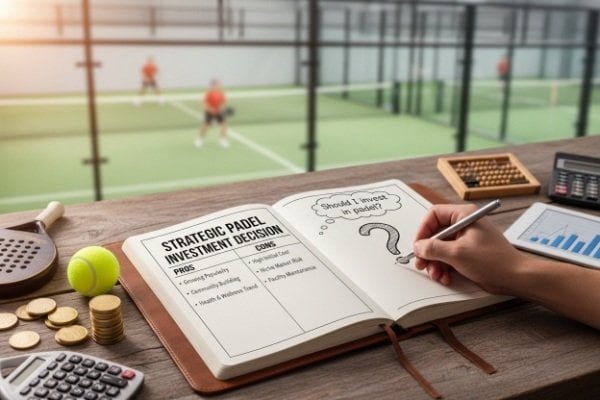
If you have a suitable vacant area and are looking for a high-growth sports industry, then padel is a fantastic investment option. But you must be smart about the quality. Low-quality courts will cost you more in the long run due to repairs. For example, our courts use artificial turf with at least 7500 dtex and PU backing adhesive to withstand 5-10 years of foot traffic.
Safety is also non-negotiable. You must ensure the tempered glass meets the EN12150-2:2004 standard with high impact resistance. If your court is in a coastal area, you should choose a Classic court or a structure with zinc-rich epoxy primer to resist corrosion from salt and wind.
Here is why you should partner with a professional supplier like QHPADEL:
- Quality Control: We ensure every component, from the IP65 LED lights to the steel columns, is built to last.
- One-Stop Service: We handle everything from design and production to export documentation and installation support.
- Support: We provide "Zero Missing Parts" guarantees and detailed installation drawings so your project finishes on time.
Investing in padel is not just about buying a court; it is about building a brand culture. If you provide high-quality facilities and great service, you will build a loyal community that guarantees your success.
Conclusion
Padel is a high-ROI investment if you choose the right location, diversify your revenue streams, and partner with a reliable manufacturer like QHPADEL for quality courts.