You want to master Padel, but the walls confuse you. Ignoring them limits your game, leaving you frustrated while opponents use rebounds to win easy points.
Padel walls are active playing surfaces, not just boundaries. Glass provides a predictable, fast rebound for attacking or defending, while wire mesh creates irregular, slow bounces that force errors. Mastering these differences transforms the walls from obstacles into strategic allies on the court.
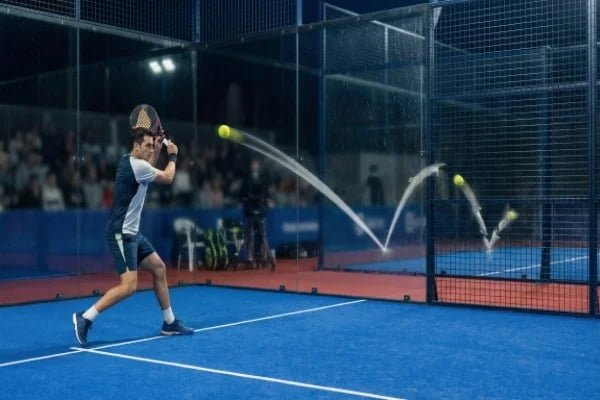
Many players see the cage as a trap, fearing the ball will die in the mesh or fly off the glass. However, once you understand the mechanics, everything changes.
How does the wall work in padel?
Hitting the ball hard often fails when the wall is involved. You lose points because you don’t anticipate how the surface changes the ball’s trajectory.
The wall acts as a "second player." When the ball hits the glass, it bounces back true and fast, allowing you to reset or counter-attack. Hitting the mesh kills the speed and creates unpredictable angles, making it a nightmare for the receiver.
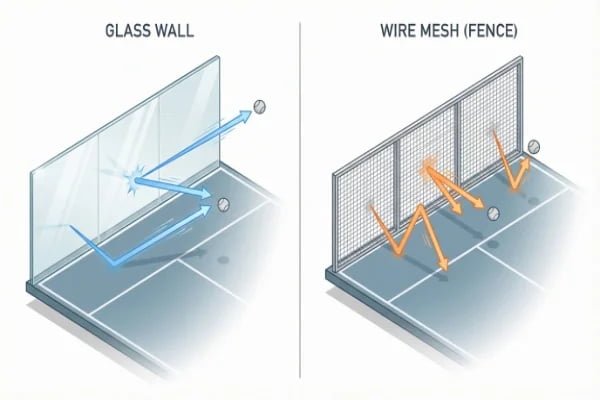
In my years as an engineer and player, I have seen many beginners treat the wall like a tennis fence. This is a big mistake. You must understand that the court has two very different zones. The glass is there to help you. When a fast ball hits the back glass, it slows down and pops up. This gives you time to position yourself and hit a lob or a controlled return. The glass is predictable. You know where the ball will go.
The mesh, however, is the enemy. It creates chaos. If the ball hits the wire mesh, it might drop dead at your feet or shoot sideways. A good strategy is to aim for the mesh when you are attacking to confuse your opponent. But when you are defending, you must trust the glass.
Here is a simple breakdown of how the walls change the game:
| Feature | Glass Wall | Mesh (Wire Fence) |
|---|---|---|
| Rebound | Predictable and linear | Irregular and chaotic |
| Speed | Maintains good speed | Slows the ball down |
| Strategy | Use for defense and resets | Use for attacking to force errors |
| Player Action | Wait for the bounce | Volley before it hits the fence |
Using the walls effectively is what separates a tennis player from a Padel player. If you miss the ball, do not panic. Let it hit the glass, turn with it, and hit it back. It effectively slows down the game for you.
Why do padel courts have glass walls?
Old concrete courts felt like playing in a box. Spectators couldn’t see, and players felt closed in, limiting the sport’s growth and appeal.
Glass walls revolutionized Padel by combining durability with visibility. They allow spectators to watch from all angles, creating an "aquarium effect" for TV, while providing the necessary hard surface for the game’s unique rebound mechanics.

Originally, Padel courts had concrete walls. They were strong, but they were ugly and blocked the view. As the sport grew, we needed a way to make it more exciting for people watching outside. That is why we switched to high-quality tempered glass1. It changed the entire feeling of the sport.
Now, we use 12mm thick tempered glass that meets the EN12150-2:20042 standard. This glass is tough enough to handle players crashing into it but clear enough for cameras to record professional matches.
In the market today, the Panoramic Padel Court is the most popular choice, accounting for about 50% of sales. This design removes the metal columns from the back, giving a clear view. For high-end clubs and tournaments, the Ultra Panoramic Court uses special connectors for a true 360-degree view. This "aquarium effect" attracts sponsors because their ads are visible through the glass.
However, glass is not just for looks. It provides a consistent surface for the ball. Concrete can have rough spots that ruin the bounce. Glass is perfectly smooth. This consistency is vital for competitive play. While the Classic Padel Court with steel columns is still used in windy areas like islands, the trend is clearly moving toward glass for that premium look and feel.
Is Padel Glass Easy to Break? Common Causes of Shattering and Prevention
A shattering glass wall is a club owner’s worst nightmare. It stops play, costs money, and scares customers, yet most people ignore the warning signs until it’s too late.
Padel glass is tough, but not invincible. While 12mm tempered glass is five times stronger than regular glass, improper installation causes 90% of breakages. Stress on the edges or overtightened screws are the real culprits, not the ball hitting the center.
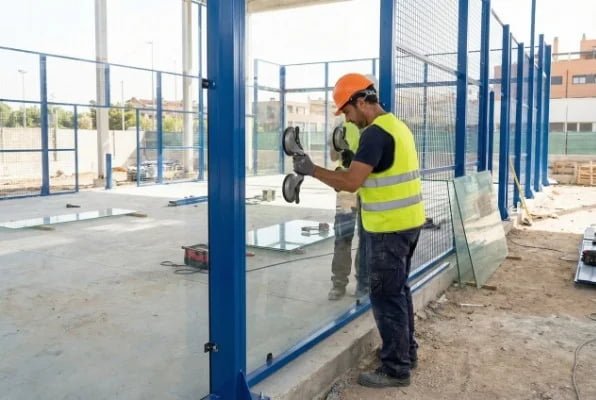
I often hear clients ask if the glass will break if a player runs into it. The answer is usually no. The front surface of tempered glass is incredibly strong. It can withstand impacts of at least 300 kg. The real danger comes from how it is installed.
The weakest points of tempered glass are the four corners and the edges. If the metal screws are too tight, or if the glass touches the steel frame directly without a buffer, stress builds up. One day, a small impact causes the whole panel to explode. This is why at QHPADEL, we provide detailed drawings to ensure the edges are never under stress.
Another hidden danger is nickel sulfide. This is an impurity found in inferior glass. Over time, these particles expand and cause the glass to break spontaneously, even if no one is touching it.
To prevent these disasters, follow these rules:
- Use Certified Glass: Ensure your glass meets EN12150-2:2004 standards and is CE/ISO certified.
- Check Installation: 90% of breaks happen because of bad alignment. The glass must "float" in the fixings, not be crushed by them.
- Inspect Regularly: Look for chips on the edges. A small chip on the edge is a ticking time bomb.
A broken panel costs money to replace, but the damage to your club’s reputation is worse. Investing in quality installation and materials is the best insurance for your business.
Conclusion
The walls define Padel strategy and safety. High-quality glass and proper installation ensure a great game. Choose the right materials to protect your business and improve the player experience.