Are you feeling overwhelmed by the technical choices for your new padel club? You want the best court for your players, but picking the wrong structure could ruin the viewing experience or blow your budget. Let me simplify these choices for you so you can buy with confidence.
There are three main types of padel courts that make up 99% of the global market: the Classic, the Panoramic, and the Ultra Panoramic models. The main difference lies in the amount of steel used and the visibility they offer. The Classic focuses on wind resistance with more posts, while the Ultra Panoramic removes corner columns entirely for a perfect view.
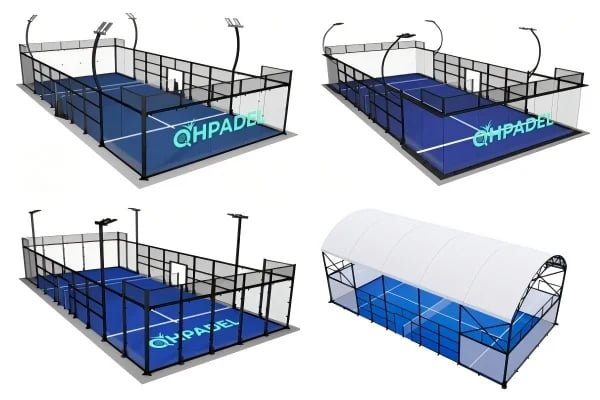
I often talk to club owners who think all courts are the same, only to regret their purchase later when they realize the pillars block the view of a great match. Let’s break down the specific differences so you don’t make that mistake.
What are the key structural differences between Classic and Panoramic Padel Courts?
Do you prioritize maximum durability in storms or a better experience for your spectators? Making the wrong call here can either lead to safety issues in windy areas or a cage-like feel that players dislike.
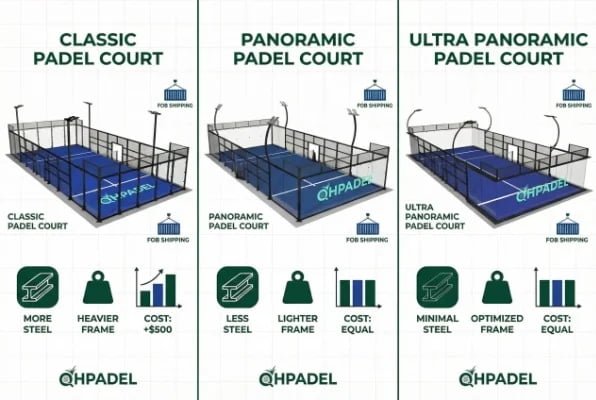
The Classic model features a "double column" structure with 12 more steel posts than the Panoramic version, making it extremely strong against wind. The Panoramic model is a hybrid design; it removes the side pillars and only keeps steel columns at the four corners, opening up the view significantly.
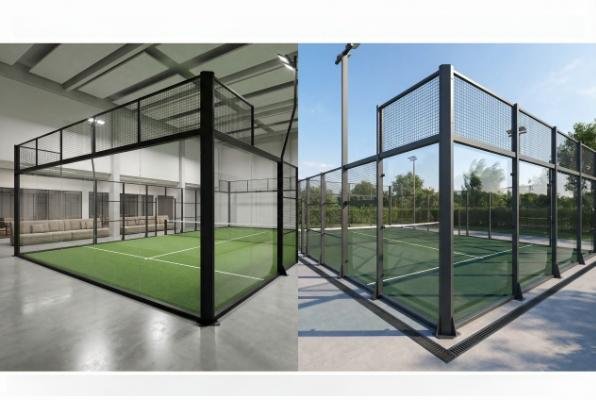
Let’s look closer at the steel structure, as this is where the real engineering difference lies. In my years working with artificial turf and court construction, I have seen Classic courts stand tall in typhoons where other structures might worry me.
The Classic Padel Court uses a traditional reinforced design. It has steel columns between every glass panel. This means there is a lot of metal holding everything together. It is built like a tank. If your club is near the ocean or in a high-wind zone, this is the safest bet because it offers superior wind pressure resistance.
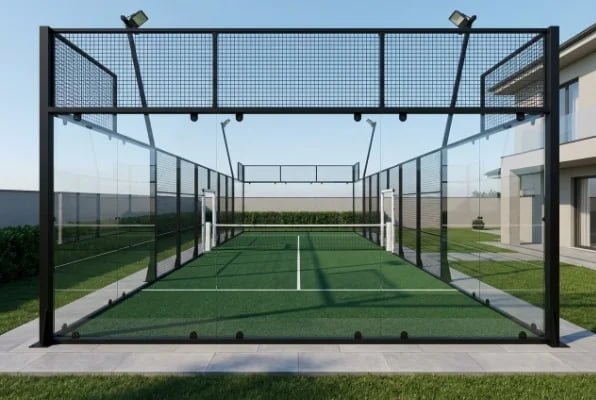
On the other hand, the Panoramic Padel Court is what I call the "modern standard." We engineered this to solve the complaint that Classic courts felt too enclosed. In this model, we remove the vertical steel beams between the rear glass panels. However, it still retains structural steel columns at the four corners. This hybrid approach gives you a much cleaner look without sacrificing too much stability. It is the perfect middle ground for most outdoor clubs that are not in extreme weather zones.
| Feature | Classic Court | Panoramic Court |
|---|---|---|
| Structure | Double column system | Hybrid (Corner columns only) |
| Steel Posts | 12 more posts than Panoramic | Standard corner support |
| Visibility | Obstructed by beams | Clear rear view |
| Best Use | Coastal/Windy areas | Standard Outdoor/Indoor |
Why is the Ultra Panoramic Padel Court the best choice for high-end clubs and tournaments?
Are you building a center court that needs to look amazing on camera or impress VIP members? If you use a standard court for a major event, the pillars will block the camera angles and annoy the audience.
The Ultra Panoramic court eliminates all corner columns, using special connectors to hold the glass, creating a "fish tank" effect with zero visual obstruction. It is the standard for the World Padel Tour because it offers a true 360-degree viewing angle for fans and TV cameras.
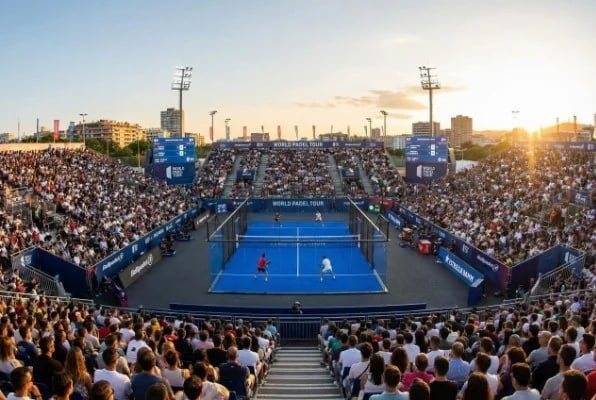
When I visit high-end clubs, the Ultra Panoramic court is always the star of the show. It just looks premium. But structurally, it is quite different from the other two.
My insights tell me that the Ultra Panoramic model has four fewer corner posts than the standard Panoramic model. You might ask, "Tom, if we remove the corner posts, is it safe?" Yes, because we replace that support with a different engineering method. It actually has four more horizontal support beams than the Panoramic model to hold the structure together firmly at the top and bottom.
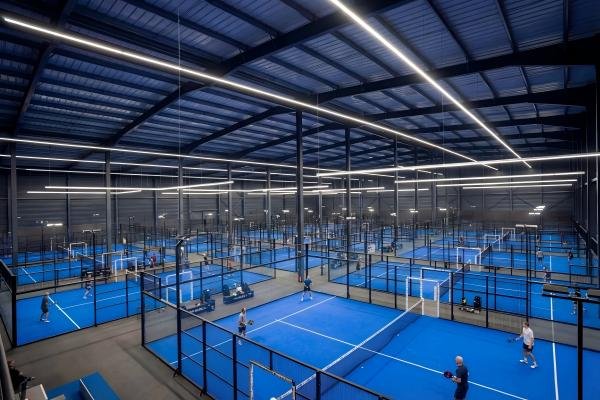
This design creates what we call the "aquarium effect". There is no steel at the corners, just glass meeting glass. This is why it is strongly recommended for indoor use or outdoor areas with low wind. If you are hosting tournaments, this is the only choice because spectators can see the ball from every single angle. While it accounts for about 45% of sales, it is the 100% choice for anyone wanting a luxury feel.
How does the cost vary between Classic, Panoramic, and Ultra Panoramic models?
Are you worried that the best-looking court will break your bank account? You might be surprised to learn that less steel sometimes means a lower price, even if the court looks more expensive.
Typically, the Panoramic and Ultra Panoramic models are priced the same, while the Classic model is actually about $500 more expensive. This is because the Classic model uses significantly more steel material for the extra pillars and reinforced double-column structure.
Many of my clients assume the "fancy" Ultra Panoramic court is the most expensive. But let’s look at the materials. Steel is heavy and costs money to manufacture and ship.
The Classic model is the heavyweight of the group. It has those 12 extra support posts I mentioned earlier. That extra steel adds to the manufacturing cost, making it roughly $500 more per court than the other types.
The Panoramic and Ultra Panoramic models often cost about the same as each other. The Ultra Panoramic uses thicker glass connectors and extra horizontal beams, while the standard Panoramic uses corner posts. These costs tend to balance out.
A complete court from QHPADEL generally ranges from $6,500 to $9,000 FOB. The final price depends on your glass thickness and LED options, but structurally, choosing the "best view" won’t necessarily cost you more. In fact, importing directly from a manufacturer like us in China is the best way to keep these costs low, avoiding the middleman markups.
Can QHPADEL customize the color and turf for all three types of courts?
Do you want your courts to match your club’s logo and branding? Settling for standard generic colors can make your new facility look boring and unconnected to your brand identity.
Yes, we can customize the polyester powder coating color for the steel frame and the dtex or color of the artificial turf for any court model. Standard color options are included in the base price, while specific custom colors may incur a small additional fee.
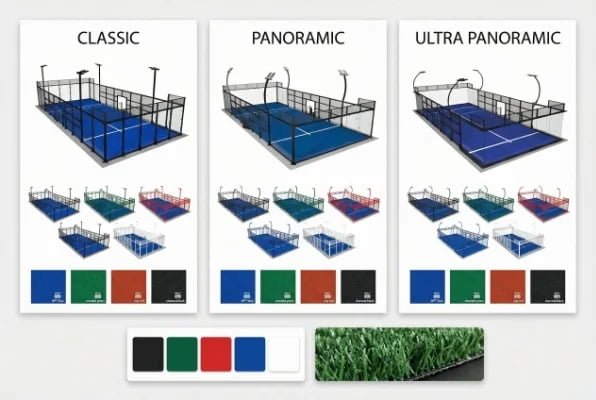
I love seeing the creative designs my clients come up with. Customization is where you can really make your club stand out.
For the steel structure, we use a zinc-rich epoxy primer to prevent rust, followed by a polyester powder coating. You are not stuck with just black or green. If your club logo is red, we can paint the steel red.
For the artificial turf, this is my area of expertise. We usually use 12mm monofilament turf with a density of 7500 dtex or higher. While blue is the most popular color for the World Padel Tour because it looks great on TV, we can produce turf in green, clay red, or even black.
We can even help you put your club logo on the glass or the net tape. I remember helping a client in Mexico who wanted bright pink courts to match his resort’s theme. We adjusted the production line, and the result was stunning. Just remember, standard colors are free, but unique custom blends might add a little to the cost.
Conclusion
To sum up, choose the Classic for wind resistance, the Ultra Panoramic for premium views, and the Panoramic for a balance of both; QHPADEL can customize all of them to fit your budget and brand.