Club owners buy cheap padel courts to save money. These courts break down fast and cost more later. I will show you how to avoid these expensive mistakes.
Low-quality padel courts hide serious risks. They cause player injuries because they have uneven surfaces and poor drainage. They also create huge long-term costs. Club owners face expensive repairs, broken glass, and damaged turf. You prevent financial losses by choosing high-quality materials from the start.
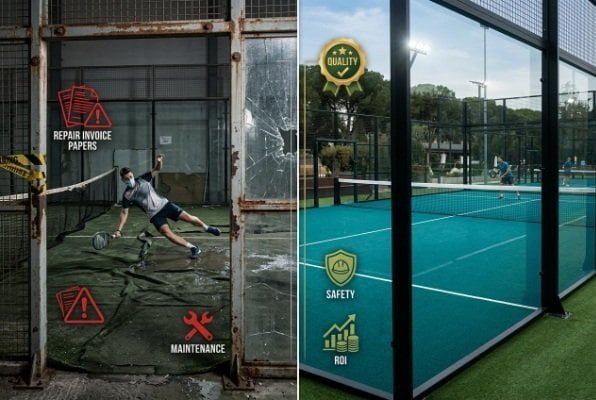
You might think a cheap court is a smart deal right now. But you will soon realize that this choice destroys your budget. You must learn the truth about these hidden costs before you lose your money.
How Does Substandard Padel Court Construction Impact Player Safety and User Experience?
Players hate bad courts. They slip, fall, and get hurt on uneven surfaces. You must build a safe court to keep your players happy and your business highly profitable.
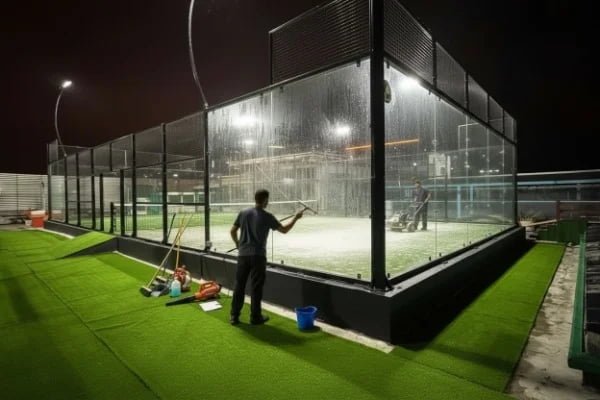
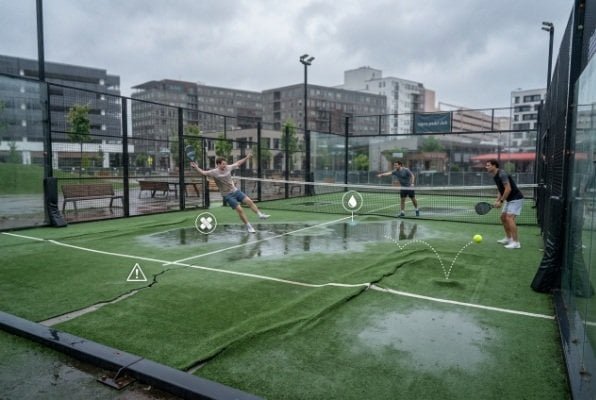
Bad padel courts impact player safety heavily. They cause slips, sprains, and fractures. Uneven surfaces and cracks create dangerous playing conditions. Poor drainage systems leave water on the court. This water makes the floor slippery and ruins the user experience. Players demand a flat and safe surface.
Real Costs of Poor Safety and Bad Experience
I have seen many club owners pay huge compensation for player injuries. A bad court costs you a lot of money in legal fees. Pitch injuries make up a large part of all sports injuries. Uneven surfaces and bad maintenance are the main reasons. An uneven surface is a big problem. Players slip on standing water. They fall down and they hurt their ankles.
Poor drainage systems cause this water problem. Rain stays on the pitch. The rain makes the artificial turf very slippery. This standing water damages the court materials over time. You might live in an area with a lot of rain. A bad drainage system keeps your court closed for days. You lose money every single hour. The court stays empty.
You must understand the real cost of these safety issues. Player experience gets worse fast. The ball bounces poorly. Players talk to each other. They will leave your club if the pitch is bad. I always tell my clients about this. Pitch surface quality is the most important factor for success.
| Problem Area | Immediate Result | Long-Term Business Impact |
|---|---|---|
| Uneven Concrete Base | Bad ball bounce | High legal costs from player injuries |
| Poor Drainage System | Water stays on the court | Damaged turf and lost rental income |
| Cracks in the floor | Unsafe running space | Players leave for a better club |
What Are the Most Common Structural and Material Deficiencies Found in Cheap Padel Courts?
Cheap materials fail quickly. Bad steel bends easily and cheap glass breaks without warning. You need to know these common defects so you can avoid buying terrible junk products.
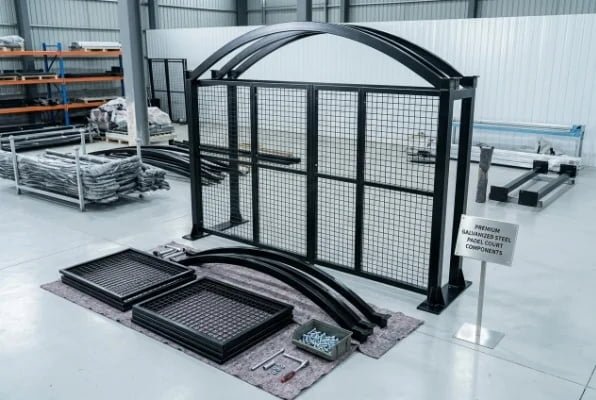
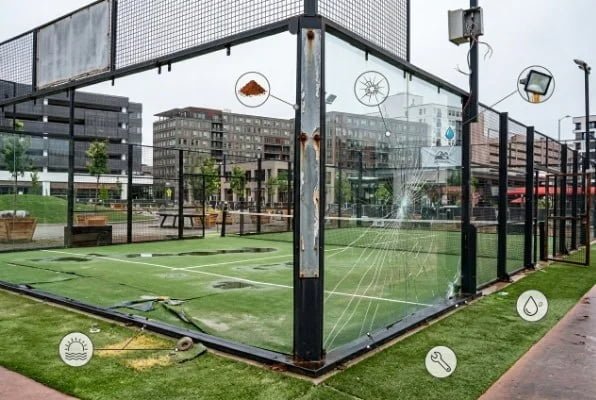
Cheap padel courts have severe structural and material problems. The main problems include uneven concrete bases, thin cold-galvanized steel, and uncertified tempered glass. Installers also use low-quality artificial turf with bad joint treatments. They install cheap LED lights and rust-prone screws. These defects destroy courts quickly.
Factory Secrets Behind Cheap Prices
I started in the technical department of an artificial turf factory. I learned everything about turf there. Then I managed the Padel export sales team. I helped many clients build their courts. I know exactly how factories cut corners. They offer low prices. But low-quality pitches age very quickly. You have to repair them all the time. Good materials save you up to 30% in long-term maintenance costs.
Structural defects start at the base. The concrete cement hardens in an uneven way. This creates big level gaps after installation. This uneven base puts a lot of stress on the steel frame. The steel deforms. This uneven stress causes the heavy glass to break. Broken glass is very dangerous. It is also very expensive.
We also see bad turf work. Workers leave uneven joints. They do not spread the silica sand well. The raw materials are the biggest issue. Factories use thin steel with cold galvanizing. Cold galvanizing rusts fast outdoors. You need hot-dip galvanizing. They also use SBR latex backing for the turf. SBR latex loses its grip on the grass during the rain. The grass fibers fall out. Low-quality turf has a low dtex. The factory does not add enough UV-resistant raw materials. The sun ruins the turf fast. Small factories make the tempered glass without quality checks. Bad suppliers use ordinary screws. They do not use high-quality UV-resistant washers.
| Court Component | Deficient Cheap Material | High-Quality Standard Needed |
|---|---|---|
| Steel Frame | Thin steel, cold galvanized | Thick steel, hot-dip galvanized |
| Court Lighting | Cheap halogen, not IP65 | High-quality LED, IP65 rated |
| Artificial Turf | SBR latex backing, low dtex | High UV resistance, high dtex, PU backing |
| Glass Walls | Small factory, uncertified | CE Certified thick tempered glass |
| Screws and Washers | Ordinary metal, rusts fast | 304 stainless steel, UV washers |
How Can Padel Club Investors Identify Quality Indicators to Avoid "Bottom-Price" Traps?
Dishonest suppliers will trick you with low prices. You might receive cheap parts that do not match your order. You must control the buying process strictly to protect yourself.
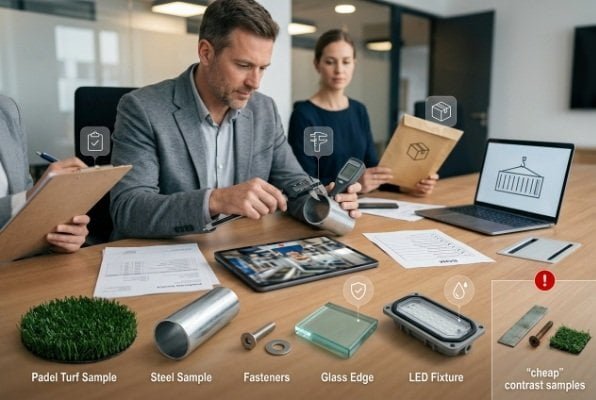
Padel club investors avoid bottom-price traps by demanding detailed Proforma Invoices. You must list every component specification clearly. You need to specify the exact galvanizing method, steel thickness, and screw types. You should also require the supplier to send physical samples before you order.
Strict Buying Rules for Smart Investors
Many buyers tell me their worries. They worry about Chinese suppliers. They fear bad shipments. The supplier might send low-quality goods after taking the money. You must manage this risk. The secret is in the paperwork. The physical proof is also very important.
You must not accept a simple Proforma Invoice (PI). A bad supplier writes "galvanized steel" on the PI. This simple description is a trap. You must force the supplier to write the exact details. The PI must state "hot-dip galvanizing." It must list the exact wall thickness, length, and width of the steel. It must state the tool they use to measure thickness. You must do this for every single item. If they sell lights, the PI must say "IP65 LED." If they sell screws, it must say "304 stainless steel."
I also highly recommend a physical check. You must ask for small samples. You do this before you send the deposit. You hold the small piece of turf in your own hand. You touch the steel sample. You check the quality yourself. This simple step stops many quality problems.
| Verification Step | Bad Buyer Action | Smart Investor Action |
|---|---|---|
| PI Details | Accepts vague descriptions | Demands exact parameters and sizes |
| Physical Check | Trusts pictures only | Requests real samples by mail |
| Quality Control | Waits for the final shipment | Requires instrument testing videos |
Conclusion
Cheap padel courts bring high hidden costs and dangerous risks. You must demand strict quality control, check all materials, and focus on long-term value over low initial prices.