You invested heavily in a premium Padel court, but seeing the turf degrade quickly is frustrating. Why is your artificial grass failing before its expected lifespan?
Padel artificial turf usually suffers damage from extreme heat sources, corrosive chemicals like oil or bleach, physical trauma from sharp objects, and heavy static loads. Additionally, improper installation techniques and neglecting regular maintenance, such as ignoring organic debris, will significantly shorten the lifespan of your court.
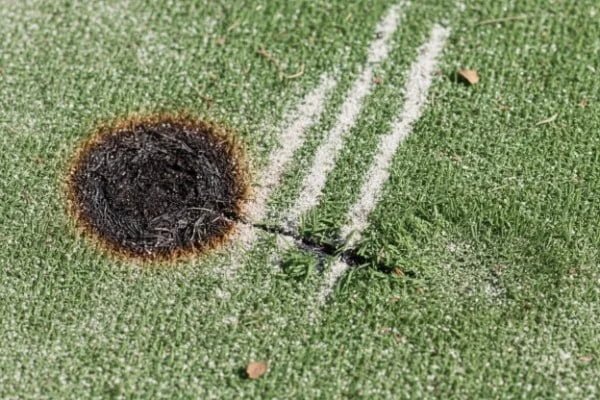
I have seen many court owners panic when they find melted spots or tears on their new courts. Do not worry. We need to understand the root causes first. Then, you can take simple steps to protect your investment and keep players happy.
How Does High Temperature and Sunlight Affect the Durability of Padel Turf?
Your court looks perfect, but suddenly you notice melted patches near the glass walls. Is the sun actually strong enough to destroy durable plastic fibers?
Direct sunlight rarely melts quality turf, but reflected light1 from low-emissivity windows or glass walls creates "hot spots" that scorch fibers. Direct fire sources like cigarettes, fireworks, or hot BBQ coals will instantly melt the polyethylene material, causing irreversible damage.
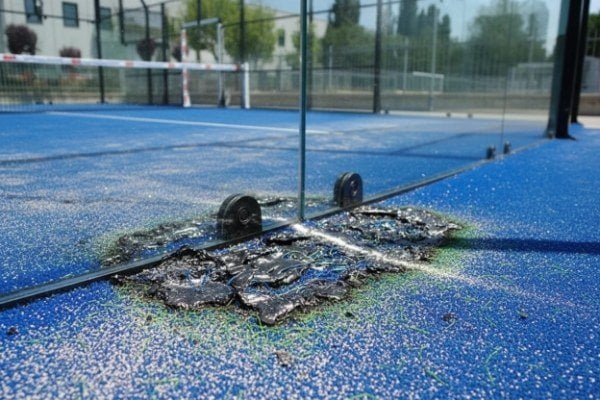
I remember a client in Dubai who called me in a panic. He thought his turf was defective because straight lines of burned grass appeared on the court. We investigated and found out the glass walls were reflecting intense heat onto specific spots. Artificial turf is made of plastic, usually polyethylene. It handles weather well, but it has a specific melting point. When heat exceeds this limit, the fibers fuse together.
You must be vigilant about fire sources. Cigarettes are the most common enemy. I always tell club owners to put strict "No Smoking" signs near the court entrance. Even a small ember can fuse the fibers into a hard lump.
Reflection is a trickier problem. The glass panels on a Padel court or nearby building windows can act like a magnifying glass. If the sun hits the glass at a specific angle, the heat intensifies on the turf surface. This is called the "magnifying glass effect."
Here is a breakdown of heat sources and how to manage them:
| Heat Source | Effect on Turf | Prevention Strategy |
|---|---|---|
| Open Flame | Instantly melts fibers into hard plastic lumps. | Ban smoking and fireworks near the court. |
| Reflected Sunlight | Creates "hot spots" that scorch or fade areas. | Install anti-glare screens2 or window films. |
| Hot Objects | BBQ grills or hot tools melt the contact point. | Keep maintenance equipment cool before placing it down. |
To fix reflection issues, you can install anti-glare screens or use specific window films on the glass. This simple step saves you from replacing expensive patches of turf later.
What Substances and Stains Can Permanently Damage Synthetic Grass Fibers?
Spills happen during matches or maintenance, but do you know which liquids act like poison to your court? Some cleaners do more harm than good.
Petroleum-based products, strong acids, and harsh bleaches will degrade the turf backing and fade the fiber colors permanently. Sticky substances like chewing gum are difficult to remove without pulling out fibers, while organic waste can encourage mold and bacterial growth.
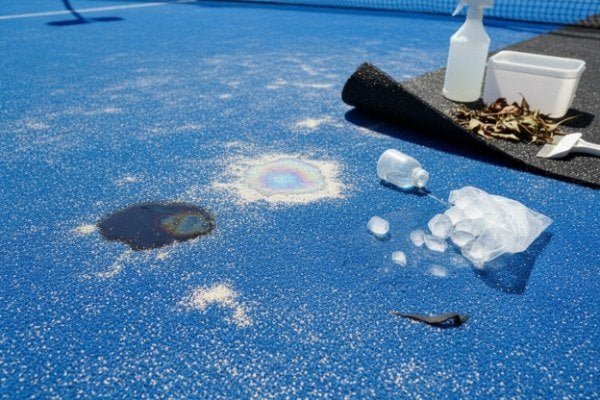
I once visited a court where the maintenance team used strong industrial bleach to clean a soda spill. The grass turned white and brittle within days. You must be very careful with what touches the fibers. The backing of the turf relies on latex or PU (Polyurethane), and harsh solvents can eat through it. Once the backing is damaged, the fibers will fall out.
Avoid engine oil, grease, or pesticides meant for natural grass. They create a chemical reaction with the synthetic materials. If you use gas-powered maintenance tools, refuel them away from the court. Spilled gasoline is a disaster for artificial turf.
Chewing gum is another headache. If a player drops gum, do not try to pull it off immediately. You will rip the fibers out with it. I suggest using ice to freeze the gum first. Once it is hard and brittle, you can scrape it off easily with a plastic knife.
For most spills, like sports drinks, coffee, or even pet accidents, mild soapy water is your best friend. Rinse the area quickly. Acting fast prevents the stain from setting into the backing.
Use this guide for safe cleaning:
- Loose Debris: Use a leaf blower or plastic rake.
- Sticky Gum: Freeze with ice, then scrape.
- Liquid Spills: Rinse with water and mild soap.
- Avoid: Bleach, gasoline, battery acid, and oil-based paint.
How Do You Prevent Physical Wear and Tear caused by Sharp Objects and Heavy Loads?
You might think your turf is indestructible because players run on it daily. However, specific tools and objects can destroy the structure instantly.
Sharp metal objects like high heels, metal rakes, or cleats can cut the fibers and puncture the backing. Heavy static loads, such as furniture or equipment left in one spot for too long, will permanently flatten the grass blades.
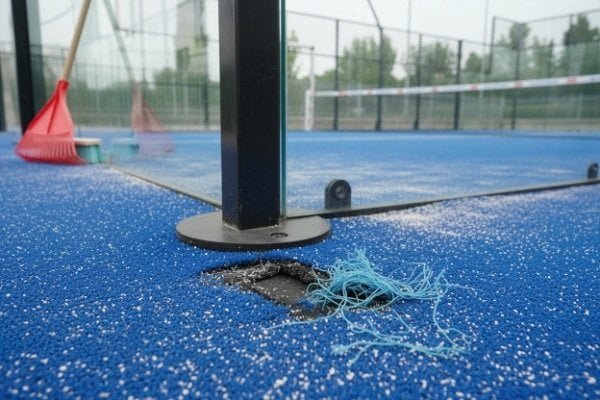
During a site visit in Mexico, I saw a worker using a metal rake to spread silica sand. He was tearing the fibers with every pull. This is a painful sight for an engineer like me. Padel turf is designed for rubber soles, not sharp metal. Even high heels can punch holes in the backing layer, which ruins the drainage system.
You should always use plastic tools for maintenance. A soft bristle broom is perfect for redistributing silica sand. Never use metal rakes or shovels directly on the surface. If you need to remove snow or heavy debris, use a plastic shovel with a rubber edge.
Also, watch out for heavy furniture. I often see owners placing benches or heavy advertising boards on the turf. If you place a heavy object on the turf for weeks, the fibers will crush. They might not bounce back. It is like a carpet in your home; heavy weight leaves a permanent mark.
Here is how to manage physical contact on your court:
| Object Type | Potential Damage | Best Practice |
|---|---|---|
| Footwear | High heels or metal studs puncture backing. | Enforce "Sports Shoes Only" rules. |
| Tools | Metal rakes cut fibers. | Use plastic rakes and soft brooms. |
| Furniture | Crushes fibers flat. | Rotate furniture items or use wide coasters. |
| Vehicles | Heavy tires rip seams. | Do not drive cars or heavy trucks on the turf. |
If you must put equipment on the court, move it frequently. This distributes the weight. Treat the surface with respect, and it will last for years.
What Common Installation and Maintenance Mistakes Lead to Premature Turf Failure?
You bought the best turf, but the court looks uneven and loose after six months. Is the product bad, or was the process wrong?
Poor foundation compaction leads to dangerous settling and wrinkling of the surface. Furthermore, inadequate joint adhesion causes gaps and curling edges that trip players. Neglecting pet waste and drainage maintenance allows bacteria to thrive and bad odors to linger.
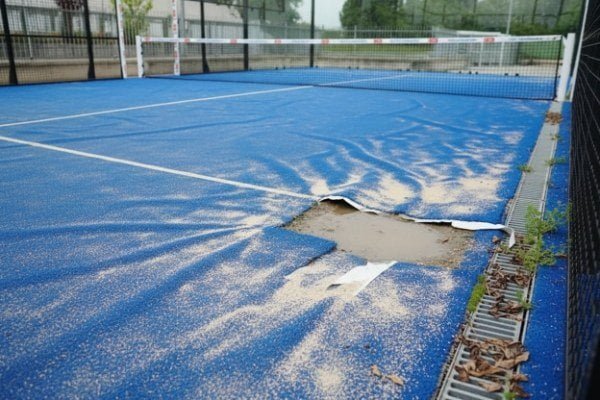
I recall a project where the client tried to save money by doing the foundation himself. The ground was not compacted enough. After the first heavy rain, the ground sank, and the turf wrinkled like an old bedsheet. The foundation is just as important as the turf itself. If the base is not stable, the turf will fail.
Another common issue is the seams. If the glue is not applied correctly or the joint tape is cheap, the seams will split. This creates a tripping hazard for players. I always recommend hiring certified professionals for the installation. They know how to handle the specialized glue and tape we use in this industry.
Finally, keep pets off the court. I love dogs, but their waste is bad for Padel courts. Urine creates strong odors and bacteria that are hard to wash out. If it happens, you need to use an enzyme cleaner, not just water.
Summary of mistakes to avoid:
- Weak Foundation: Leads to sinking and wrinkles. Ensure professional compaction.
- Bad Seaming: Causes tripping hazards. Use high-quality glue and tape.
- Poor Drainage: Causes moss and mold. Check the slope of the base.
- Ignoring Weeds: Roots damage the backing. Use a weed barrier cloth underneath.
Regular maintenance is not just about cleaning; it is about inspection. Check your seams and level the sand regularly. Small fixes now prevent big failures later.
Conclusion
To protect your Padel court, avoid high heat, harsh chemicals, and sharp objects. Ensure professional installation and perform regular cleaning to extend the lifespan of your artificial turf.