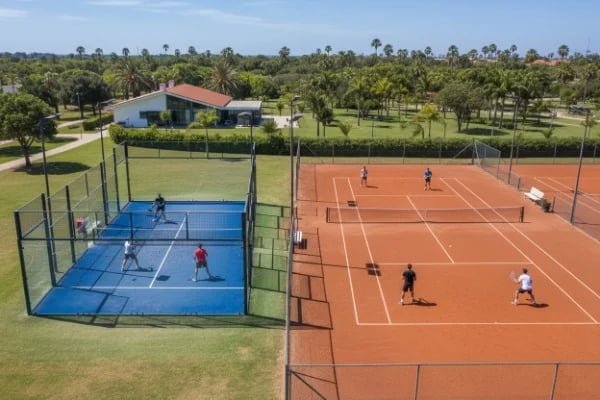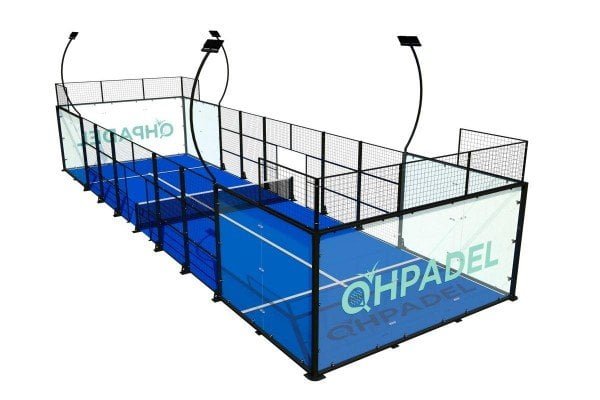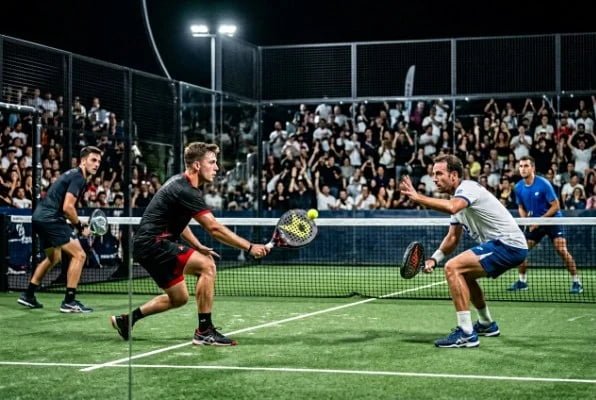

You finally booked a padel court, but as you pack your gym bag, a common question pops up: are padel shoes different from tennis shoes? Wearing the wrong footwear on a sand-filled padel court leads to frustrating slips, slow reaction times, and even serious ankle sprains. Fortunately, understanding the specific grip and support you need is simple once you look at the court surface.
Yes, padel shoes are slightly different from tennis shoes because they are designed for sand-infilled artificial grass rather than hard courts. Padel shoes feature a deeper herringbone or dot-pattern tread for maximum grip on shifting silica sand. They also offer higher flexibility for 360-degree pivoting and added durability to withstand scraping against the court’s glass and metal walls.
Before you rush out to buy entirely new gear, let’s break down exactly why these differences exist. As a court manufacturer, I look at footwear from the ground up—starting with how your shoes interact with the turf.
Why do padel shoes need a different grip for artificial grass?
Have you ever tried sprinting on a sandy surface in regular running shoes? You lose traction instantly and end up sliding out of control. To understand why padel shoes are different from tennis shoes, you must first look at the unique construction of a padel court surface.
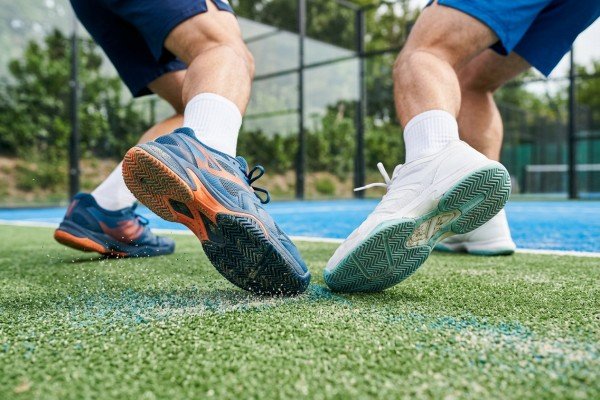
Padel shoes require a specialized grip to penetrate the layer of silica sand that sits on top of artificial grass. Unlike flat hard tennis courts, this sandy turf requires a deep herringbone or omni-court dot pattern to lock into the fibers and prevent dangerous slips.
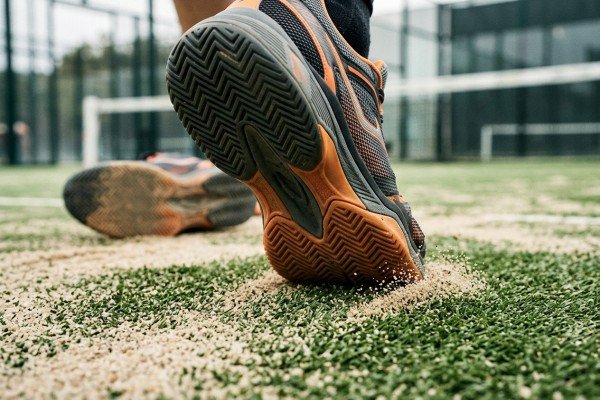
As a manufacturer of padel court systems, I spend a lot of time analyzing the physics of artificial grass. Standard padel courts use turf fibers that are typically 10mm to 12mm high. We then infill this turf with fine silica sand. The sand keeps the grass blades standing upright, provides a consistent bounce for the ball, and protects the backing from wear.
However, this loose sand acts like a layer of micro-marbles under your feet. If you wear standard running shoes with a flat or shallow tread, you will ski across the surface. Hard court tennis shoes face a similar problem. Their tread patterns are designed to allow a controlled slide on abrasive acrylic hard courts, but they simply do not bite deeply enough into artificial grass.
When I test a new batch of artificial turf at our factory, I notice immediately if I am wearing flat-soled sneakers. Walking across unbrushed sand feels unstable. Padel shoes solve this friction problem entirely. Their outsoles are engineered with deep, sharp zig-zag grooves (the herringbone pattern) that bite through the loose sand and grip the actual turf fibers beneath.
| Feature | Hard Court Tennis Shoe | Padel Shoe |
|---|---|---|
| Primary Surface | Acrylic or concrete | Sand-infilled artificial grass |
| Tread Depth | Shallow | Deep |
| Sole Pattern | Modified herringbone or mixed | Sharp herringbone or omni-dots |
| Traction Goal | Controlled sliding | Immediate grip on loose sand |
How does court size make padel shoes different from tennis shoes?
If you play tennis, you are used to long lateral sprints along the baseline. But if you bring those exact movements into a smaller padel court, you will quickly find yourself crashing into the glass walls.
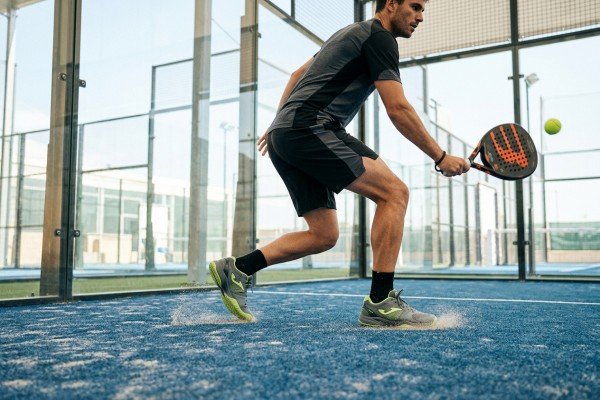
Movement in padel is completely different from tennis, requiring footwear that supports rapid, multidirectional shifts. Padel players execute sudden stops, 360-degree pivots, and frequent forward dashes, demanding more rotational flexibility in the sole compared to the heavy lateral support found in tennis shoes.
A standard tennis court offers a vast, open baseline. Tennis players plant their feet and push off side-to-side repeatedly. Because of this, tennis shoes are heavily reinforced on the outer edges to stop the foot from rolling over during aggressive lateral slides.
A padel court is much smaller, measuring exactly 10 by 20 meters, and enclosed by walls. You simply do not have the space for long lateral sprints. Instead, the sport demands explosive agility. You will constantly sprint forward to retrieve a drop shot, backpedal rapidly for an overhead smash, and quickly turn your back to the net to chase a ball rebounding off the glass.
Because of these biomechanics, padel shoes are built for multi-directional agility. If you examine the sole of a modern padel shoe, you will often spot circular patterns near the ball of the foot. These are "pivot points."1 They allow a player to plant their foot and rotate their body 360 degrees smoothly without the shoe catching on the turf. If you attempt these rapid spins in a rigid tennis shoe, the grip can lock up, putting harsh twisting stress on your knees and ankles.
What are the unique wear zones on padel shoes vs tennis shoes?
You buy an expensive pair of standard tennis shoes, only to find the sides scuffed and peeling after a few padel matches. The enclosed nature of a padel court destroys unreinforced footwear surprisingly fast.
Padel shoes feature strategic rubber reinforcements on the upper sides and toes to withstand the unique friction of the game. Because players constantly scrape their feet against the abrasive metal mesh fencing and glass walls, padel shoes require thicker protection in areas where standard tennis shoes remain exposed.
When we design and manufacture our panoramic padel courts, we use heavy-duty tempered glass and electro-welded steel mesh panels. These materials ensure structural integrity, but they are unforgiving on footwear.
In tennis, the primary wear zone is the toe box. Players drag their toes during serves and lunges, so manufacturers wrap durable rubber over the front of the shoe. Padel shares this toe-drag wear, but introduces a completely new set of friction zones.
During a tight rally in padel, players frequently dig their feet into the extreme corners of the court. You will often scrape the medial (inside) and lateral (outside) edges of your shoes directly against the wire mesh panels. The abrasive nature of this metal mesh acts like a cheese grater on soft shoe fabrics.
To combat this, padel shoes feature elevated rubber bumpers and protective overlays that wrap higher up the sides of the shoe. A standard tennis shoe simply lacks this side-wall armor. Without it, the fabric upper of a tennis shoe will tear open long before the rubber sole wears out.
Can you wear clay court tennis shoes for padel?
Buying a dedicated pair of shoes for a sport you are just trying out feels like an unnecessary expense. If you already have a closet full of sports gear, you might wonder if anything you own will work safely on the turf.
Yes, clay court tennis shoes are an excellent alternative to dedicated padel shoes. Both surfaces require maximum grip on loose particles (clay dust vs. silica sand). A clay court shoe features the same deep herringbone tread needed to grip artificial grass safely, making it a highly viable option.
As a professional in the court manufacturing industry, I want to be entirely clear: you do not strictly have to buy brand-new padel shoes if you already own clay court tennis shoes. I never recommend normal running shoes, as they present a severe injury risk on sand. But clay court shoes are perfectly safe.
A clay tennis court is covered in a layer of fine crushed brick.2 Players need a shoe that bites through that dust to find traction. To achieve this, clay court shoes use a deep, sharp herringbone tread pattern. This exact same physical mechanism applies perfectly to the silica sand on an artificial grass padel court.3 The sharp zig-zags channel the sand out from under the shoe, allowing the rubber to grip the turf fibers directly.
There are minor differences to note. Pure padel shoes usually have specific pivot circles for easier turning, and their herringbone tread might be slightly deeper than a clay shoe’s tread. However, for beginners and intermediate players, these differences are negligible.
If a club operator buys a court from us and asks how to advise new players on footwear, I always give this ranking:
- Best: Dedicated padel shoes (perfect grip, pivot points, side durability).
- Excellent Alternative: Clay court tennis shoes (great grip, safe for turf).
- Mediocre: Hard court tennis shoes (poor grip, increased slipping risk).
- Dangerous: Running or gym shoes (no lateral support, extreme slipping hazard).
Are padel shoes different from tennis shoes in flexibility and support?
Stiff shoes might make you feel secure, but on a padel court, a rigid sole will slow down your reaction time and tire out your calves. You need a shoe that moves precisely with your foot.
Padel shoes are generally more flexible and lighter than tennis shoes. Because padel relies on quick, short bursts of speed rather than long baseline sprints, the shoe’s forefoot must flex easily.4 Heavy, stiff tennis shoes can feel clunky and unresponsive during rapid net exchanges.
The physical impact on your joints differs between the two sports, largely dictated by the court surface. Hard tennis courts are made of acrylic over asphalt or concrete.5 They are completely unforgiving. Consequently, hard court tennis shoes require massive amounts of dense shock absorption and stiff midfoot shanks to prevent foot fatigue during hours of heavy pounding.
Padel courts offer a slightly softer experience. The 12mm artificial grass, combined with the silica sand layer, provides a minor but noticeable cushioning effect over the concrete base. Because the surface absorbs some of the shock, padel shoes can afford to be slightly lighter and closer to the ground.
You spend a significant portion of a padel match on the balls of your feet, anticipating the next unpredictable bounce off the glass. This ready stance requires a shoe with a highly flexible forefoot. The sole of a padel shoe often incorporates deeper flex grooves, allowing the front half of your foot to bend naturally. If you wear a heavy, stiff hard-court tennis shoe, you will feel slightly disconnected from the turf, making those split-second forward lunges feel sluggish.
Frequently Asked Questions
Can I use running shoes for padel?
No, you should never use running shoes for padel. Running shoes have flat treads designed for forward motion on asphalt. On a sand-filled artificial grass court, they provide zero grip, creating a high risk of slipping, falling, and suffering severe ankle sprains.
What is the best sole pattern for a padel shoe?
The best sole pattern is a deep herringbone (zig-zag) tread or an omni-court dot pattern. Both designs effectively channel the loose silica sand outward, allowing the rubber outsole to securely grip the artificial grass fibers underneath.
Will hard court tennis shoes damage a padel court?
No, hard court tennis shoes will not damage the artificial grass or the court structure. However, their shallow tread patterns will clog with sand, leaving you with very little traction. You are at a disadvantage, but the court itself is perfectly safe.
How long do padel shoes last?
Depending on your playing frequency, padel shoes typically last between 6 to 12 months. The abrasive nature of the silica sand wears down the rubber outsole, while scraping against the metal mesh and glass walls degrades the upper materials over time.
Conclusion
So, are padel shoes different from tennis shoes? Yes, the differences are highly practical and rooted in the court’s physical environment. Padel shoes provide the exact deep tread needed to conquer slippery silica sand, the multi-directional flexibility required for 360-degree pivoting, and the specialized durability to survive enclosed glass and metal walls. While clay court tennis shoes serve as a safe and excellent substitute, investing in proper footwear will always elevate your game and protect your ankles.
If you are a club operator, sports facility investor, or contractor looking to build professional-grade courts, the right surface matters just as much as the right footwear. At QHPADEL, we manufacture premium artificial grass and complete padel court systems designed for optimal player safety and performance. Contact us today to explore our customizable court solutions.
-
"Comparison of Rotational Traction of Athletic Footwear on …", https://plantscience.psu.edu/research/centers/ssrc/documents/2013tractionreport.pdf. Biomechanical studies on court footwear indicate that circular outsole geometries, commonly referred to as pivot points, are engineered to reduce rotational friction and facilitate rapid changes of direction while minimizing torsional stress on the lower extremities. Evidence role: mechanism; source type: paper. Supports: The function of circular outsole patterns in reducing rotational friction during pivoting movements.. Scope note: The effectiveness of pivot points depends heavily on the interaction with the specific court surface. ↩
-
"Clay court – Wikipedia", https://en.wikipedia.org/wiki/Clay_court. The International Tennis Federation (ITF) classifies traditional red clay courts as unbound mineral surfaces, typically constructed with a top layer of finely crushed brick or shale. Evidence role: definition; source type: institution. Supports: The material composition of traditional red clay tennis courts.. ↩
-
"(PDF) Optimal Frictional Properties for Sport Shoes and …", https://www.academia.edu/72555297/Optimal_Frictional_Properties_for_Sport_Shoes_and_Sport_Surfaces. Research on footwear-surface interactions shows that deep herringbone tread patterns effectively displace loose particulates—such as clay dust or silica sand—allowing the outsole to engage with the stable substrate beneath and maintain optimal traction. Evidence role: mechanism; source type: paper. Supports: The efficacy of herringbone tread patterns in generating traction on loose, particulate-covered sports surfaces.. Scope note: While the traction mechanism is similar, clay shoes may lack the specific upper reinforcements needed for the abrasive walls of a padel court. ↩
-
"Padel Shoes Vs. Tennis Shoes: The Ultimate Guide", https://www.wilson.com/en-us/blog/tennis/wilson-labs/padel-shoes-vs-tennis-shoes-ultimate-guide. Comparative analyses of court footwear indicate that shoes designed for sports with smaller court dimensions, like padel and squash, prioritize lower mass and higher forefoot flexibility to optimize for rapid, short-distance accelerations, whereas tennis shoes prioritize lateral stiffness and heavier cushioning for baseline stability. Evidence role: general_support; source type: paper. Supports: The design emphasis on forefoot flexibility and reduced weight in padel footwear compared to traditional tennis shoes.. Scope note: High-end tennis shoes designed specifically for speed may also feature lightweight and flexible profiles similar to padel shoes. ↩
-
"Hard court", https://en.wikipedia.org/wiki/Hard_court. According to the International Tennis Federation (ITF) surface classifications, hard courts are typically constructed using a rigid base of asphalt or concrete coated with pigmented acrylic or polyurethane layers. Evidence role: definition; source type: institution. Supports: The standard construction materials of hard tennis courts.. ↩