
Do you struggle to find four players for a padel match? Waiting for others wastes your valuable time. You can play one-on-one padel to keep your training on track.
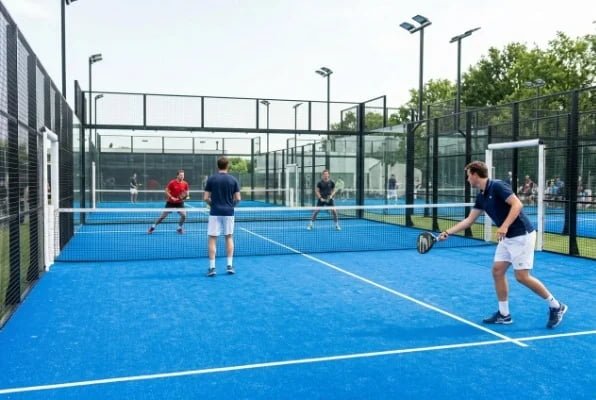
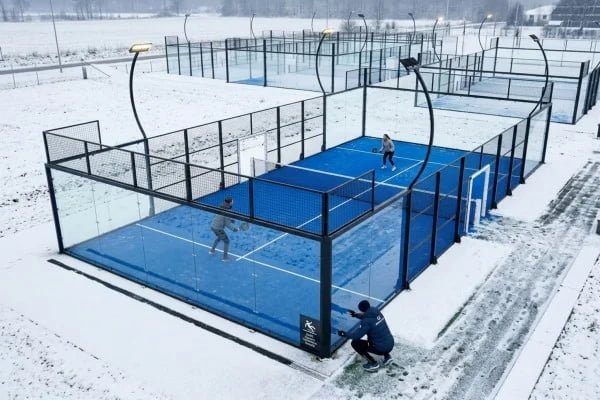
Yes, you can play padel 1 vs 1. A dedicated singles court measures 20 by 6 meters. You can also play on a standard 20 by 10 meters doubles court by adjusting the rules. Singles play improves your agility, stroke technique, and physical endurance.
You might think padel is only for four players. Let me show you how one-on-one matches work so you can start playing today.
What Are the Rules for Playing Singles Padel?
Do singles rules confuse you? Playing without clear guidelines leads to arguments on the court. Understanding the right rules makes your 1-on-1 matches fair and fun.
The rules for singles padel are almost identical to doubles. The server must hit the ball diagonally into the service box. On a dedicated 20 by 6 meters singles court, you play the whole width. Scoring remains the same as standard doubles padel.
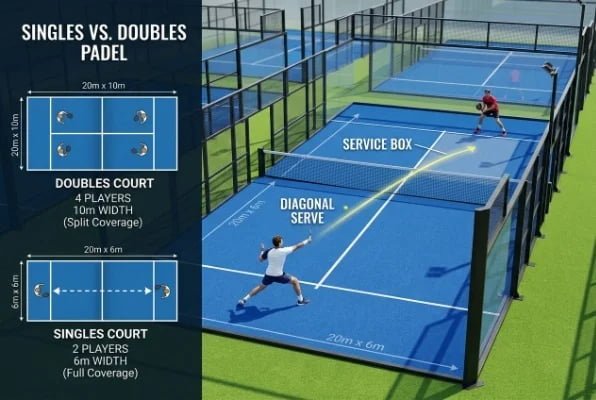
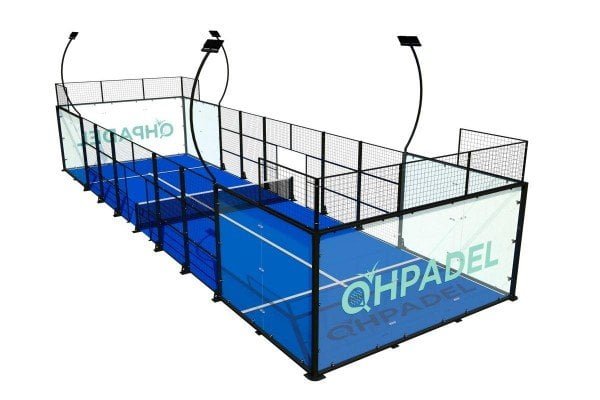
When you play singles on a dedicated court, the game changes. I worked with many club owners who buy our artificial turf. They often ask me about singles courts. A standard doubles court measures 20 by 10 meters. A specialized singles court measures 20 by 6 meters. This narrower width changes how you play the game.
Singles Court Structure
On a singles court, you cover a larger area by yourself. You do not have a partner. You need extremely fast footwork to reach the ball. You also need physical stamina to keep moving.
Key Rule Differences
Here is a clear comparison between standard doubles rules and dedicated singles rules.
| Feature | Doubles Padel | Singles Padel |
|---|---|---|
| Court Size | 20 x 10 meters | 20 x 6 meters |
| Number of Players | 4 (2 vs 2) | 2 (1 vs 1) |
| Service Rule | Diagonal into service box | Diagonal into service box |
| Area to Cover | 5 meters width per player | Full 6-meter width alone |
You use different strategies in singles matches. You rely on varied shot selections. You aim to exploit the weak side of your opponent. You place the ball into empty spaces. Singles play forces you to rely entirely on your own skills. This format tests your endurance from start to finish. You must patrol the entire 6-meter width without rest. I always tell my buyers that a singles court is a great addition to any sports facility. It offers players a fast and focused workout.
Can you play singles padel on a doubles court?
Do you lack a dedicated singles court nearby? Playing one-on-one on a huge doubles court feels impossible. You can easily fix this with simple cross-court practice rules.
Yes, you can play singles on a standard doubles court. But the 20 by 10 meters court is too wide for two people. Players use "cross-court" rules. You serve diagonally. After the serve, you must hit all shots diagonally across the center line.
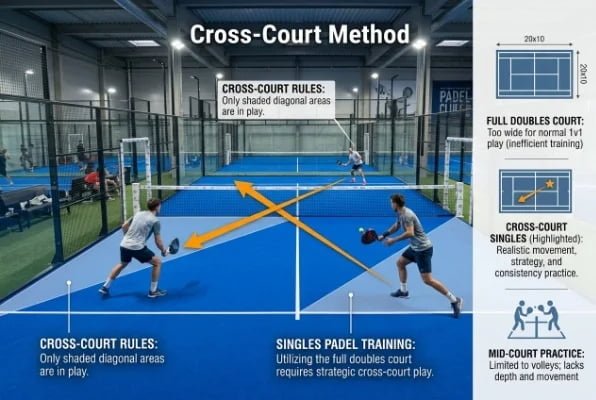
Many overseas buyers tell me they only have space for standard 20 by 10 meters courts. You can still play 1 vs 1 on these standard doubles courts. But a standard court is too big for one person to defend. Playing the full 10-meter width requires impossible reaction times. You will quickly exhaust yourself.
The Cross-Court Method
To fix this problem, players use cross-court practice. One player stands on the right side. The other player stands on the opposite left side. You serve the ball diagonally as usual. During the rally, every shot must cross the center line diagonally. If your ball lands straight ahead on the wrong side of the center line, the ball is out.
Why Cross-Court Works
This rule mimics real match conditions very well. It gives you optimal shot fluidity. You practice many different strokes in a realistic way.
| Practice Type | Court Area Used | Main Benefit |
|---|---|---|
| Full Court 1v1 | Entire 20x10m | Extreme fitness test, but too difficult |
| Cross-Court | Diagonal halves | Real match simulation, pure stroke focus |
| Mid-Court | Center strip area | Good for volleys, but limits stroke variety |
You can also practice by hitting the ball straight down the middle line. We call this mid-court practice. But mid-court practice limits the number of stroke variations you can use. I always suggest cross-court training for 1-on-1 games on a big court. It helps you perfect your technique safely before you play a real doubles match.
What Are the Key Benefits of Playing Padel 1-vs-1?
Do you feel tired during long doubles matches? Poor stamina causes you to lose points late in the game. Singles padel builds your strength and fixes your endurance issues.
Playing padel 1-vs-1 builds your physical stamina and refines your stroke technique. You return every ball yourself. This improves your footwork and stability. It gives beginners repetitive practice and helps professional players focus on specific technical skills.
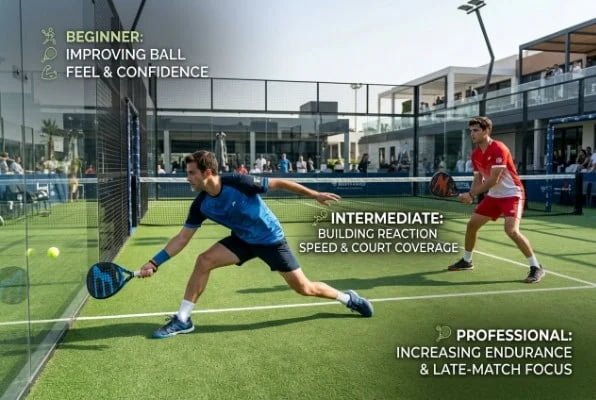
Singles padel is a great format for players of all skill levels. In my job as a sales manager, I see many clubs buy premium turf for singles courts. They do this to offer specialized training to their members.
Benefits for Beginners
Standard doubles matches feel chaotic for new players. One-on-one padel removes the pressure of letting a partner down. Beginners hit the ball many times without stopping. This repetitive practice builds strong muscle memory. You quickly improve your feel for the ball. You slowly get used to the court environment at your own pace.
Benefits for Professionals
Professional players also love the singles format. They use it daily to isolate and refine specific skills.
| Player Level | Main Benefit | End Result |
|---|---|---|
| Beginner | High repetition rate | Better ball feel and increased confidence |
| Intermediate | Intense footwork drill | Faster reaction times and court coverage |
| Professional | Extreme stamina build-up | High focus during late match stages |
Singles padel is the best way to build endurance. In a standard doubles match, your partner takes half the shots. In singles, you return every incoming ball by yourself. You stand alone on your side of the net. This forces your body to adapt quickly. Your legs grow much stronger. Your breathing capacity increases. Later, you return to normal doubles games. You feel fresh and fast. You keep your mental focus sharp even during long contests.
Conclusion
Playing 1-vs-1 padel is highly beneficial. You can use a dedicated singles court or play cross-court on a doubles court to boost your stamina and improve your skills.