You want to build a padel club but feel overwhelmed by complex supplier options. Finding a reliable factory is the difference between a profitable business and a construction nightmare.
A professional padel court factory provides end-to-end solutions, not just materials. This includes site analysis, manufacturing three standard court types (Panoramic, Ultra-Panoramic, Classic), strict quality control, logistics handling, and post-installation support. They ensure every component, from turf to glass, meets safety standards for long-term durability.
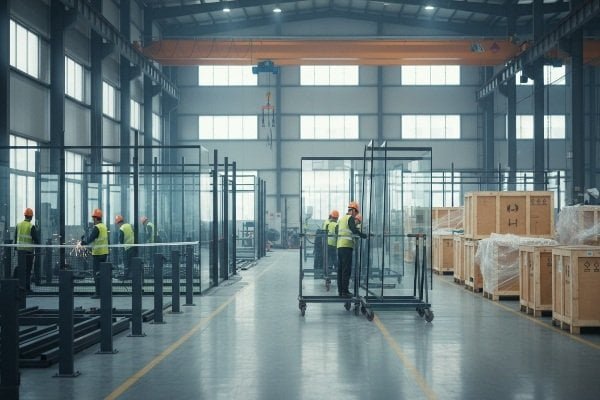
Many buyers think all factories are the same. They choose the cheapest option and regret it later. I have seen projects fail because of this mistake. You need to know exactly what to look for.
What Types of Padel Courts Can a Factory Manufacture?
Choosing the wrong court model for your specific location wastes money and disappoints players. You need to understand the structural differences to maximize your investment return.
Factories typically produce three main styles. The Panoramic court offers a balance of view and stability. The Ultra-Panoramic provides a 360-degree view for tournaments. The Classic court uses reinforced columns for maximum durability in harsh weather conditions like typhoons.
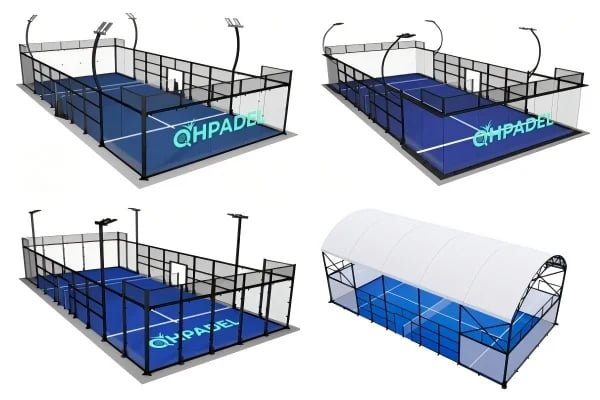
I analyze our 2025 sales data to help you understand market trends. We see a clear preference in the industry, but the "best" court depends on your specific needs. I break down the three distinct styles we manufacture at QHPADEL.
The Panoramic Padel Court is the market leader. It accounts for 50% of our total sales. This design is popular for a reason. It is not an "ultra-panoramic" court that relies only on glass. It is also not a "classic" court with blocked views. It is a hybrid. We place steel columns only at the four corners. This improves wind resistance. It keeps the structure stable. Yet, it maintains a clear view for players and spectators.
The Ultra Panoramic Padel Court follows closely at 45% of sales. I recommend this for high-end clubs and center courts. We eliminate structural steel columns at the corners completely. We use high-strength connectors to join the glass panels. This creates a 360-degree unobstructed view. We call this the "aquarium effect." It is perfect for camera angles in professional tournaments like the World Padel Tour (WPT).
The Classic Padel Court makes up about 4% of sales. Do not let the low number fool you. This model is a beast. It features a "double column" system. We reinforce steel columns between every glass panel. Aesthetics take a back seat here. Durability is the priority. I advise clients in coastal cities or islands to choose this. It withstands typhoons and heavy wind pressure better than any other design.
Less than 1% of our production involves special custom models. This includes single courts, children’s courts, or portable courts. Sunshades and roofs are upgrades applicable to the three main models.
| Court Model | Market Share | Key Feature | Best Use Case |
|---|---|---|---|
| Panoramic | 50% | Corner Columns Only | Commercial Clubs, Standard Match Play |
| Ultra Panoramic | 45% | Zero Corner Columns | Premium Venues, TV Broadcasting |
| Classic | 4% | Double Column System | Coastal Areas, High Wind Zones |
Which Materials Define Court Quality?
Poor quality materials look fine on day one but fail after six months. Replacing a rusted structure or worn-out turf costs more than the initial court price.
The most critical component is artificial turf, which requires 7500 dtex and PU backing. Tempered glass must meet EN12150-2 standards for safety. Steel structures need zinc-rich epoxy primer1s to prevent rust. High-quality LED lighting ensures years of maintenance-free operation.
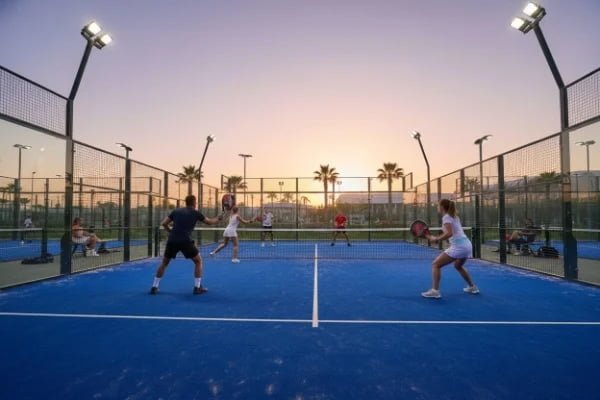
I spent years as an artificial turf engineer. I know that material specifications determine the lifespan of your court. You must pay attention to four specific components. If a factory cuts corners here, you will pay for it later.
1. Artificial Turf
This is the most wear-resistant component. It takes the most abuse. I insist on using turf with a density of 7500 dtex or higher. The backing adhesive matters immensely. We use PU (polyurethane) backing. It resists water and aging better than latex. Installation requires a two-component polyurethane adhesive. This is the minimum requirement. It ensures maximum firmness. It prevents the turf from lifting after heavy rain.
2. Tempered Glass
Glass is integral to the game. Players crash into it constantly. Safety is my top priority here. The glass must meet the EN12150-2:2004 standard. We test for an impact resistance of at least 300 kg. This ensures the glass withstands heavy body checks without shattering.
3. Steel Structure
Rust is the enemy of outdoor courts. Salt and moisture attack steel aggressively. We use a zinc-rich epoxy primer. This is not just paint. It contains sacrificial zinc powder. The zinc corrodes before the steel does. This effectively slows down rust. It extends the structural life significantly.
4. LED Lighting
Changing bulbs 6 meters in the air is expensive. We use high-quality IP65 fixtures. They are dust-tight and water-resistant. They ensure 5 to 10 years of operation without maintenance. This reduces your long-term operating costs.
| Component | Critical Spec | Why it Matters |
|---|---|---|
| Turf | 7500+ dtex, PU Backing | Durability against foot traffic |
| Adhesive | 2-Component Polyurethane | Waterproofing and firm hold |
| Glass | EN12150-2, 300kg Impact | Player safety during impact |
| Steel | Zinc-rich Epoxy Primer | Corrosion resistance |
| Lights | IP65 Rating | Low maintenance costs |
How Much Does a Padel Court Cost and What Impacts the Price?
Hidden costs and vague quotes can destroy your project budget. You need a clear breakdown of pricing to plan your financial strategy effectively.
A standard QHPADEL court typically ranges from FOB $6,500 to $9,000 per court. The final price depends on the court model, total quantity ordered, and customizations like steel colors, turf types, or laser-cut logos on the glass.
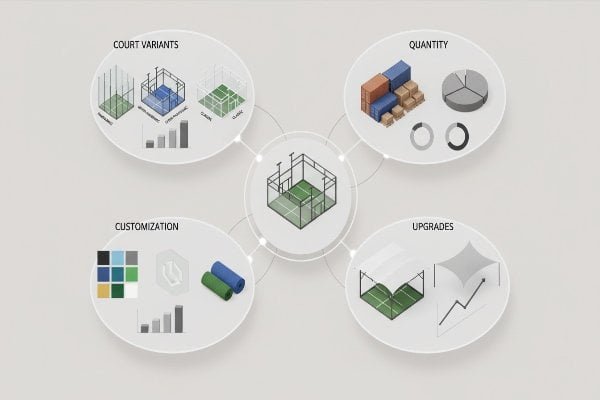
Price is always the first question I get. I believe in transparency. The range of $6,500 to $9,000 (FOB) is a standard baseline. You need to understand what moves this number up or down. It allows you to budget accurately.
The Model Choice
This is the biggest factor. An Ultra Panoramic court uses thicker glass fittings and specialized connectors. It costs more to manufacture than a Classic court. The engineering required for the "aquarium view" adds to the price.
Order Quantity
Manufacturing has economies of scale2. Setting up the production line takes time. If you order one court, you pay for that setup. If you order ten courts, we spread that cost. Shipping costs also drop per unit when you fill a container.
Customization
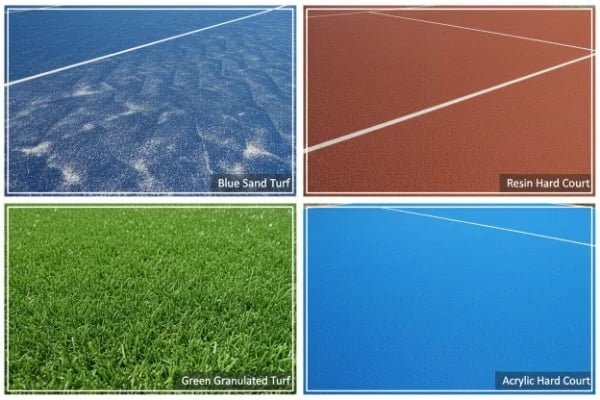
Standard colors like black or green are cheaper. I often have clients who want their club’s brand colors on the steel structure. This requires a custom powder coating run. It increases the cost. The same applies to the turf. Blue is standard. Red or pink turf is custom.
Branding Add-ons
Many clubs want their logo everywhere. We can add DIY decal logos to the glass or weave logos into the turf. These are excellent for marketing. They also add to the labor and material costs.
Upgrades
A basic court is just the start. Adding a retractable roof or sunshades changes the price drastically. These are extensions of the standard models. You should consider them based on your climate.
How Do You Choose the Right Padel Court Manufacturer for Your Project?
Selecting a supplier based only on price is a dangerous gamble. You need a partner who understands the entire lifecycle of your padel business.
An excellent manufacturer provides a one-stop solution. They handle everything from site design and customizing solutions to logistics and export documentation3. They also offer crucial post-delivery support, including installation guidance and maintenance advice to ensure your long-term success.
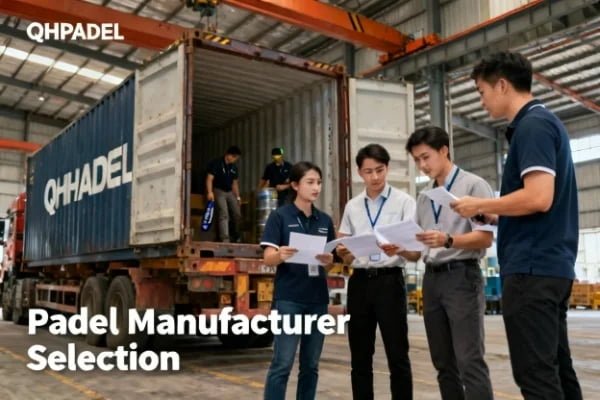
I built QHPADEL to be more than a factory. I wanted to be a partner. I know the pain points buyers face. You struggle with communication. You worry about delayed shipments. You fear the quality is not what was promised. A true manufacturer solves these problems before they happen.
Pre-Order Phase
The factory must understand your site. I ask for drawings and photos. I want to know your wind conditions. We provide complete material specifications. You should know exactly what you are buying. We offer customization solutions to fit your specific terrain.
Production and Logistics Phase
Trust is good, but control is better. We perform strict quality control during production. We check the welding. We test the glass. Logistics is often a headache for buyers. We handle the shipping. We prepare the complete export documentation. This ensures your container clears customs without delay.
Post-Delivery Phase
The relationship does not end when the ship leaves the port. I have seen clients struggle to unload heavy glass panels. We provide unloading instructions. Installation is complex. We offer support and detailed manuals. Maintenance is ongoing. We teach you how to care for the turf and structure.
QHPADEL is dedicated to this full-service approach. We make padel knowledge accessible. Whether you are a beginner or a professional, we guide you. We want you to achieve greater profits and success.
Manufacturer Checklist:
- Design: Do they analyze your site conditions?
- QC: Is there a strict inspection process?
- Logistics: Do they handle export documents?
- Support: Is there installation and maintenance guidance?
Conclusion
A reliable factory provides site analysis, three main court models, high-quality certified materials, and full lifecycle support. Choose a partner like QHPADEL for quality, safety, and business success.
-
Discover how zinc-rich epoxy primer protects steel structures from rust and extends their lifespan. ↩
-
Learning about economies of scale can help you make informed decisions on order quantities to save money. ↩
-
Learn about the critical role of export documentation in ensuring smooth international transactions and compliance. ↩