
Are you trying to figure out exactly what equipment is needed for a padel court to get your new club off the ground? First-time investors often stare at confusing spreadsheets from multiple suppliers, wondering if they are missing a crucial component. The frustration of comparing endless quotes can lead to fatal procurement mistakes. A comprehensive, risk-assessed equipment list is the only way to protect your timeline and budget.
The equipment needed for a padel court includes a precision-welded steel frame structure, 10mm or 12mm CE-certified tempered safety glass panels, high-density artificial turf (typically texturized monofilament), LED lighting fixtures, high-tension steel mesh fencing, and a professional net system. A complete padel court package provides all these components with perfectly matched tolerances to guarantee safe, fast installation.
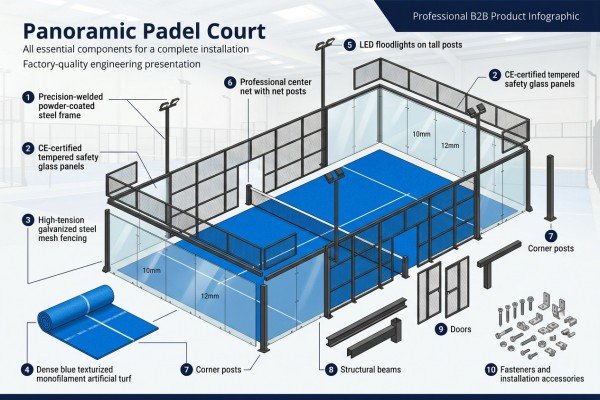
Building a club is not just about ticking items off a shopping list. Every piece of padel court equipment carries a hidden financial risk if sourced incorrectly. Let’s look at how evaluating your bill of materials through an ROI lens will save you thousands in hidden costs.
Why is piecemeal sourcing the biggest trap for the equipment needed for a padel court?
You might think buying glass from a local supplier and importing the steel frame from China will save you freight costs. Then, a glass panel shatters during installation because the metal frame flexed. Who pays for the replacement? Trying to save pennies on separate components often creates a nightmare of aftermarket finger-pointing.
Piecemeal sourcing for the equipment needed for a padel court doubles your logistics fees, complicates customs clearance, and creates severe compatibility risks.1 Buying a complete padel court package from a single manufacturer ensures that structural tolerances match, keeping shipping costs consolidated and placing the full warranty responsibility on one supplier.
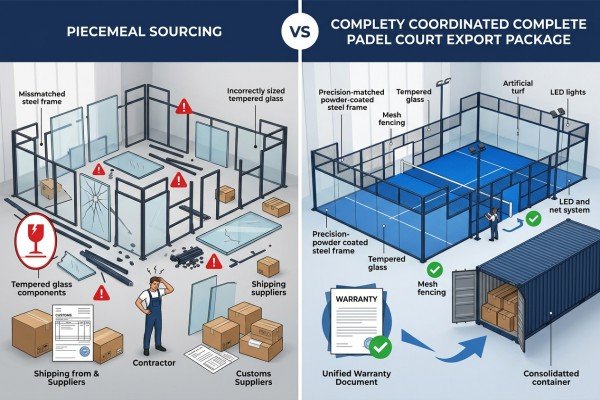
Let me share a common scenario I see when reviewing competitor quotes for first-time club investors. A buyer attempts to split their bill of materials (BOM). They buy the artificial grass from one factory, the LED lights from a local wholesaler, and the steel structures from an overseas supplier.
This is what I call the "calculator illusion." On paper, when you punch the unit prices into your calculator, the total looks lower. In reality, you are now paying for multiple separate LCL (Less than Container Load) shipments instead of one optimized FCL (Full Container Load).2 You are paying your customs broker multiple times.
Worse is the operational risk. When you source glass locally and frames internationally, you assume the total risk of integration. If a 12mm tempered glass panel shatters three weeks after your grand opening, the local glass supplier will blame the "flexible imported steel frame," and the frame manufacturer will blame the "substandard local glass." You are left holding the bill for the replacements and the labor.
As a consultant for a manufacturer exporting over 600 containers annually, I always advise investors to treat an equipment list as a quality risk-management roadmap. A comprehensive system means zero missing screws, zero mismatched brackets, and zero excuses. If a component fails, you make one phone call. Consolidating your padel court equipment into one complete order minimizes your total lifecycle cost and rigorously protects your opening day schedule.
How does structural tolerance in your padel court equipment impact local installation costs?
Your shipping containers have arrived, but the installation crew is standing around doing nothing. The pre-drilled holes on the steel columns do not align with the tempered glass panels. You are paying high hourly labor rates while workers try to modify the structure on-site, blowing your construction budget entirely.
Structural tolerance directly dictates the speed of your local construction team. High-precision padel court equipment with exact hole positions, clear component numbering, and complete fasteners allows a team to assemble a court in days. Poor tolerances cause costly construction downtime and expensive on-site modifications.
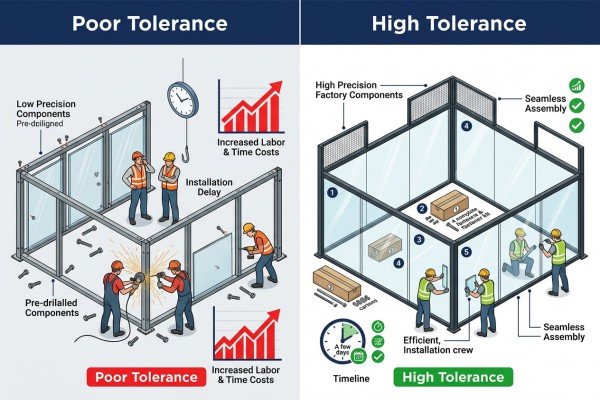
Many investors fixate entirely on the upfront material cost of the equipment needed for a padel court. They completely forget that local European, Middle Eastern, or South American labor rates can easily exceed the cost of the materials themselves if a construction project drags on.
Let me ask you a crucial question: If the glass and the steel frame have a 5mm tolerance gap, how much will your local installation crew charge you for an extra day of downtime?
When you buy a complete BOM with zero missing parts, you are actually buying speed. Precision engineering means the installation is essentially a giant, heavy-duty Lego set. Here is what a professional structural package must include to protect your labor budget:
- Clear Foundation Drawings: Precise pre-embedding guidelines with specific tolerance requirements for the civil contractors.
- Component Numbering: Every single steel post, mesh panel, and glass sheet should be clearly labeled to match the installation manual.
- Over-supplied Fasteners: A few dropped screws in the dirt shouldn’t halt a project. Reliable suppliers provide a surplus of hardware.
If the steel is warped by just a few millimeters due to cheap manufacturing, the tempered glass will be under constant stress. Not only do you pay the installers extra to force the fit, but you also drastically increase the risk of spontaneous glass breakage when a player impacts the wall. Evaluate your equipment supplier based on their machining accuracy. High accuracy protects your installation budget from day one.
Which climate factors destroy cheap padel court equipment materials?
You launched your club in a beautiful coastal city, and it looks incredible on day one. A year later, salt air has rusted the steel frames, and harsh sun has degraded the artificial turf. You are now facing a total renovation, forcing you to shut down and lose revenue just when your club was gaining momentum.
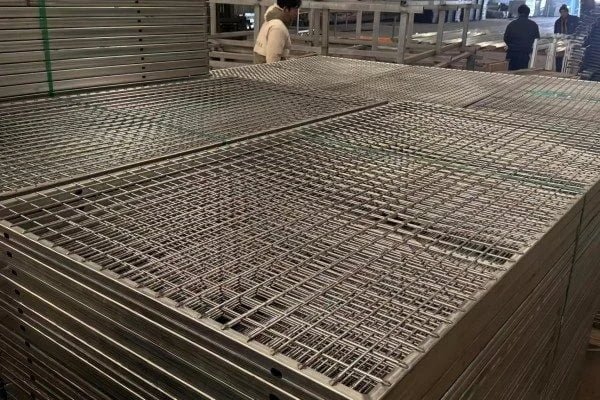
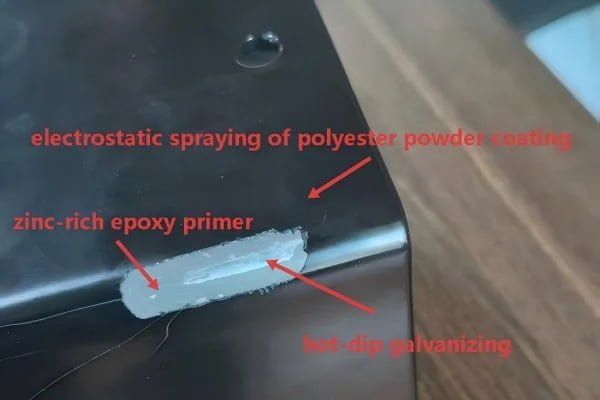
Harsh climates, particularly high-salinity coastal environments and extreme UV zones, rapidly degrade cheap padel court materials. Professional equipment requires hot-dip galvanized steel, UV-resistant texturized artificial turf, and weather-proof LED fixtures to prevent rust, fading, and catastrophic structural failure.
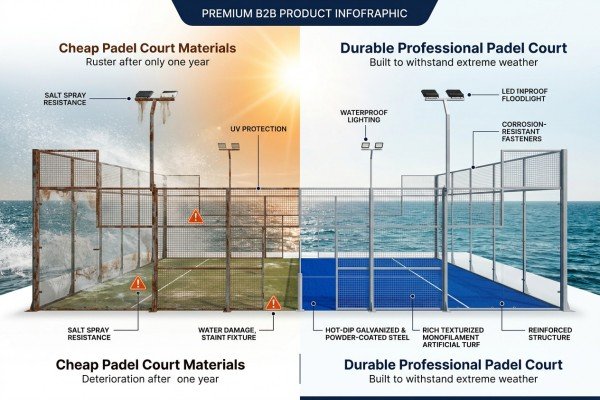
I regularly speak with club operators in South America and Southeast Asia who learned this lesson the hard way. They procured standard indoor equipment for an outdoor, high-humidity, coastal environment. Have you calculated the actual revenue lost when your club has to shut down for a major renovation in three years?
Let’s translate obscure engineering specifications into business reality.
Steel Rust-Proofing
Do not accept basic powder coating for outdoor courts. You need heavy-duty galvanization. The thickness of the steel tube matters, but the anti-corrosion treatment dictates the lifespan. Rust is not just an ugly aesthetic issue; it severely weakens the safety barrier holding back a 100kg player crashing into the mesh or glass.
Turf Wear-Resistance
Suppliers often throw around terms like "Dtex" and "density." In commercial terms, higher Dtex (like 9,000 or 10,000) and proper density mean the artificial grass will not flatten into a slippery, dangerous surface after six months of heavy play. For outdoor courts, UV stabilizers in the yarn prevent the sun from turning the turf brittle. We typically supply texturized monofilament turf because it holds the silica sand better, significantly reducing your weekly maintenance costs.
Wind Loading
If you are in a typhoon or hurricane zone, standard panoramic courts might fail under the pressure. You must ask your supplier for equipment evaluated for specific wind loads, potentially upgrading to a Hurricane Resistant Court structure. Over-engineering your padel court equipment upfront is the absolute cheapest insurance policy you can buy to protect your investment from extreme weather.
Will non-compliant equipment needed for a padel court fail your local safety inspections?
The courts are built, the marketing is out, and opening day is scheduled. Then the municipal inspector walks in, checks the glass stamps and lighting specs, and denies your operating permit. Non-compliant equipment will immediately turn your massive investment into a useless pile of metal and glass.
Yes, lacking proper safety certifications for the equipment needed for a padel court will cause you to fail building and fire safety inspections. You must verify that your supplier provides CE, RoHS, and AS/NZS certified components, including safety glass, non-glare LED lighting, and structurally sound steel frames.
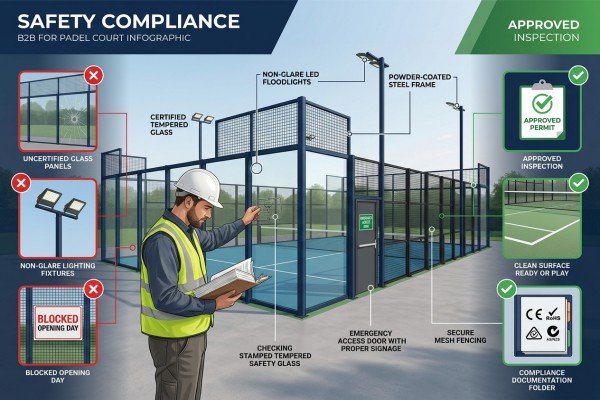
This is the hidden cost of non-compliance. First-time investors often treat certifications as optional marketing badges. In reality, they are legally binding documents that buyers must verify to secure their commercial operating licenses.
Public sectors, schools, and serious chain brands demand comprehensive documentation. Here is the strict compliance checklist you need for your padel court equipment list:
| Component | Essential Certifications | Business Impact |
|---|---|---|
| Tempered Glass | CE, AS/NZS 2208:1996, AS/NZS 4666:2012 | Prevents catastrophic injury lawsuits; required for public facility insurance policies. |
| Steel Frame | CE Structure Certification | Proves the cage can withstand severe wind loads and player impacts without collapsing. |
| LED Lights | CE, AS 61347.2.13:2018 | Ensures electrical safety, prevents fire hazards, and eliminates blinding glare for players. |
| Accessories/Screws | AD 2000 WO, PED 2014/68/EU | Guarantees critical joints will not shear under continuous vibration and stress. |
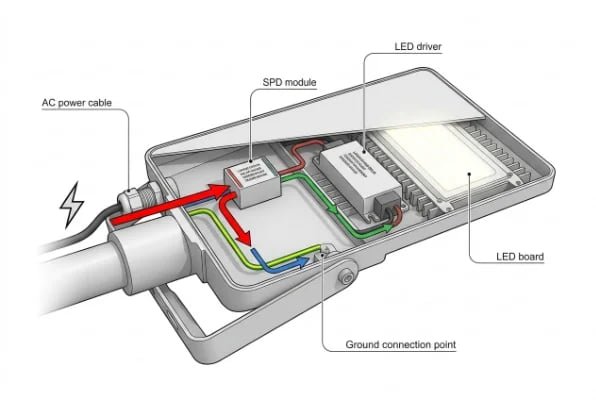
Let’s talk specifically about lighting. Cheap LED fixtures create heavy glare, which ruins the player experience when looking up for a lob. More importantly, poorly manufactured electrical components are a major fire hazard that inspectors will flag immediately.
When you are evaluating quotes, demand to see the actual test reports. A reliable supplier, like a factory with ISO9001 certification, provides an audited paper trail. If your local sports bureau or city council requires technical response texts for bidding, having properly certified equipment needed for a padel court is the only way to win the project and open your doors on time. Always rely on qualified professional evaluation for your specific local building codes.
Frequently Asked Questions
What is the most critical piece of equipment needed for a padel court?
While all parts matter, the tempered safety glass (10mm or 12mm) and the structural steel frame are the most critical. They ensure player safety, withstand heavy impacts, and dictate the structural integrity of the entire court assembly.
Can I buy padel artificial turf separately from the court structure?
Yes, but it complicates your logistics. Buying your high-density artificial turf alongside your frame in a complete padel court package saves on shipping and ensures the grass dimensions perfectly match the interior play area.
How long does it take to manufacture a complete padel court package?
For standard orders, a qualified factory can produce two complete courts in about 20 days. Larger orders of four or more courts typically take 25 to 30 days, allowing for strict quality control and proper container packaging.
Conclusion
Understanding exactly what equipment is needed for a padel court goes far beyond creating a simple shopping list. It requires evaluating structural tolerances, climate resistance, and strict safety certifications to protect your investment. Avoiding the piecemeal sourcing trap and investing in complete, precision-engineered packages ensures you pass local inspections, eliminate costly installation downtime, and maximize your club’s ROI over the long term.
If you need a professional to review your BOM, or if you want transparent, factory-direct pricing for certified complete court packages, reach out to me. Contact Alice Chen at alice@grass-supplier.com, message me on WhatsApp at +86 185 7566 0746, or explore our full capabilities at www.qhpadel.com. Let’s build your courts right the first time.
-
"Supply Chain Fragmentation and the Global Trade Elasticity", https://pmc.ncbi.nlm.nih.gov/articles/PMC7988637/. Supply chain research indicates that fragmented sourcing strategies significantly increase transportation overhead and customs brokerage fees due to the multiplication of administrative touchpoints. Evidence role: general_support; source type: research. Supports: The financial and administrative inefficiencies associated with fragmented supply chains.. ↩
-
"LCL vs FCL | Difference Between Full Container Load & Less …", https://www.youtube.com/watch?v=E_EhtwfwD6E. Logistics analyses demonstrate that Less than Container Load (LCL) shipments incur higher per-unit freight rates and terminal handling charges compared to Full Container Load (FCL) shipments. Evidence role: mechanism; source type: research. Supports: The cost mechanisms that make LCL shipping more expensive per unit of volume than FCL shipping.. ↩