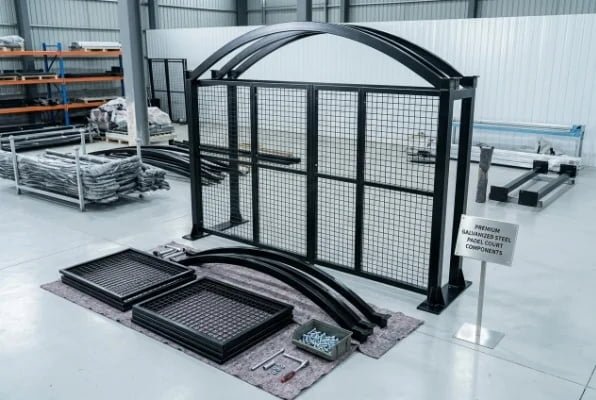
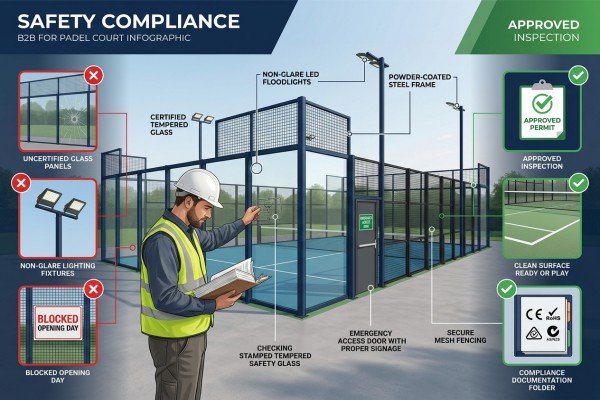
Padel court metal structures directly affect installation accuracy, corrosion risk, maintenance needs, and overall project reliability. However, buyers often compare frames only by price, weight, or steel thickness. That narrow comparison can hide costly mismatches. We recommend evaluating the complete structure against the site, foundation, environment, usage, and local requirements.
The quality and design of padel court metal structures are important because the frame must safely support fencing, tempered glass, lighting, and repeated use under site-specific conditions1. Buyers should assess material traceability, structural design, welding, connection accuracy, corrosion protection, foundation coordination, and installation documentation rather than relying on appearance, weight, or price alone.
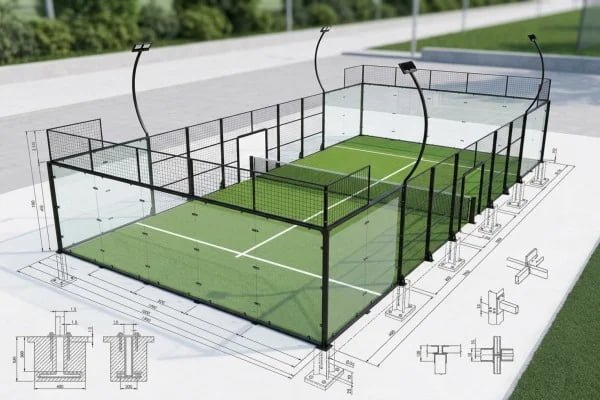
In our production inspections and reviews of installation feedback, we have seen that two similar-looking frames can create very different project outcomes. The important differences often remain hidden until contractors begin aligning posts, fitting glass panels, or tightening connections on site.
Why Must Padel Court Metal Structures Match the Project Site?
Many buyers begin with a simple question: “Is this frame strong enough?” We understand why they ask it, but the question lacks the information needed for a responsible answer. A frame cannot be evaluated properly without considering wind exposure, corrosion conditions, foundation design, court usage, installation quality, and local regulations.
The right padel court metal structure is the one whose documented materials, geometry, connections, protective coating, and foundation interface match the project conditions. Buyers should define the location, surrounding terrain, environmental exposure, intended use, and applicable requirements before asking a qualified professional to verify structural adequacy.
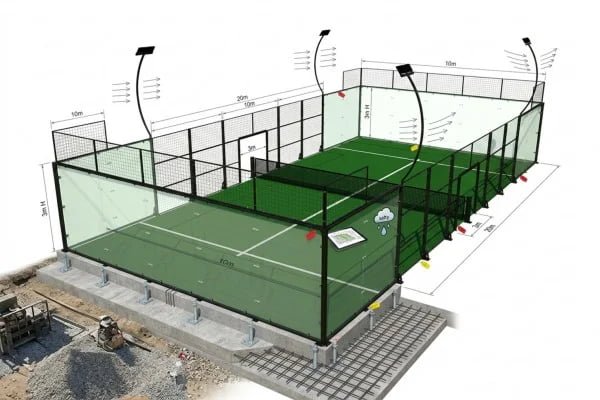
Strength Is a Project-Fit Question
We frequently receive inquiries that include only the preferred court style and requested quantity. Buyers sometimes ask for a “heavy-duty frame” without providing the installation address, foundation information, or environmental conditions.
We usually respond by asking more questions because a heavier frame is not automatically a better-matched frame2. The complete structure has to work as a coordinated system.
Buyers and suppliers should consider at least the following factors:
- Site location and terrain: An exposed coastal site can face different conditions from an enclosed urban facility.
- Wind exposure: Nearby buildings, open land, elevation, and local weather patterns can affect the design basis.
- Indoor or outdoor installation: Indoor courts may have lower weather exposure, but they still require accurate connections and foundation coordination.
- Corrosion environment: Coastal salt, high humidity, industrial pollution, and chemical exposure can change coating requirements3.
- Usage intensity: A private court and a multi-court commercial club can have different maintenance and operational priorities.
- Foundation design: The steel frame cannot compensate automatically for an unsuitable, inaccurate, or inadequately verified foundation4.
- Local requirements: Building, electrical, glass, accessibility, and sports-facility rules can vary between jurisdictions.
Questions We Recommend Asking Before Quotation
| Project factor | Information to provide | Why we consider it important |
|---|---|---|
| Installation location | Country, city, and site address | It helps identify environmental and regulatory questions |
| Site type | Rooftop, coastal, inland, indoor, or open field | It affects exposure and installation planning |
| Foundation | Existing or new foundation, dimensions, and drawings | It determines the structure-to-foundation interface |
| Court configuration | Panoramic, ultra-panoramic, classic, single, or roofed | Each configuration can use different structural arrangements |
| Lighting | Fixture quantity, position, and mounting method | Lighting posts and brackets create structural interfaces |
| Local criteria | Applicable codes and approval process | A qualified local party must verify compliance |
| Installation party | Local contractor or supplier-supported team | Responsibility and documentation needs may differ |
We once reviewed site images from an installation where the contractor initially suspected that the frame components were inconsistent. The later discussion focused on the foundation dimensions and anchor positions instead. That pattern appears often in after-sales coordination: a visible alignment problem can come from manufacturing, foundation work, component identification, or installation sequencing.
We do not diagnose structural adequacy from a photograph. We use drawings, measurements, batch records, and installation information to narrow down the likely cause. A qualified local structural professional should verify project-specific loads, foundations, anchoring, and code compliance.
How Do Materials and Design Affect Padel Court Metal Structures?
Steel grades, profile sizes, and wall thicknesses matter, but they do not describe the whole frame. Buyers can still receive a poorly coordinated system even when an individual material specification looks impressive. We therefore evaluate the steel together with member geometry, load paths, connections, glass interfaces, lighting supports, and foundation details.
High-quality padel court metal structures combine traceable materials with a documented design suited to the intended project. Buyers should compare profile specifications, connection details, post spacing, support geometry, fasteners, glass interfaces, and foundation requirements. No single steel thickness, frame weight, or material grade proves that a complete court is suitable.
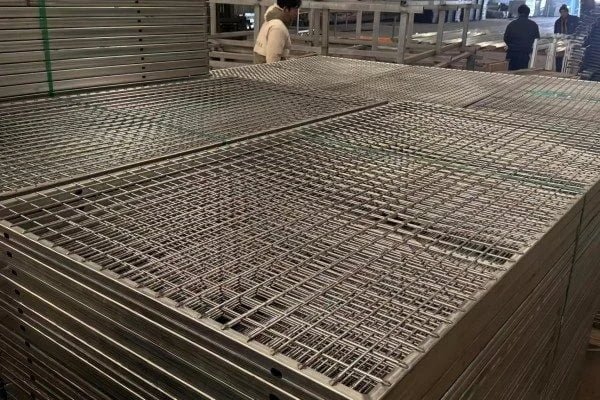
Why More Steel Does Not Always Mean Better Quality
A heavy quotation can feel reassuring. However, total steel weight does not reveal whether the material is placed where the design needs it. It also does not show whether the connection plates align, whether the glass openings are accurate, or whether the foundation detail suits the site.
We recommend comparing the following information instead:
- Material designation and traceability
- Profile dimensions and wall thickness
- Structural member layout
- Base-plate and anchoring details
- Bolted and welded connection designs
- Glass-support and mesh-panel interfaces
- Lighting-post integration
- Design assumptions and referenced criteria
- Drawing revision and approval status
A buyer should ask the supplier to identify the steel specification used for the quoted system. The buyer should also ask whether the supplier can connect incoming material records to production batches. A verbal statement such as “we use strong steel” provides little procurement value.
The Complete Frame Matters More Than One Component
Padel court frames support several interacting elements. These elements can include structural posts, welded frame netting, tempered glass, court doors, lighting fixtures, nets, and anchoring components. A change in one area can affect another area.
For example, a larger post does not automatically solve a weak or poorly detailed connection. Likewise, a robust frame does not correct anchor locations that conflict with the foundation. The complete assembly needs coordinated dimensions and interfaces.
| Evaluation shortcut | What it misses | Better procurement question |
|---|---|---|
| “Which frame is heaviest?” | Material placement, geometry, and connections | What documented design does the quoted weight represent? |
| “Which post is thickest?” | Overall load path and connection details | How do the posts, panels, glass, and base plates work together? |
| “Which option is cheapest?” | Rework, delays, maintenance, and spare parts | What is included, excluded, and documented? |
| “Does it have a certificate?” | Project-specific suitability | What does the document cover, and can we verify it? |
| “Is it wind resistant?” | Site-specific design conditions | Which verified criteria and assumptions apply to this project? |
At QHPADEL, we can provide documentation for our manufacturing scope, including installation drawings, foundation drawings, packing lists, and maintenance manuals. Our factory holds ISO 9001 certification, and our steel frame structure has CE-related documentation. We advise buyers to verify the issuing body, scope, model coverage, validity, and referenced standards. A certificate is procurement evidence, not automatic proof that a structure complies with every local site requirement.
Why Does Manufacturing Accuracy Matter for Padel Court Metal Structures?
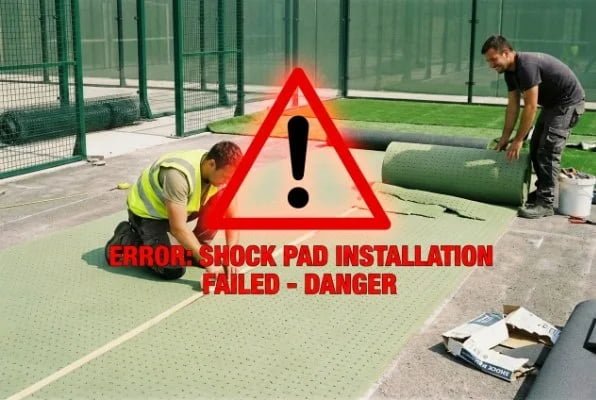
A design can look complete on paper while production inconsistencies create difficulties on site. Misaligned holes, variable welds, incorrect labels, distorted panels, or missing fasteners can delay installation5. These defects may appear small at the factory, but they can become expensive when contractors, lifting equipment, and concrete work are already scheduled.
Manufacturing accuracy determines whether padel court metal structures fit together according to the approved drawings. Buyers should evaluate cutting, drilling, welding, alignment, hole tolerances, component numbering, trial assembly procedures, coating inspection, packing controls, and final quantity checks. Consistent fabrication reduces field modification, glass-fitting problems, and installation uncertainty.
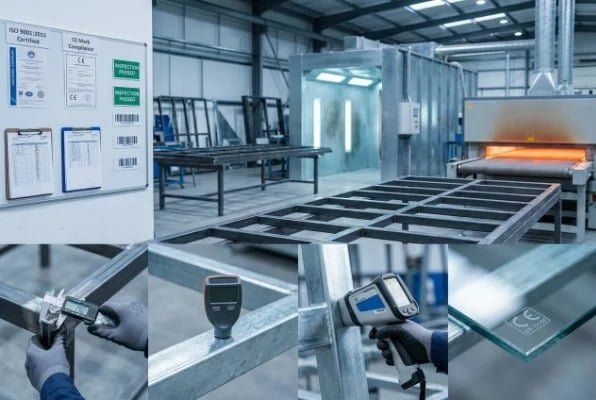
Fabrication Details Influence Installation
We have reviewed inquiries where buyers compared only the visible post dimensions. In practice, installers often care just as much about less visible details:
- Do the bolt holes align without forced modification?
- Do the mesh-panel frames fit between the correct posts?
- Are welded brackets located according to the drawing?
- Do the glass openings maintain the specified geometry?
- Are left-hand and right-hand components identified clearly?
- Does each package correspond to the packing list?
- Are fasteners separated and labeled?
- Do the installation drawings match the produced revision?
A contractor may be able to enlarge a hole or modify a bracket in the field. However, that action can affect coating integrity, installation responsibility, appearance, and potentially structural performance. The contractor should not make an unapproved site modification to a structural component. The responsible parties should review the issue against the drawings first.
Quality Control Evidence Buyers Can Request
A supplier does not need to disclose every internal production record. Still, buyers can request reasonable evidence that the factory controls critical processes.
We suggest requesting:
- Incoming material documentation for the quoted steel specification.
- Approved production drawings with revision numbers.
- Dimensional inspection records for critical interfaces.
- Welding process and inspection information appropriate to the supplier’s scope.
- Coating specifications and inspection methods.
- Pre-shipment photos or videos showing labels, components, and packaging.
- Packing lists linked to package numbers.
- A missing-part and defect-reporting procedure.
- Written warranty boundaries covering material defects and excluding unrelated site errors.
- Change-control records when the buyer approves a customized design.
Our factory uses 10 production lines and produces complete padel court systems alongside artificial turf. We can produce two standard courts in approximately 20 days, four courts in 20–25 days, and larger standard orders in no more than 30 days under normal planning conditions. Custom styles can require up to 35 days. Buyers should confirm the actual schedule in the purchase contract because order complexity, approvals, holidays, and logistics can affect delivery.
Clear Numbering Reduces Avoidable Errors
We regard component numbering as a practical quality feature rather than a cosmetic detail. A frame can include many posts, panels, brackets, base components, fasteners, and glass-related parts. If labels do not correspond with the installation drawing, the contractor can lose time identifying each piece.
A complete bill of materials also matters. Club operators want to avoid opening containers and discovering that a small but essential connection component is missing. Contractors need exact quantities before scheduling labor. Distributors need standardized SKUs for resale and replacement orders.
For that reason, we recommend making the BOM, drawings, packing list, labels, and physical components traceable to one another.
Which Corrosion Protection Is Suitable for Padel Court Metal Structures?
Buyers often ask us to name the “best” coating. We avoid giving one universal answer because corrosion exposure differs by project. An indoor court, a humid outdoor club, and an exposed coastal installation do not present the same risk. Processing sequence, surface preparation, coating coverage, handling damage, and maintenance also influence performance.
Suitable corrosion protection for padel court metal structures depends on environmental exposure, fabrication sequence, coating coverage, transport risk, installation damage, appearance, maintenance access, and project requirements. Buyers should compare the complete coating specification and inspection method instead of assuming that one coating name guarantees a fixed service life.
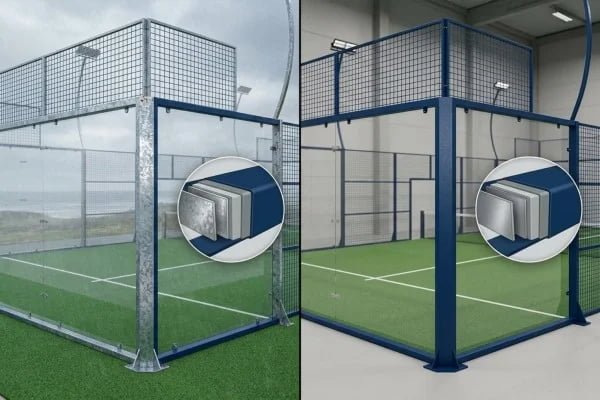
Three Protection Approaches Available From Our Factory
QHPADEL offers three corrosion-protection approaches. We present them as examples of different process levels, not as a universal ranking for every application.
| Protection approach | General process description | Procurement points to verify |
|---|---|---|
| Localized zinc-rich epoxy repair | Processed areas receive localized zinc-rich epoxy repair | Repair locations, preparation, coverage, and final finish |
| Full-frame zinc-rich epoxy coating | The fabricated frame receives zinc-rich epoxy coating across the frame | Surface preparation, dry-film criteria, coverage, curing, and inspection |
| Post-fabrication hot-dip galvanizing | Fabricated components receive hot-dip galvanizing above 100 μm under the agreed specification | Measured thickness, venting and drainage details, distortion control, finish, and repair method |
Buyers should not convert these process descriptions into unsupported lifespan promises. Corrosion performance depends on multiple variables, including the actual environment and maintenance. A qualified coating or corrosion professional should review demanding coastal, industrial, or chemically exposed sites.
Fabrication Sequence Changes the Risk
The words “galvanized” or “zinc coated” can hide important differences. Buyers should establish whether the material was coated before fabrication or whether the complete component was treated after cutting, drilling, and welding.
Fabrication can disturb an existing protective layer6. Cut edges, weld areas, drilled holes, and ground surfaces may need a defined repair process. Post-fabrication hot-dip galvanizing can provide broad coverage after manufacturing7, but it also requires suitable component design, drainage and venting provisions, process control, and dimensional inspection.
We recommend asking suppliers these questions:
- What surface preparation occurs before coating?
- Does the treatment take place before or after fabrication?
- How does the factory treat welds, cuts, holes, and damaged areas?
- Which coating thickness or acceptance criteria apply?
- How does the factory measure and record coating results?
- How are components protected during packing and container loading?
- What repair procedure applies after site drilling or handling damage?
- Which maintenance instructions will the supplier provide?
Color Coatings Still Need Process Control
Frame color is an important part of club branding, but appearance should not replace corrosion evaluation. A smooth colored finish can conceal inconsistent preparation or thin coverage in difficult areas.
QHPADEL supports customized frame colors. We advise buyers to approve a color reference and a complete coating specification rather than relying only on a digital image. Screens, lighting, gloss, and production batches can change how a color appears.
I have seen buyers focus heavily on an exact color shade while giving little attention to weld coverage or transport protection. We encourage both checks. The finish must satisfy the visual requirement, while the underlying protection must match the agreed process.
How Should Buyers Evaluate Padel Court Metal Structure Suppliers?
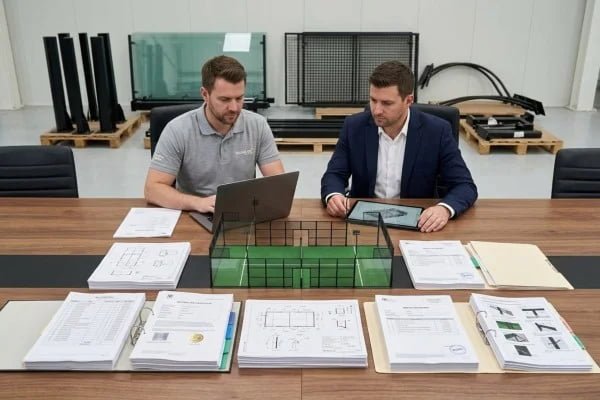
Supplier comparisons become confusing when quotations use different frame configurations, coating descriptions, accessory lists, and documentation standards. A low total can exclude essential parts, while an expensive quotation can still lack traceability. We recommend normalizing every offer before comparing price, lead time, warranty, and technical scope.
Buyers should evaluate padel court metal structure suppliers through a documented checklist covering project inputs, material traceability, design information, fabrication controls, corrosion protection, complete BOMs, installation drawings, packaging, replacement procedures, and responsibility boundaries. Local professionals should separately verify foundations, structural adequacy, code compliance, electrical work, and site installation.
Use the Same Request for Quotation
A standardized request for quotation helps buyers compare like with like. We suggest including:
- Installation location and site category
- Court type and quantity
- Indoor or outdoor use
- Available site and foundation drawings
- Environmental or corrosion concerns
- Required frame color
- Turf color, Dtex, and density requirements
- Glass, lighting, net, and accessory scope
- Required certificates and test reports
- Packaging and labeling requirements
- Spare-parts expectations
- Incoterm and destination port
- Required production and shipping schedule
- Local approval requirements
- Installation responsibility
Our complete packages can include artificial turf, welded frame netting, structural posts, tempered glass, LED lighting fixtures, nets, screws, and accessories. However, buyers should confirm the exact BOM for each quotation. The phrase “complete court” should never replace a line-by-line scope.
Score Evidence, Not Sales Language
Buyers can use a weighted scorecard to make the evaluation more objective.
| Evaluation category | Example weighting | Evidence to review |
|---|---|---|
| Project-fit information | 20% | Site questions, assumptions, and exclusions |
| Material and design documentation | 20% | Specifications, drawings, and revisions |
| Manufacturing quality control | 15% | Inspection process and traceability |
| Corrosion protection | 15% | Process specification and inspection criteria |
| Installation support | 10% | Foundation and assembly drawings |
| BOM and packaging | 10% | Packing lists, labels, and spare parts |
| Commercial and after-sales terms | 10% | Lead time, warranty, and responsibility matrix |
The weighting should change according to the buyer. A contractor may place more weight on tolerances and drawings. A distributor may prioritize repeatable SKUs and packaging. A public institution may require more bidding documents and traceability.
Define Responsibility Before Production
We advise buyers to create a written responsibility matrix. The document should identify who is responsible for:
- Site survey information
- Local engineering review
- Foundation design and construction
- Anchor positioning
- Manufacturing dimensions
- Coating quality
- Transport and unloading
- Storage before installation
- Court installation
- Electrical connections
- Inspection and acceptance
- Maintenance
- Defect reporting and replacement parts
This distinction matters because a manufacturing defect, an inaccurate foundation, and an unauthorized installation modification require different corrective actions. Clear records help all parties investigate the root cause without making premature assumptions.
We can support buyers with production documentation, drawings, online installation guidance, packing information, and manufacturing records within our scope. We do not replace the local structural engineer, building authority, electrical professional, or installation supervisor.
Frequently Asked Questions
Is a heavier padel court frame always stronger?
No. A heavier frame contains more material, but weight alone does not prove that the complete structure suits a project. We recommend reviewing member geometry, steel specifications, connections, anchoring, design assumptions, fabrication accuracy, and foundation coordination. A qualified professional should verify project-specific structural adequacy.
What documents should I request from a padel court supplier?
We recommend requesting material specifications, design and installation drawings, foundation interface details, coating specifications, quality-control evidence, certificate copies, a complete BOM, packing lists, maintenance guidance, warranty terms, and a responsibility matrix. Buyers should verify certificate scope, validity, issuing organization, and model coverage.
Is hot-dip galvanizing always the best corrosion-protection option?
No single process is best for every court. Post-fabrication hot-dip galvanizing can offer broad protection, but suitability depends on environmental exposure, component design, appearance, process control, installation damage, and project requirements8. Buyers should seek professional coating advice for severe coastal or industrial environments.
Can a CE certificate prove that a court is suitable for my location?
A CE-related document can support procurement review, but it does not automatically establish compliance with every local code or site condition. Buyers should verify what the document covers and ask qualified local professionals to assess structural loads, foundations, anchoring, electrical work, and approval requirements.
What should I inspect before shipping a padel court?
We recommend checking component quantities, identification labels, critical dimensions, visible weld quality, coating condition, glass and lighting documentation, fastener packages, spare parts, packing protection, and drawing revisions. Buyers should also confirm that the packing list matches the approved BOM and package numbering.
Conclusion
The quality of padel court metal structures depends on much more than steel thickness, frame weight, appearance, or price. We recommend evaluating project conditions, material traceability, structural documentation, connection details, manufacturing accuracy, corrosion protection, installation drawings, and responsibility boundaries as one system. Qualified local professionals should verify site-specific engineering and compliance. If you need a documented quotation for a complete padel court system, contact Alice Chen at alice@grass-supplier.com or WhatsApp +86 185 7566 0746 to discuss your project conditions and procurement requirements.
-
"Design of Padel and Outdoor Sports Courts in the United …", https://www.engineeringexpress.com/wiki/design-of-padel-and-outdoor-sports-courts-in-the-united-states/. Applicable sports-facility and structural design guidance treats enclosure components and attached equipment as coordinated elements that must be assessed for the loads and conditions of the installation site. Evidence role: general_support; source type: institution. Supports: That court enclosure systems require coordinated structural consideration of glass, fencing, lighting attachments, and applicable design loads.. Scope note: The exact load combinations and design criteria depend on the jurisdiction, court configuration, and site conditions. ↩
-
"on the geometry of load paths", https://scholarspace.manoa.hawaii.edu/bitstreams/46364847-e6f5-484a-87e2-d793519026c6/download. Structural design evaluates the complete load path, member resistance, connections, support conditions, and design loads; material quantity by itself is not a measure of project-specific adequacy. Evidence role: mechanism; source type: education. Supports: That structural performance depends on the complete load path, member geometry, connections, supports, and applied loads rather than material mass alone.. ↩
-
"Marine Atmospheric Corrosion of Carbon Steel: A Review – PMC", https://pmc.ncbi.nlm.nih.gov/articles/PMC5506973/. Corrosion-protection guidance classifies atmospheric corrosivity using environmental factors such as time of wetness, chloride contamination, and industrial pollutants, which inform selection of protective systems for steel. Evidence role: mechanism; source type: institution. Supports: That atmospheric corrosivity varies with factors including chloride deposition, moisture, sulfur dioxide or industrial pollutants, and other chemical exposures, affecting protective-coating selection.. Scope note: A corrosion category must be established from the actual project environment rather than inferred solely from a broad location label. ↩
-
"Setting anchor bolts on a reinforced column mesh …", https://www.facebook.com/groups/721977035053039/posts/2141830343067694/. Structural-steel installation guidance recognizes foundation and anchor-bolt location, elevation, and tolerances as necessary interfaces for proper erection; superstructure design does not independently correct deficient supporting works. Evidence role: mechanism; source type: education. Supports: That structural steel erection depends on foundations and anchor bolts meeting specified location, elevation, and tolerance requirements.. ↩
-
"Steel Erection Dimensional Errors and Correction Methods", https://xtdsteel.com/steel-structure-construction/steel-erection-dimensional-errors/. Construction-quality research identifies fabrication nonconformities and incomplete or incorrectly managed materials as common sources of field rework and schedule disruption during installation. Evidence role: general_support; source type: research. Supports: That fabrication nonconformities and material-management failures can generate rework, disruption, and schedule impacts during construction or assembly.. Scope note: The magnitude of delay depends on the defect, available corrective work, installation sequence, and contractual arrangements. ↩
-
"Step-by-Step: Recoating After Welding Galvanized Steel …", https://galvanizeit.org/about-aga/news/article/step-by-step-recoating-after-welding-galvanized-steel-components. Galvanizing and protective-coating guidance notes that cutting, welding, drilling, and handling can create damaged areas requiring preparation and repair to restore protective continuity. Evidence role: mechanism; source type: institution. Supports: That fabrication and handling can leave damaged or uncoated areas on galvanized or coated steel and that such areas require an appropriate repair method.. Scope note: The appropriate repair material and acceptance criteria depend on the original coating system, damage extent, and governing specification. ↩
-
"Design Details and Fabrication Best Practices for HDG", https://galvanizeit.org/aess-for-specifiers/design-details-and-fabrication-best-practices-for-hdg. Hot-dip galvanizing is applied to fabricated steel after cleaning and immersion in molten zinc, providing a protective zinc coating over the article’s accessible surfaces after fabrication. Evidence role: mechanism; source type: institution. Supports: That hot-dip galvanizing is commonly applied to completed fabricated steel articles and forms a zinc coating over immersed accessible surfaces.. Scope note: Coverage and coating quality depend on component geometry, accessibility, venting, drainage, surface condition, and process control. ↩
-
"Corrosion Protection for Metal Connectors and Fasteners …", https://www.brunswickcountync.gov/DocumentCenter/View/990/FEMA-TB-08—Corrosion-Protection-for-Metal-Connectors-in-Coastal-Areas-PDF. Corrosion-engineering literature recommends selecting steel-protection systems according to the exposure environment, structural detailing, fabrication and application conditions, inspection requirements, and planned maintenance rather than applying a universal ranking to one process. Evidence role: general_support; source type: research. Supports: That selection of corrosion-protection systems for steel should consider service environment, design details, fabrication and application constraints, inspection, maintenance, and performance requirements.. Scope note: This principle does not determine the optimal system for a particular court without a project-specific corrosion assessment. ↩