You might hear about a new sport that is taking over the world. But you may not know the rules or why everyone loves it. Let me explain exactly what Padel is.
Padel is a racquet sport combining tennis and squash elements, played on an enclosed 10x20m court. It is usually played in doubles, uses walls for rebounds, and is easier to learn than tennis. It is highly social and suitable for all ages.
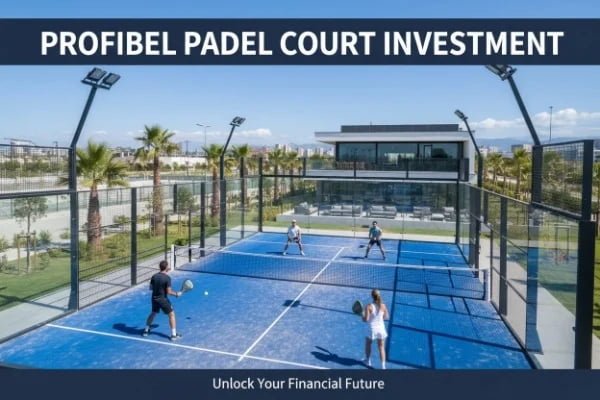
I have seen this sport grow from a niche hobby to a global phenomenon during my time in this industry. Let us look closer at the details you need to know.
What are the different Padel Tennis Court Types available today?
Choosing the right court model is often very confusing for many new buyers. Making the wrong choice can waste your money and affect how the game plays. Here are the three main types you need to know.
The three standard types are Panoramic, Ultra Panoramic, and Classic courts. Panoramic offers a balance of view and stability, Ultra Panoramic provides 360-degree visibility for pro matches, and Classic ensures maximum durability for windy areas.
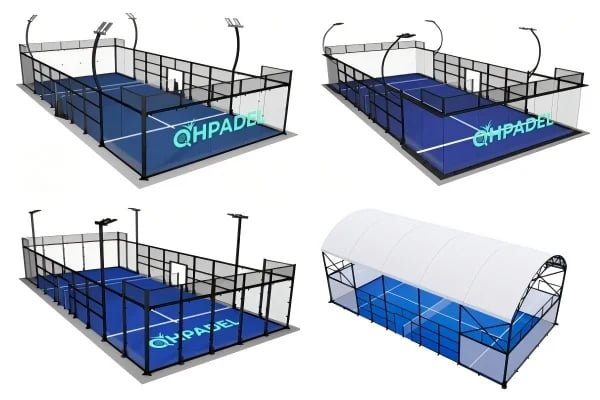
Based on my experience selling courts to clients globally, over 99% of padel courts fall into these three categories. There are single-player courts, but they make up less than 0.1% of the market. Let me break down the differences so you can choose the right one for your club.
First, the Panoramic Court is the most popular choice, making up about 50% of sales. It uses steel columns only at the four corners. This design gives good wind resistance while keeping the view mostly clear. It is a great middle ground for outdoor clubs.
Second, the Ultra Panoramic Court is what you see on TV. It accounts for 45% of the market. It has no steel columns at the back, using special connectors to hold the glass. This creates an "aquarium effect" with a 360-degree view. I highly recommend this for indoor clubs or center courts where spectators watch the game.
Third, the Classic Court is the "tank" of padel courts. It has double steel columns between every glass panel. While it blocks the view slightly, it is the strongest option. If you are building near the coast or in a windy city, this is the safest choice.
Here is a simple comparison table to help you decide:
| Court Type | Key Feature | Best Location | Market Share |
|---|---|---|---|
| Panoramic | Corner columns only | Outdoor/Indoor | 50% |
| Ultra Panoramic | No corner columns | Indoor/Pro Matches | 45% |
| Classic | Double columns | Coastal/Windy | 4% |
Besides the structure, the materials matter. We use 12mm tempered glass that meets European standards and artificial turf that can handle 5 to 10 years of wear. The price usually ranges from $6,500 to $9,000 per court depending on these choices.
Why is padel so popular now?
Many club owners wonder if this trend will last or if it is just a bubble. Investing in a fad is risky for your business capital. The reasons behind Padel’s growth show it is here to stay.
Padel is popular because it is social, fun, and easy to learn. It combines tennis and squash on a smaller court where walls are part of the game. It allows players of all ages to have long rallies immediately, unlike difficult technical sports.

I believe Padel is successful because it solves the biggest problem in racquet sports: the learning curve. In tennis, you spend months learning to keep the ball in play. In Padel, the court is smaller (10m x 20m), and the walls save you when you miss a shot. This means beginners can have fun on day one.
From a business perspective, it is very profitable. A tennis court takes up a lot of space. You can fit nearly three padel courts in the space of one tennis court. This triples your potential revenue per square meter.
Let’s look at the numbers. Padel is a social game played by four people. If a club charges $5 to $7 per person per hour, that is $20 to $28 per hour for one court. If the court is open 14 hours a day and has 80% occupancy, the revenue adds up fast.
In places like Indonesia, a single court can generate between $29,200 and $40,880 in revenue per year. This high return on investment (ROI) is why investors love it. The game is not just fun for players; it is a serious business model. The operational costs are low, especially if you use quality LED lights that need no maintenance for years.
Where is padel popular?
You might think Padel is only famous in Spain or Latin America. Ignoring other markets means missing huge global business opportunities. The data shows this sport is exploding in unexpected regions.
Spain remains the most popular region for Padel historically. However, Indonesia is currently seeing the most explosive growth rate in court construction. Global expansion is rapid, with over 10,000 new courts planned worldwide by 2026.
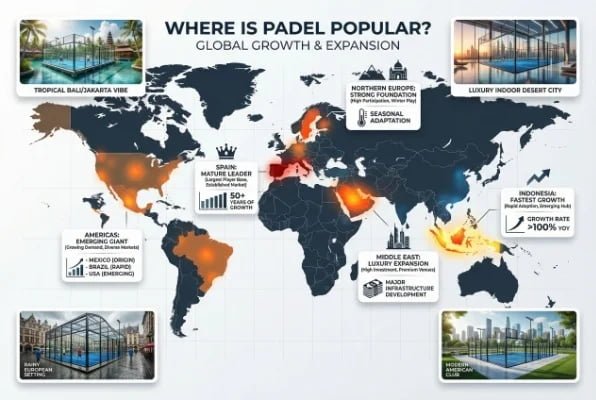
Spain is the birthplace of modern Padel culture, but the center of growth is shifting. As a manufacturer, I see orders coming from everywhere.
Currently, Spain is still the leader in total player numbers and courts. It is a mature market where Padel is arguably more popular than tennis. However, if you look at where the new construction is happening, the focus moves to Asia and the Middle East.
Indonesia is the star right now. By 2025, over 2,000 new courts have been built or planned there. The growth rate is incredible. I have worked with many clients in Bali and Jakarta who are converting empty land into thriving clubs.
We are also seeing strong demand from:
- The Middle East: Countries like the UAE and Saudi Arabia are building luxury indoor courts to beat the heat.
- The Americas: Mexico (where it started) and Brazil are strong, but the USA is now waking up to the sport.
- Northern Europe: Sweden and Italy saw a boom recently, though it has stabilized.
The "aquarium effect" of the Ultra Panoramic courts is a favorite in these new high-end markets. Club owners in these new regions want the best aesthetics to attract new players. Whether you are in a rainy city or a tropical island, the sport is adapting and growing. The sheer fun of the game translates across every culture.
Conclusion
Padel is a high-growth social sport with versatile court options. From Spain to Indonesia, the right court choice and location can lead to significant business success for investors.