You want to invest in a new sport facility, but the names are confusing. You might buy the wrong equipment or build the wrong court design because the terms look so similar. This mistake can cost you a lot of money and time.
Padel and Paddle-tennis are distinct sports despite their similar names. Padel uses an enclosed court with walls (glass or concrete) that are part of the game, originating in Mexico. Paddle-tennis is played on an open court without walls, functioning like a miniature version of tennis, and it originated in the USA.
Many of my clients come to me with this question. They see the rapid growth of these sports. They want to know which one is the right investment. I will explain the history, the equipment, and the rules clearly. This will help you make the right choice for your business.
Are Padel and Paddle-tennis the same sport?
Many people use these names interchangeably, which creates a big misunderstanding in the industry. If you order materials for "Paddle," you might get something that does not fit a Padel court at all.
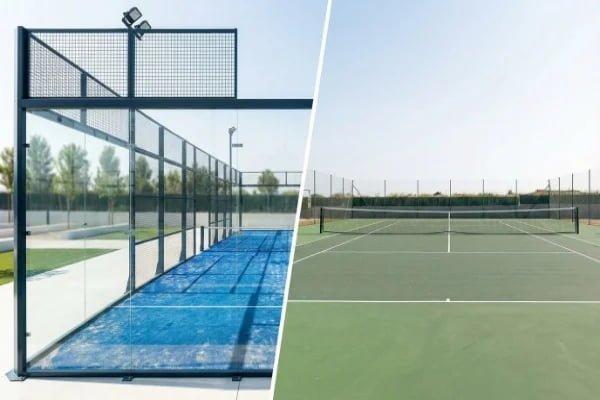
No, they are not the same sport. While both come from tennis roots, they have different inventors, different histories, and different rules. Padel features walls and usually involves four players. Paddle-tennis has no walls and focuses on direct shots over a net on a smaller court.
The Origins of the Two Sports
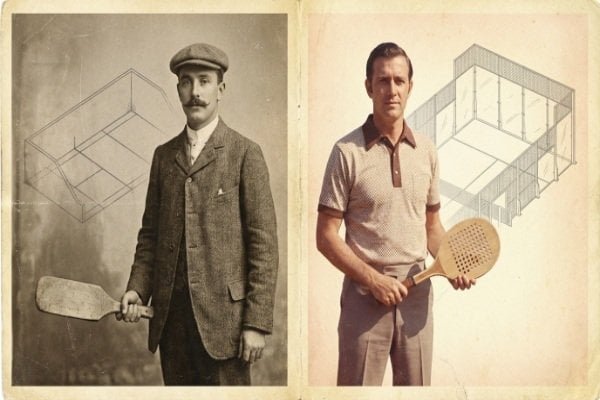
I find the history of these sports very interesting because it explains their physical differences. We need to look back at the early 20th century. A man named Frank Beal founded Paddle Tennis in the United States around 1915. He was a devout man who wanted a good game for children. He took a standard tennis court and reduced the size by half. He introduced wooden rackets and smaller balls. This sport grew fast in the US. It looked exactly like a small tennis court.
Then, we have the story of Padel. This happened much later, in 1969. A Mexican man named Enrique Corcuera wanted to build a tennis court at his home. However, he had a problem. He did not have enough space, and plants were encroaching on his land. He was also tired of losing balls in the vegetation. So, he built concrete walls around the court. This was the birth of Padel.
The key difference here is the walls. Frank Beal simply shrank the tennis court. Enrique Corcuera enclosed it. This changes everything about how we build these courts today. As an engineer, I see that the material requirements are totally different because of these origins.
Comparison of Origins
| Feature | Paddle Tennis | Padel |
|---|---|---|
| Founder | Frank Beal | Enrique Corcuera |
| Year | ~1915 | 1969 |
| Country of Origin | United States | Mexico |
| Key Innovation | Halved the size of a tennis court | Added walls to enclose the court |
| Governing Body | USPTA (Historical) | FIP (International Padel Federation) |
What is Padel?
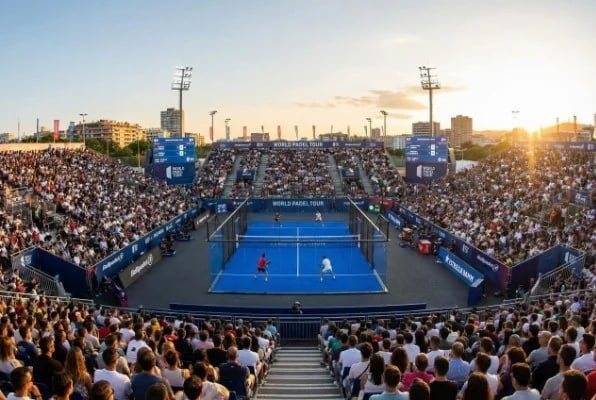
Padel is currently the fastest-growing sport globally, and you need to understand its specific construction requirements. It combines elements of tennis, squash, and Basque pelota into a unique game.
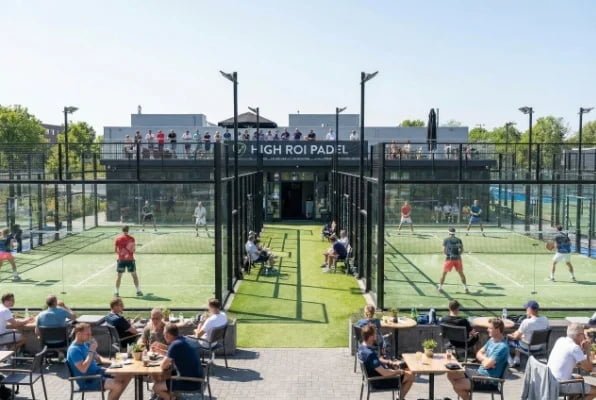
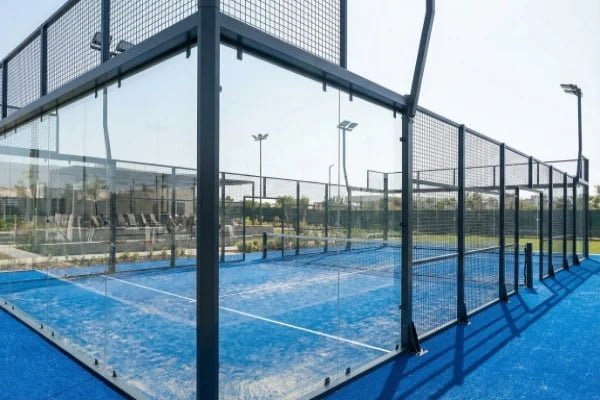
Padel is played on an enclosed court where the walls are active parts of the game. It uses solid rackets made of high-tech materials and is almost always played in doubles. The ball can bounce off the glass or mesh walls, which keeps the rally going longer.
The Construction and Gameplay of Padel
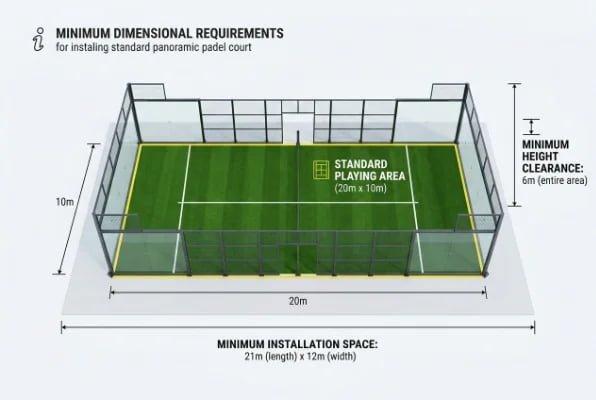
I have spent years managing the export of Padel courts, so I know the specifications by heart. A Padel court is 10 meters wide and 20 meters long. The most important feature is the enclosure. Early courts used concrete walls. Today, to improve the viewer experience and aesthetics, we use tempered glass and steel mesh. This allows light to enter and lets spectators see the action.
The floor is another critical area. We use artificial turf for Padel courts. The sand infill in the turf is vital for player movement and ball bounce. When I inspect factories, I check the turf density carefully because it affects the game speed.
The racket technology has also changed. We moved away from wood long ago. Now, we use foam cores (EVA), carbon fiber, and fiberglass. These materials give power and control. The game is fast. It emphasizes teamwork because it is a doubles game. You use the walls to bounce the ball back. This adds strategy. You do not just hit the ball hard; you must think about the rebound angles. It is like playing chess at high speed.
Key Features of Padel
| Component | Specification |
|---|---|
| Court Size | 10m x 20m |
| Enclosure | 3m high walls (Glass/Mesh) |
| Flooring | Artificial Turf with Sand Infill |
| Racket Material | Carbon Fiber, Fiberglass, EVA Foam |
| Player Format | Almost exclusively Doubles (4 players) |
What is Paddle Tennis?
You might still see "Paddle Tennis" in parks, especially in the United States. It is important not to confuse this with the modern Padel trend when you look for suppliers or locations.
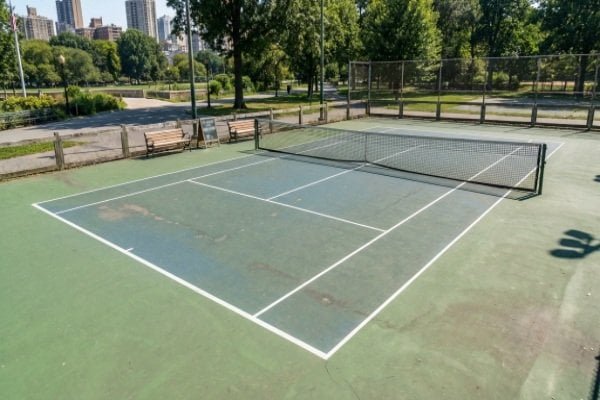
Paddle Tennis is played on a court roughly half the size of a tennis court with no walls. The rackets are solid and perforated, and the ball is depressurized to reduce its bounce. The game relies on quick reflexes and net play rather than wall rebounds.
Understanding the Open Court Game
I want to clarify the structural differences here. A Paddle Tennis court does not require the heavy steel structures or glass panels that I ship for Padel courts. It is an open space. The dimensions are usually 50 feet long by 20 feet wide. The net is slightly lower than a standard tennis net.
Because there are no walls, the ball goes out of play if it passes the lines. This makes the game more like traditional tennis. You hit groundstrokes and volleys. The strategy is straightforward. You try to pass your opponent or force an error. You do not get a second chance from a wall rebound.
The ball is also different. It is a depressurized tennis ball. This makes the game slower than regular tennis but still very tactical. The rackets are solid with holes to reduce air resistance. In urban areas like New York or Los Angeles, this sport is popular because it fits in small spaces. However, it lacks the "cage" element that defines Padel. When I talk to clients, I tell them: if you want the sport that is exploding in Europe and the Middle East, you want Padel, not Paddle Tennis.
Padel vs. Paddle Tennis: The Final Breakdown
| Feature | Padel | Paddle Tennis |
|---|---|---|
| Walls | Yes (Glass/Mesh, part of the game) | No (Open court like tennis) |
| Strategy | Uses rebounds, long rallies, patience | Baseline shots, volleys, quick points |
| Global Status | Rapid international growth | Mostly popular in the USA |
| Ball | Similar to tennis (slightly lower pressure) | Depressurized tennis ball |
| Primary Skill | Positioning and wall use | Reflexes and placement |
Conclusion
Padel and Paddle-tennis are totally different sports. Padel uses walls and high-tech courts, while Paddle-tennis is a mini version of tennis without walls. If you want to import the right courts for the booming global market, you are looking for Padel.