Selecting the right padel court color often frustrates club owners who treat it as a simple interior design choice. If you pick the wrong turf hue, you risk alienating players with poor ball contrast or violating international tournament regulations. The solution lies in balancing aesthetic appeal with strict sporting compliance and manufacturing realities.
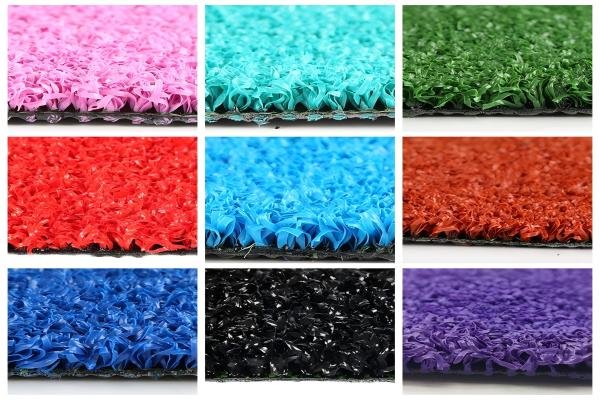
The most common padel court colors are blue, green, and earth-toned (terracotta), as recommended by the International Padel Federation (FIP).1 Blue offers the highest visual contrast for broadcasting, green provides a classic tennis feel, and earth-tones blend well outdoors. Black turf is strictly restricted to indoor courts under FIP guidelines.
Understanding these basic categories is only the first step. Before you finalize your procurement order, you must look beyond aesthetics and evaluate how your chosen color impacts tournament hosting, player performance, and factory production schedules.
What Are the Official FIP Recommended Padel Court Colors?
Investors often dream of installing neon or jet-black outdoor courts to make their commercial club stand out. However, ignoring official federation rules can disqualify your venue from hosting lucrative regional tournaments. You must align your structural design with established sports standards to protect your investment.
The International Padel Federation (FIP) mandates that padel court colors for official tournaments must be blue, green, or terracotta (earth-toned). The turf color must be uniform and distinct from the ball and wall colors.2 Black turf is permitted exclusively for indoor installations.
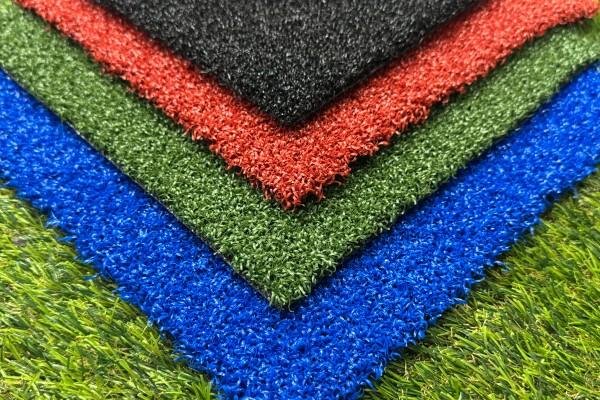
When you build a padel club, your primary goal is generating revenue through court rentals, coaching, and tournaments. By straying from FIP-approved padel court colors, you instantly limit your business model. The federation selected blue, green, and terracotta specifically because these shades provide an optimal, uniform background for tracking the ball at high speeds.
I remember a client who insisted on an all-black outdoor setup against my advice. They wanted a sleek, aggressive brand aesthetic. They later lost a local municipality bid to host a regional qualifier because the local sports bureau strictly followed FIP guidelines. Furthermore, using black turf outdoors absorbs excessive solar heat, making the court physically uncomfortable for players during summer months.3
To help you decide, here is how the three standard colors typically perform in the market:
| Court Color | Aesthetic Vibe | Best Application Environment | FIP Tournament Status |
|---|---|---|---|
| Blue | Modern, professional | High-end clubs, televised events, indoor/outdoor | Fully Approved |
| Green | Traditional, natural | Parks, country clubs, traditional tennis crossovers | Fully Approved |
| Terracotta | Warm, rustic | Outdoor resorts, Mediterranean landscapes | Fully Approved |
| Black | Sleek, aggressive | Premium indoor facilities only | Indoor Approved Only |
If your goal is to attract professional players or host official events, sticking to the primary FIP palette is non-negotiable. Certifications and tournament approvals matter deeply for commercial clubs, so you should always verify your local federation’s rulebook before ordering your court materials.
How Does Padel Court Color Impact Player Visual Experience?
A visually stunning club logo does not always translate into a highly playable sports surface. When brands force their corporate colors onto the court, players often struggle to track the fast-moving ball. Prioritizing playability over brand ego is essential for securing long-term customer retention.
Padel court color directly dictates the visual contrast between the playing surface and the yellow padel ball. High contrast reduces eye strain and improves player reaction times.4 While non-tournament venues can customize turf colors, they must ensure the shade does not camouflage the ball during fast-paced rallies.
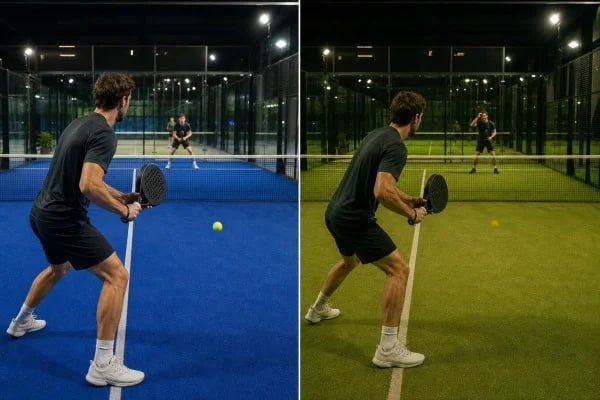
The primary functional purpose of any padel court color is to provide a solid, contrasting backdrop. Padel is a rapid, reactive sport. Players constantly track a small, bright yellow ball bouncing off artificial grass, tempered glass, and steel mesh.5 If the turf color blends with the ball, player fatigue increases, and the overall sporting experience degrades rapidly.
Balancing Brand Identity and Playability
Many equipment distributors and commercial real estate developers want to customize courts to match their corporate identity. While we fully support OEM customization at the factory level, we always advise buyers to manipulate the steel frame color rather than the turf color. Customizing the steel posts and mesh panels to match your brand leaves the playing surface visually optimized for the sport.
When evaluating a padel court color from a playability standpoint, you must consider these factors:
- Ball Visibility: Light yellow or lime-green turf will render the standard yellow padel ball nearly invisible.6
- Frame Contrast: If you choose blue turf, a contrasting frame color (like white or black) helps players subconsciously judge the boundaries of the court faster than a matching blue frame.
- Glass Reflections: Lighter turf colors reflect more heavily against tempered glass under bright sunlight.7 This glare can obscure a player’s vision when defending shots off the back wall.
Blue remains the dominant market choice (especially for our best-selling Panoramic Courts) precisely because it offers the highest optical contrast for both the human eye and camera sensors. If your business model relies on players recording and sharing their matches on social media, a blue court ensures the ball remains visible on smartphone cameras.
What Is the Manufacturing Reality of Custom Padel Turf Colors?
Many buyers browse custom turf shades online and assume they can order a single pink or grey court with a simple click. This misunderstanding of factory production lines leads to blown budgets and delayed construction timelines. You must understand how minimum order parameters dictate your design options.
Customizing a padel court color requires meeting a factory Minimum Order Quantity (MOQ), typically set at 6 courts or approximately 1,254 square meters. Single-court buyers cannot easily access non-standard turf colors without paying prohibitive machine setup fees or accepting extended manufacturing lead times.
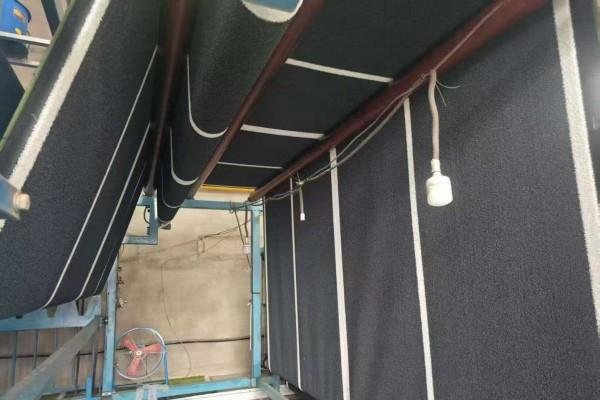
As a B2B manufacturer managing ten production lines, I constantly field requests for single custom-colored courts. Buyers often do not realize that changing the yarn color in massive industrial tufting machines requires significant downtime, material purging, and recalibration. This is why the industry operates on strict MOQs for non-standard requests.
Planning Your Procurement Strategy
If you are a civil contractor or club operator planning your procurement schedule, you must align your color choices with your purchasing volume. We maintain a monthly output exceeding 1.5 million square meters of artificial turf. Standard blue and green yarns are running continuously on our machines. Therefore, standard colors benefit from our fastest lead times: we can produce two standard courts in just 20 days.
If you decide to pursue a custom padel court color, you must plan for the following realities:
- The 6-Court Threshold: You must order at least 6 courts (around 1,254 sqm) to trigger a custom turf production run. If you only need two courts for your club, a custom turf color is not a financially viable procurement path.
- Extended Lead Times: Custom-made styles and colors push production timelines up to 35 days. You must build this buffer into your site preparation and installation schedule.
- Spare Parts Inventory: If you buy a custom color, you must order extra rolls of turf during your initial purchase. If a section of your court gets damaged three years later, you will not be able to buy a small 10 sqm patch of that exact custom shade.
By understanding these supply chain constraints, engineering contractors and club investors can make rational, budget-conscious decisions rather than chasing aesthetic concepts that disrupt their project timelines.
Why Do 3D Renders Differ From Actual Padel Court Colors On-Site?
Relying strictly on computer-generated 3D design renders sets buyers up for massive visual disappointment. When the shipping container arrives and the court is built, the turf often looks drastically different under local stadium lights. You need to account for lighting interactions and material properties before signing the commercial invoice.
A padel court color changes appearance based on environmental lighting, LED color temperature, and sun exposure.8 3D renders cannot perfectly replicate how an 800-lux LED fixture interacts with textured artificial polyethylene grass. Furthermore, different colored turfs possess identical UV resistance when manufactured to standard specifications.
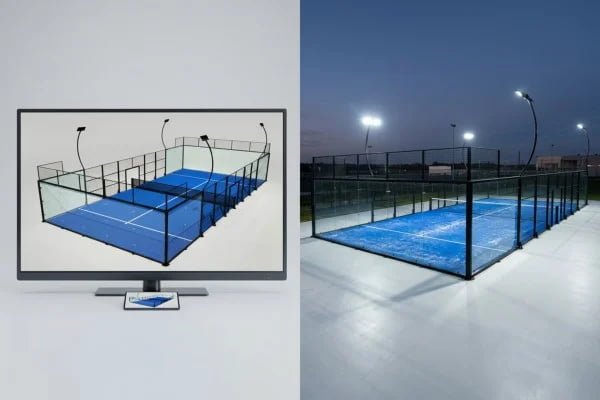
Buyers frequently fall victim to the "lighting illusion." A dark, navy blue court might look incredibly rich and moody in a PDF architectural render. However, once we ship the court and the local contractor installs our CE-certified AS/NZS compliant 200W LED lights, that dark blue suddenly reflects a bright, vibrant hue under the intense 800-lux nighttime illumination.
The Truth About Color and Material Durability
Another major misconception I encounter is the belief that padel court color dictates the physical durability of the grass. Clients often falsely assume that lighter colors degrade faster or that dark green turf possesses better UV resistance.
In factory manufacturing, the color is simply a pigment masterbatch mixed into the polyethylene (PE) resin. The physical performance of the turf is determined entirely by the Dtex (yarn weight), stitch density, and the quality of the UV inhibitors added to the formula. A custom grey turf and a standard blue turf, manufactured to the same ISO9001 specifications, will have the exact same lifespan and weather resistance.
When you procure complete padel court systems, you should ask your supplier for detailed lighting layout drawings alongside the structural foundation drawings. Understanding how the light poles are angled and distributed will give you a much more accurate expectation of how your final padel court color will look in the real world, far beyond what a sterile 3D rendering can provide.
Frequently Asked Questions
Can I use black turf for an outdoor padel court?
No. According to FIP guidelines, black turf is exclusively recommended for indoor padel courts. Using black artificial grass outdoors absorbs excessive solar heat, degrades player comfort, and violates official tournament compliance standards.
Does padel court color affect the price?
The color pigment itself does not change the per-square-meter manufacturing cost of artificial grass. However, non-standard colors require a Minimum Order Quantity (usually 6 courts), which significantly increases the total capital outlay for your procurement project.
Which padel court color is best for TV broadcasting?
Blue is universally considered the best padel court color for broadcasting and live streaming. It provides the highest optical contrast against the yellow padel ball, making it easier for both live spectators and digital camera sensors to track fast-paced rallies.
Can I customize the frame color instead of the turf?
Yes. Customizing the steel frame color (using standard RAL color codes) is a highly recommended way to showcase your brand identity. This allows you to maintain standard, FIP-approved turf colors for optimal playability while still personalizing the club’s aesthetic.
Conclusion
Choosing the right padel court color is a strategic business decision that directly impacts tournament compliance, player satisfaction, and your procurement budget. While commercial clubs may desire unique branding, sticking to FIP-approved blue, green, or earth-toned turf ensures maximum visual contrast and avoids the costly manufacturing delays associated with custom color MOQs. Always factor in real-world LED lighting effects rather than relying entirely on digital renders.
If you are a club operator, contractor, or distributor looking for reliable, CE-certified complete padel court systems, QHPADEL has the factory capacity and export expertise to deliver. Contact Alice Chen at alice@grass-supplier.com or via WhatsApp at +86 185 7566 0746 to discuss your project specifications, request technical drawings, and secure your order today. Visit our website at www.qhpadel.com to explore our Panoramic and Classic court packages.
-
"Documents", https://www.padelfip.com/documents/. See the International Padel Federation (FIP) Rules of Padel, which specify the approved color palette for official tournament playing surfaces. Evidence role: general_support; source type: institution. Supports: The official FIP regulations regarding approved playing surface colors for padel courts.. Scope note: FIP rules are periodically updated; the citation should reference the most current edition of the regulations. ↩
-
"Official Padel Rules (FIP): 2026 Summary and Practical Guide", https://padel.how/rules/official-fip-padel-rules/. According to FIP structural and sporting guidelines, the playing surface must maintain a uniform color that provides clear visual contrast against the ball and boundary walls. Evidence role: general_support; source type: institution. Supports: The regulatory requirement for visual contrast between the playing surface, walls, and the ball in padel.. ↩
-
"The effect of synthetic grass sports surfaces on the thermal environment", https://pmc.ncbi.nlm.nih.gov/articles/PMC11272752/. Studies on the thermal performance of synthetic sports surfaces demonstrate that low-albedo colors, such as black, absorb significantly more solar radiation, resulting in higher surface temperatures compared to lighter hues. Evidence role: mechanism; source type: research. Supports: The relationship between the color of synthetic turf and its solar heat absorption rates.. Scope note: Actual surface temperature increases also depend on ambient temperature, humidity, and the specific polymer composition of the turf. ↩
-
"Comparison of Blue-Yellow Opponent Color Contrast … – PMC", https://pmc.ncbi.nlm.nih.gov/articles/PMC3690730/. Research in sports vision indicates that high luminance and chromatic contrast between a target object and its background significantly enhances visual tracking efficiency and reduces ocular fatigue during high-speed tasks. Evidence role: mechanism; source type: paper. Supports: The biomechanical and visual benefits of high-contrast environments on reaction time and eye fatigue.. ↩
-
"Visual Behaviours of Expert Padel Athletes When Playing on …", https://pmc.ncbi.nlm.nih.gov/articles/PMC9919481/. Sports science analyses of padel highlight the intense visual demands placed on players, who must continuously track high-velocity trajectories across varying background materials including glass, mesh, and synthetic turf. Evidence role: general_support; source type: paper. Supports: The complex visual tracking requirements inherent to the sport of padel.. ↩
-
"Camouflage and visual perception – PMC – NIH", https://pmc.ncbi.nlm.nih.gov/articles/PMC2674079/. Principles of visual psychophysics demonstrate that target visibility degrades severely when the chromaticity and luminance of a moving object closely match its background, effectively camouflaging the object. Evidence role: mechanism; source type: research. Supports: The degradation of visual target acquisition when the target and background share similar chromatic properties.. ↩
-
"Albedo", https://en.wikipedia.org/wiki/Albedo. Architectural optics studies confirm that high-albedo ground surfaces reflect a greater percentage of incident sunlight, which consequently increases the intensity of secondary reflections and glare on adjacent vertical glass panes. Evidence role: mechanism; source type: research. Supports: The optical mechanism by which lighter ground surfaces increase reflective glare on adjacent glass structures.. Scope note: The intensity of the reflection is also heavily influenced by the angle of the sun and the specific anti-reflective coatings (if any) on the glass. ↩
-
"Effect of warm/cool white lights on visual perception and mood …", https://pmc.ncbi.nlm.nih.gov/articles/PMC8481791/. The perceived hue of a surface is highly dependent on the spectral power distribution of the illuminant, a phenomenon in colorimetry where varying LED color temperatures can drastically alter the visual appearance of identical pigments. Evidence role: mechanism; source type: encyclopedia. Supports: The phenomenon of metamerism and how illuminant color temperature affects perceived surface color. ↩