Investors are rushing to upgrade their courts, but integrating new padel technology often turns into an expensive nightmare. A flashy AI camera system means nothing if your structural hardware cannot support it. We solve this by ensuring every smart accessory integrates flawlessly with a rock-solid, physically optimized court foundation.
Padel technology redefines the sport by driving higher booking rates and increasing operational ROI through AI cameras and automated systems1. However, these smart systems rely entirely on a durable physical foundation. Proper structural integration, custom load-bearing poles, and flicker-free lighting are mandatory prerequisites for any smart padel technology to function correctly.
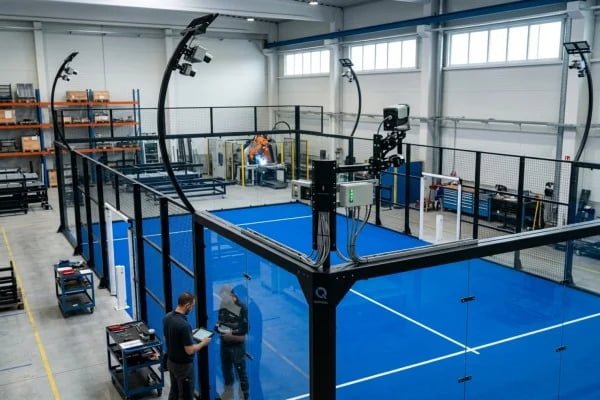
You cannot simply bolt a high-tech camera onto a standard fence and expect it to track high-speed rallies accurately. Let us explore exactly how physical hardware must adapt to accommodate these advanced software systems.
Why does AI ball-tracking fail without proper padel technology integration?
Club owners often spend thousands on AI scoring systems, only to find the cameras constantly losing the ball during evening matches. Frustrated players demand refunds. The root cause usually hides in the court’s physical lighting setup.
High-end AI cameras require flawless lighting to track fast-moving objects.2 Standard LED lights often suffer from imperceptible flicker or uneven brightness, which fatally disrupts ball-tracking algorithms. Successful padel technology integration demands structural lighting upgrades designed specifically for camera synchronization.
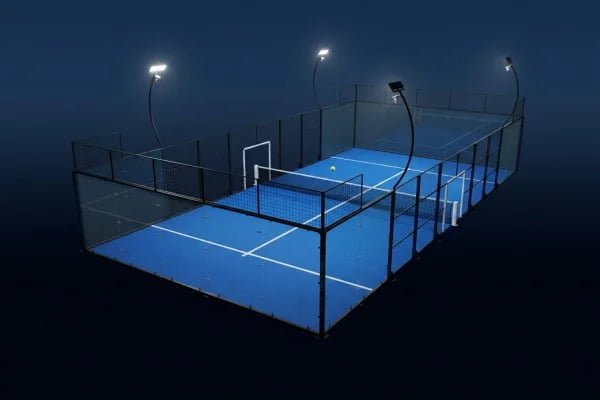
I review Bill of Materials (BOM) configurations daily as a pre-sales expert. I frequently see buyers request basic, entry-level lighting fixtures alongside heavy investments in smart padel technology. This creates the ultimate AI lighting trap.
An AI algorithm processes dozens of frames per second. If your LED drivers produce micro-flickers, the camera sensor records dark frames.3 The software then drops the ball trajectory, rendering the automated scoring useless. Furthermore, uneven lux levels across the court surface create harsh shadows. Cameras struggle immensely to distinguish a fast-moving ball from a dark shadow4 in the corner of a panoramic court.
We mandate specific lighting standards for any smart court setup to protect your investment. We use CE-certified, AS/NZS 61347 compliant LED lights equipped with high-quality drivers to eliminate this flicker.
Lighting Requirements for Smart Courts
- Flicker-Free Drivers: Essential for high-frame-rate AI cameras to maintain continuous tracking.
- Uniform Lux Distribution: Eliminates blind spots and shadows in the camera’s field of view.
- Angled Glare Control: Prevents the light fixtures from directly blinding the sensitive camera sensors.
Our factory pre-assembly process tests these lighting configurations before export. Software updates cannot fix bad physical lighting. You must build the correct physical environment first if you want your padel technology to deliver a return on investment.
Can standard court structures support smart padel technology?
You install a premium automated recording system to generate highlight reels for your players. A mild breeze picks up, and the resulting footage becomes a blurry, unwatchable mess. Wind vibration destroys camera effectiveness on standard structural poles.
Standard padel structures cannot adequately support heavy smart padel technology. Outdoor environments subject cameras to wind vibration, causing severe footage blur. We solve this by manufacturing custom load-bearing poles with thicker steel and pre-embedded wiring tubes to physically protect the equipment.
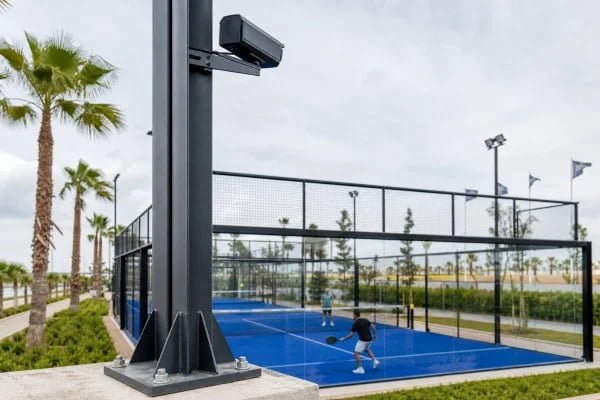
I regularly receive installation feedback from our export clients operating in the Middle East and South America. High winds, coastal gales, and extreme weather are daily realities in these regions. A standard structural post simply flexes too much under these wind loads when carrying extra weight at the top.
When a camera shakes, the smart padel technology fails entirely. Players pay a premium for crisp, automated highlight reels. They will not accept blurry videos. To support advanced smart accessories, we must rethink the structural physics of the entire court frame.
Structural Customizations for Smart Tech
We modify the BOM to include several critical structural upgrades for smart courts:
- Thicker Steel Profiles: We upgrade the gauge of the steel posts carrying cameras to eliminate micro-vibrations and sway.
- Pre-embedded Wiring Channels: Exposed data cables degrade quickly under harsh UV light5 or heavy rain. We route cables inside the steel structure during manufacturing.
- Reinforced Mounting Brackets: We weld custom brackets directly onto the frame at the factory, ensuring absolute rigidity.
| Feature | Standard Court Structure | Smart Court Structure |
|---|---|---|
| Post Thickness | Standard safety specification | Upgraded gauge for maximum rigidity |
| Cable Management | External zip ties and plastic conduits | Pre-embedded internal steel tubes |
| Mounts | Aftermarket clamps | Factory-welded custom brackets |
| Wind Resistance | Meets standard structural limits | Enhanced to prevent camera blur entirely |
These physical upgrades protect your software investment. We secure these setups using AD 2000 WO certified screws and accessories. A camera system is ultimately only as good as the steel holding it in place.
Will smart padel technology save a failing club ROI?
Many operators try to mask high maintenance costs by adding flashy automated booking systems to their venues. They hope new technology will automatically boost revenue. Sadly, basic hardware failures quickly consume those hard-earned tech profits.
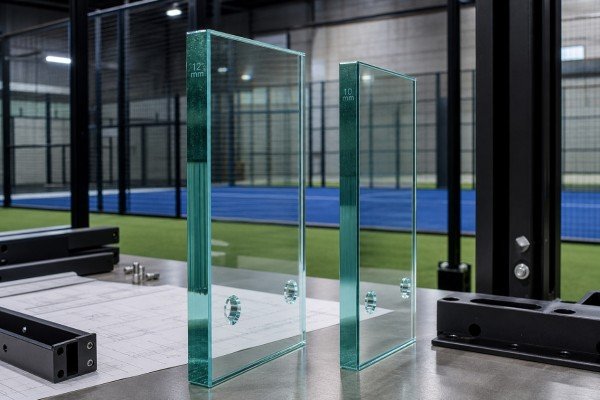
No amount of smart padel technology can offset the financial drain of fundamental hardware failures. Tempered glass explosions and rapid artificial turf aging will destroy your operational budget. Profitable padel technology requires a highly durable, maintenance-free physical foundation to ensure true ROI.
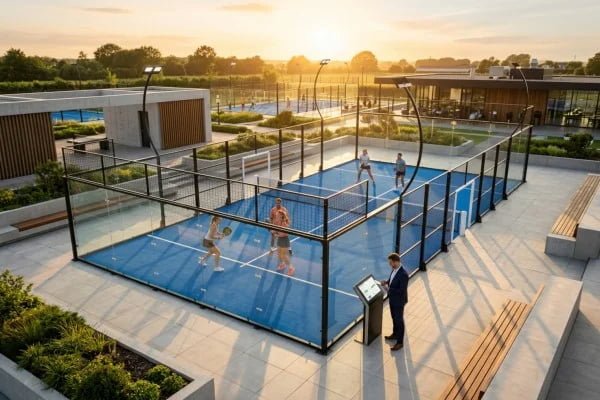
Club investors want to increase ticket sizes and maximize daily booking rates. Implementing padel technology certainly attracts players. However, we must evaluate commercial ROI honestly as business operators. The battle between build costs and operational profit dictates your ultimate success.
I constantly see civil contractors pitch high-end tech packages while cutting corners on the foundation to save money. This approach guarantees failure. If a poorly manufactured tempered glass panel shatters, your court closes for days. You lose booking revenue, and you face high emergency replacement costs. A smart scoring system sits uselessly above a closed court.
Similarly, low-density turf wears out rapidly under heavy play. If you must replace your artificial grass every two years instead of five, your maintenance budget vanishes.
Prioritizing Durable Hardware
You must secure the physical foundation first. At QHPADEL, we manufacture courts using CE-certified tempered glass that passes strict AS/NZS 2208:1996 and bulletproof tests. We pair this with high-density, UV-resistant artificial turf tailored to your specific Dtex requirements.
- Glass Stability: Reduces emergency replacements and costly operational downtime.
- Turf Longevity: Lowers long-term operational costs and keeps players happy.
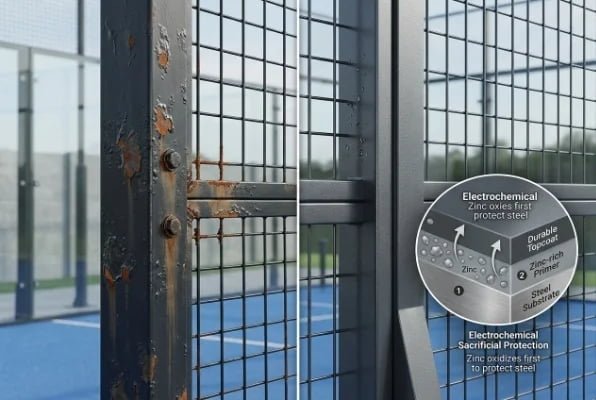
- Rust Prevention: Hot-dip galvanized steel prevents structural degradation over time.
Smart padel technology acts as a revenue multiplier for your club. It multiplies your base profitability. If your base profitability is negative due to constant physical repairs, technology just accelerates your financial losses. "Smart" must always sit on top of "durable".
Where should smart padel technology integration actually happen?
Contractors often assume they can just bolt smart devices onto a finished court after the concrete dries. On-site installation quickly devolves into a nightmare of missing parts and incompatible brackets. Labor costs skyrocket as workers struggle.
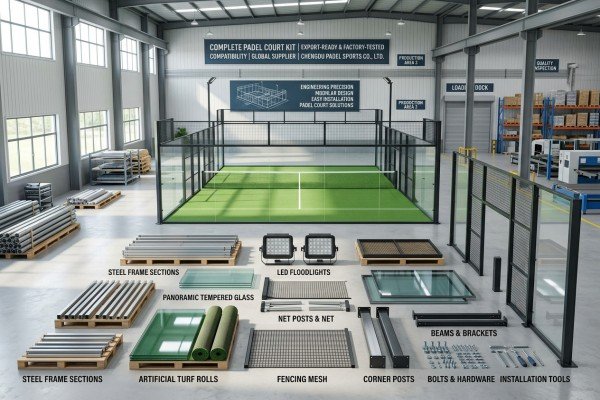
Smart padel technology is not plug-and-play consumer electronics. True integration must happen during the factory pre-assembly phase. We structurally adapt the frame, configure the complete BOM, and debug the physical mounting points before shipping to eliminate on-site installation failures.
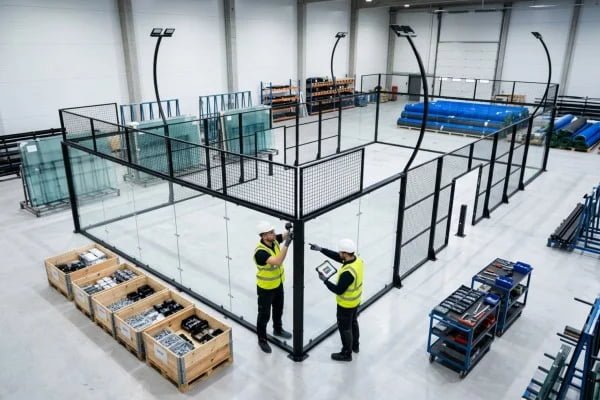
The biggest misconception in our industry is that padel technology is easy to install on site. Buyers frequently purchase cameras and automated systems separately from the court structure. They hand everything to a local civil contractor and expect miracles.
I specialize in physical structural integration. I know exactly how complex this process truly is. You cannot safely drill into a finished, powder-coated steel post on-site without compromising its rust resistance6. You cannot run power lines safely without pre-planned electrical conduits already inside the frame.
The Factory Pre-assembly Advantage
We integrate hardware and software physical requirements at our factory, located conveniently near Tianjin Port. Our engineers meticulously review the physical specifications of your chosen padel technology.
- BOM Customization: We add the exact necessary brackets, fasteners, and wiring channels to the Bill of Materials. We guarantee zero missing parts upon arrival.
- Structural Adaptation: We drill and weld all necessary mounting points before the steel goes through galvanization and powder coating treatments.
- Physical Debugging: We test the physical assembly on our factory floor. We ensure the cameras fit the custom brackets perfectly.
By managing this integration at the factory, we reduce your on-site labor costs drastically. Your local engineering contractor simply follows our clear, detailed installation drawings. We make the hardware accommodate the software, ensuring your smart upgrades actually work flawlessly from day one.
Frequently Asked Questions
Does smart padel technology require special lighting?
Yes. High-speed AI cameras require flicker-free LED drivers and uniform brightness. Standard lights cause harsh shadows and micro-flickers, which completely disrupt the ball-tracking algorithms used in modern padel technology.
Can I add AI cameras to my existing standard padel court?
Adding heavy cameras to standard structures often results in blurry footage due to wind vibration. Upgrading requires custom load-bearing poles and factory-welded brackets to ensure the extreme rigidity necessary for smart padel technology.
How does factory pre-assembly help technology integration?
Factory pre-assembly embeds wiring channels and welds mounting brackets before anti-rust treatments are applied. This ensures smart padel technology is physically compatible, preventing expensive on-site installation nightmares and structural damage.
Will automated booking systems reduce my court maintenance costs?
No. Software cannot fix failing hardware. Profitable padel technology requires a durable foundation. Frequent glass breakages or turf replacements will drain your ROI, regardless of how advanced your tech is.
Conclusion
Upgrading your club with smart padel technology offers incredible ROI, but only if you respect the physical requirements of these systems. Advanced software relies heavily on robust hardware. You need flicker-free lighting for accurate AI tracking, rigid load-bearing poles to prevent camera blur, and highly durable materials to keep maintenance costs low. True integration requires expert BOM configuration and meticulous factory pre-assembly. At QHPADEL, we engineer the solid physical foundations that make padel technology work profitably. Contact Alice Chen today to discuss your next high-performance, tech-ready court project.
-
"The Impact of Emerging Technology in Sports", https://www.ohio.edu/business/academics/graduate/professional-master-sports-administration/resources/technology-sports. Research indicates that the integration of automated video and scoring technologies in recreational sports facilities can increase user retention and booking frequency, thereby improving overall return on investment. Evidence role: general_support; source type: research. Supports: Studies demonstrating the financial impact of smart technology and automated recording systems on user engagement and revenue in sports facilities.. Scope note: Most studies focus on broader sports facility management rather than padel clubs specifically. ↩
-
"A Comprehensive Study of Object Tracking in Low-Light …", https://pmc.ncbi.nlm.nih.gov/articles/PMC11244102/. Computer vision literature establishes that high-speed object tracking algorithms require continuous, uniform illumination to prevent motion blur and feature loss during frame capture. Evidence role: mechanism; source type: paper. Supports: The necessity of consistent, high-quality illumination for the accuracy of computer vision algorithms tracking high-velocity objects.. ↩
-
"Temporal light interference", https://en.wikipedia.org/wiki/Temporal_light_interference. When the frequency of LED Pulse Width Modulation (PWM) is out of sync with a camera’s exposure time or rolling shutter, it results in temporal light artifacts, commonly manifesting as dark frames or banding in the recorded video. Evidence role: mechanism; source type: paper. Supports: The mechanism by which temporal light modulation (flicker) from LED drivers interacts with camera shutters to produce dark or banded frames.. ↩
-
"In-the-Wild Video Shadow Removal via Detail-Preserving …", https://arxiv.org/html/2607.26203v1. Uneven illumination and dynamic shadows are well-documented challenges in computer vision, often leading to false negatives or tracking failures as algorithms struggle to segment the target object from high-contrast background artifacts. Evidence role: mechanism; source type: paper. Supports: The degradation of object detection accuracy in computer vision systems caused by shadows and uneven lighting.. ↩
-
"Photodegradation and photostabilization of polymers … – PMC", https://pmc.ncbi.nlm.nih.gov/articles/PMC4320144/. Prolonged exposure to ultraviolet radiation induces photo-oxidation in standard polymer cable jackets, such as PVC, leading to embrittlement, cracking, and eventual failure of the cable’s protective insulation. Evidence role: mechanism; source type: paper. Supports: The process of photo-oxidation and UV degradation in polymer cable jackets.. ↩
-
"Accelerated Corrosion Tests in Quality Labels for Powder Coatings on …", https://pmc.ncbi.nlm.nih.gov/articles/PMC8585214/. Mechanical alterations, such as drilling, that breach a protective powder coating expose the underlying steel substrate to electrolytes, initiating localized galvanic corrosion and undermining the structural integrity of the component. Evidence role: mechanism; source type: paper. Supports: The mechanism by which mechanical breaches in powder coatings lead to localized corrosion of the steel substrate.. ↩