
Building a new club is stressful, especially when material delays threaten your launch date. Many novice investors struggle with hidden costs and mismatched components during installation. A complete padel court kit eliminates these headaches by providing a unified, factory-tested system ready for your local contractors.
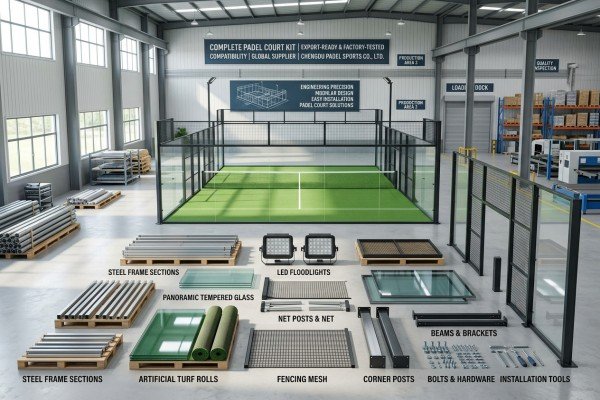
A padel court kit is a comprehensive, factory-consolidated package containing all the specialized structural and sporting materials required to build a court. It functions as a commercial risk-mitigation tool, ensuring that the steel frame, tempered glass, artificial turf, lighting, and specialized hardware fit together with perfect engineering tolerances.
Understanding what comes inside this package—and just as importantly, what does not—is critical for your business plan. Let us explore why buying a unified system protects your investment from logistical nightmares and hidden site costs.
Why is a unified padel court kit crucial for risk management?
Sourcing materials from multiple factories might seem like a clever way to save money. However, this fragmented approach often leads to expensive installation delays, budget overruns, and finger-pointing between suppliers.
A unified padel court kit eliminates the fatal risks of fragmented sourcing by guaranteeing component compatibility. Buying a complete kit ensures the tempered glass perfectly matches the steel frame tolerances, preventing expensive idle labor costs and avoiding situations where suppliers blame each other for defects.
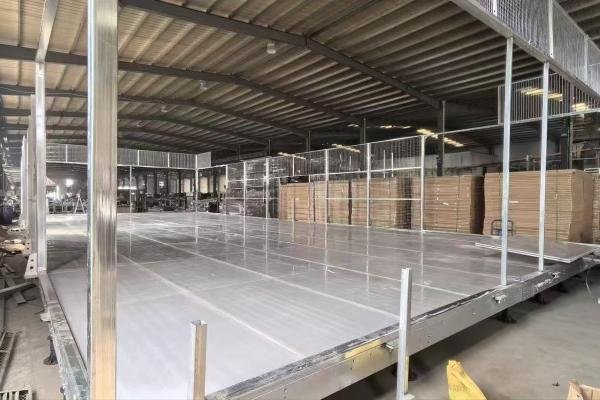
When I advise new club operators and real estate developers, I always emphasize that a padel court kit is not simply a pile of raw materials. It is a commercial safety net. B2B procurement relies heavily on predictability. If your civil contractor is standing on the job site with a crane, and the glass panels do not align with the structural posts, your project budget will immediately begin to bleed.
Who pays for the contractor’s daily rate while you wait for replacement parts? If you bought the steel from one factory and the glass from another, both suppliers will simply blame each other. The steel supplier will claim the glass was cut incorrectly, and the glass supplier will argue the steel frame warped during shipping.
The Cost of Fragmented Procurement
To understand the commercial value of a unified package, we can look at the stark differences in risk profiles:
| Procurement Strategy | Compatibility Risk | Shipping Complexity | After-Sales Accountability |
|---|---|---|---|
| Fragmented Sourcing | High (mismatched tolerances) | High (requires local consolidation) | Low (suppliers point fingers) |
| Unified Padel Court Kit | Low (factory pre-tested) | Low (direct factory loading) | High (single point of contact) |
By purchasing a turnkey padel court kit from a professional manufacturer, the responsibility for dimensional accuracy falls entirely on the factory. Facilities like ours operate under ISO9001 standards, meaning the hole positions, component numbering, and fastener dimensions are standardized1. The frame and glass are designed as a cohesive ecosystem, dramatically reducing your installation timeline.
How does a complete padel court kit prevent container loading disasters?
Shipping heavy steel and fragile glass across the ocean is inherently risky. When buyers consolidate items from different suppliers at a third-party warehouse, they invite severe cargo damage.
Procuring a complete padel court kit guarantees professional, centralized container packing by experienced factory staff. This prevents the severe cargo damage that occurs when inexperienced third-party loaders fail to properly secure heavy steel structures alongside fragile tempered glass panels.
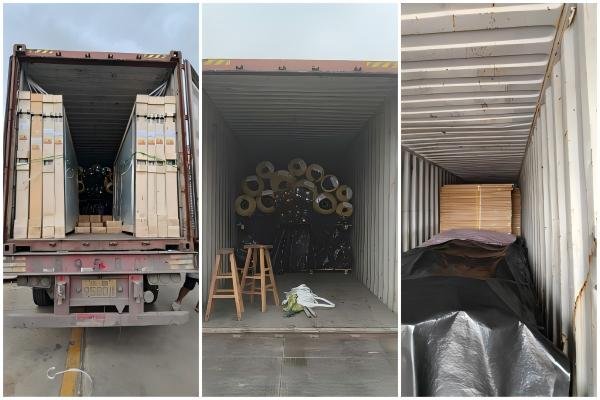
Container loading is one of the most underestimated vulnerabilities in cross-border procurement. Over my years in the export business, I have witnessed the aftermath of poor consolidation. I once spoke to an investor who attempted to save money by purchasing glass, steel, and turf separately, sending them to a generic freight forwarder near the port.
The forwarder treated the shipment like ordinary cargo. They stacked two-ton pallets of galvanized steel right next to poorly crated glass. During the ocean transit to South America, the container encountered heavy swells. The steel shifted, crushing the glass. Upon arrival, the investor faced thousands of dollars in replacement costs and a two-month project delay.
The Engineering of Unified Loading
A factory-direct padel court kit solves this logistical nightmare through specialized loading protocols. Because the factory manufactures the entire system, we know exactly how to distribute the weight inside a 40-foot High Cube (40HQ) container.
- Custom Steel Pallets: The heavy structural posts and welded mesh frames are strapped into custom-built steel pallets that cannot collapse.
- A-Frame Wooden Crates: Tempered glass is secured vertically in reinforced A-frame crates to absorb vibration.
- Strategic Cushioning: Artificial turf rolls are strategically positioned between heavy components to act as massive, shock-absorbing bumpers.
When you purchase a complete kit, you are paying for the certainty that your materials will arrive in the exact condition they left the factory.
What does a professional padel court kit Bill of Materials (BOM) look like?
A vague packing list is a warning sign of an unprofessional supplier. Without an exact inventory, your contractors will inevitably halt construction to run to local hardware stores.
A professional padel court kit is defined by the absolute precision of its Bill of Materials (BOM). A proper turnkey kit accounts for thousands of components, detailing everything from the exact square meterage of turf to the precise count of specific anti-rust screws.
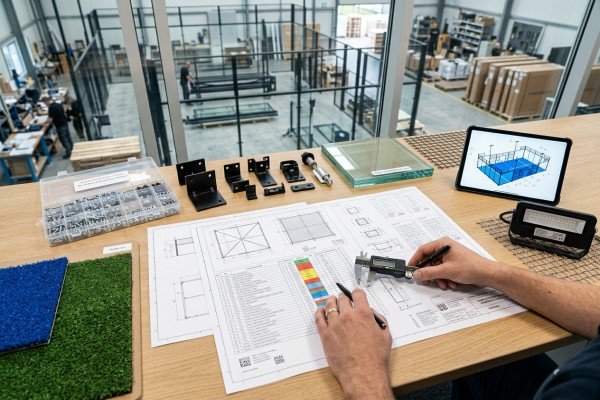
Predictability on your job site begins with documentation. For engineering contractors and local sports equipment distributors, the BOM is the blueprint of certainty. If a padel court kit arrives in the Middle East missing a specific set of brackets, the installation stops.
A high-quality supplier will provide a BOM that functions as a comprehensive checklist for both customs clearance and site handover. This document ensures transparent pricing with absolutely zero hidden material costs on the manufacturer’s side.
Core Components of a Standard BOM
When evaluating a manufacturer, demand to see a sample BOM. A legitimate padel court kit will explicitly list:
- Structural Integrity System: Exact quantities of galvanized steel posts, panoramic or classic welded mesh panels, and corner supports (all CE certified).
- Glass Enclosure: The count of 10mm or 12mm tempered glass panels (meeting AS/NZS 2208:1996 and CE standards), including specific neoprene vibration dampeners.
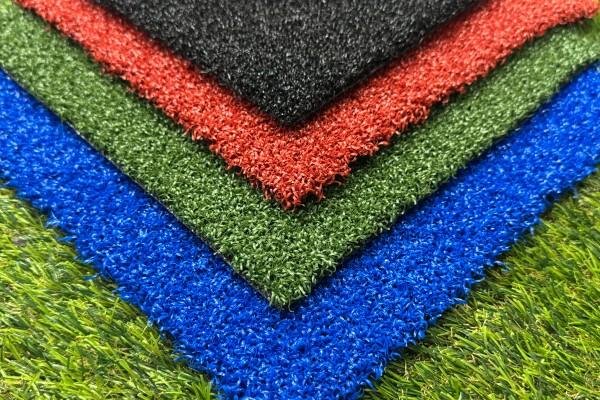
- Playing Surface: The precise dimensions of the CE-certified artificial turf (monofilament or texturized), calculated to fit the court with minimal waste.
- Illumination: LED lighting fixtures (AS 61347.2.13:2018 certified) and necessary mounting brackets.
- Fastening Hardware: The exact number of AD 2000 WO certified screws, bolts, and specialized accessories.
Crucially, an experienced B2B supplier will also include a clearly defined spare parts package. We automatically include extra screws, washers, and wear-and-tear items in every padel court kit to buffer against hardware dropped or lost by workers during installation.
What is excluded from a standard padel court kit?
Unrealistic expectations about "all-inclusive" packages can ruin your construction budget. Failing to account for locally sourced materials will leave your business plan severely underfunded.
A standard padel court kit strictly excludes site preparation materials like underground concrete foundations, silica sand for the turf, main electrical wiring, and artificial turf glue. These heavy or highly regulated materials must be sourced locally by your civil contractor.
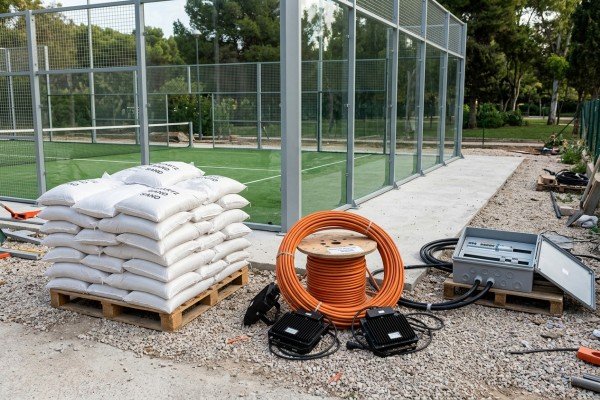
As a trusted manufacturing partner, I believe it is vital to tell investors exactly what is not in the box. Beware of any marketing brochure that claims their kit includes "100% everything." This is an operational impossibility. Your business plan must accurately reflect local procurement costs.
A professional padel court kit contains the above-ground superstructure. However, there are four major categories you must arrange locally.
The Local Procurement Checklist
- Concrete Foundations: We provide the foundation drawings and pre-embedding tolerance requirements, but the concrete, rebar, and labor must be managed locally based on your region’s soil conditions.
- Silica Sand: A single standard court requires approximately 1 to 2 tons of silica sand to infill the artificial turf. Shipping common sand across the ocean is an immense waste of freight budget. You must buy this locally.
- Electrical Grid Connections: The kit includes the LED lights and the internal wiring for the light poles. However, the main electrical cabinet, circuit breakers, and the trench wiring that connects the court to your city grid must be sourced locally to comply with your specific municipal codes.
- Two-Component Polyurethane Glue: Artificial turf requires specialized glue for the seaming tape. This glue is classified as a hazardous chemical for ocean freight. Including it in a mixed container can cause customs to flag and hold your entire shipment. Buying it locally bypasses massive shipping delays.
Frequently Asked Questions
How long does it take to manufacture a padel court kit?
For standard designs, a factory can produce two complete courts in 20 days, and up to four courts in 20–25 days. Orders exceeding four courts take up to 30 days. Custom-made styles generally require up to 35 days prior to container loading.
Can I customize the colors of my padel court kit?
Yes. Suppliers offer OEM/ODM customization for steel frame colors and turf specifications (color, Dtex, and density). Note that custom artificial turf generally requires a Minimum Order Quantity (MOQ) of 6 courts (approximately 1,254 sqm).
Do I need a specialist to install a padel court kit?
You do not strictly need a dedicated padel specialist, but you must hire an experienced local civil or engineering contractor. The factory supplies detailed foundation drawings, installation manuals, and online guidance to ensure accurate assembly.
What certifications should a padel court kit have?
A professional kit should feature CE and RoHS for the artificial turf, CE for the steel structure, and CE, AS/NZS 2208:1996 for the tempered glass. Fasteners should carry PED 2014/68/EU system approvals to guarantee structural safety.
Conclusion
A well-engineered padel court kit is far more than a collection of sporting goods; it is a critical commercial asset that protects novice investors from budget overruns, installation failures, and logistical damage. By choosing a unified system, you secure perfect component tolerances, professional container consolidation, and an exact Bill of Materials. Just remember to account for local necessities like silica sand and foundation concrete in your business plan.
-
"ISO 9000 family", https://en.wikipedia.org/wiki/ISO_9000_family. See the International Organization for Standardization (ISO) guidelines on ISO 9001, which detail how quality management systems enforce process consistency to meet strict product specifications and tolerances. Evidence role: mechanism; source type: institution. Supports: The role of ISO 9001 in ensuring consistent manufacturing outputs and standardized component dimensions.. Scope note: ISO 9001 dictates the quality management process rather than specific physical dimensions, though strict adherence to the process results in dimensional consistency. ↩