A successful padel court requires more than standard dimensions and an attractive quotation. Buyers who focus only on headline price can face approval delays, unsafe structural interfaces, poor playability, missing components, and costly installation rework. I use five essential quality checks to evaluate whether a proposed court package is suitable, complete, compliant, installable, and maintainable.
The five essential quality checks for a successful padel court or club cover site suitability, integrated structural safety, playing-surface performance, delivery completeness, and installation readiness. Buyers should test each area against local conditions and project risks rather than relying only on dimensions, certificates, or price. Qualified local professionals should verify engineering and regulatory requirements.

I developed this framework through specification clarification, factory quality control, system complementation, export packing, and missing-part resolution. Each check addresses a different failure point. Together, they help investors, contractors, distributors, and institutions compare suppliers on total project readiness instead of a visually impressive quotation.
1. Is the Padel Court Configuration Suitable for the Site?
Site suitability often receives attention after a buyer requests a quotation. That sequence creates risk because wind exposure, local approvals, drainage, climate, and installation access can change the required configuration. I recommend defining these conditions before a supplier fixes the design, price, or production schedule.
A suitable padel court configuration must match the site’s local codes, wind conditions, corrosion exposure, drainage, foundation design, usage intensity, transport access, and installation interfaces. Buyers should document these requirements before ordering. A qualified local engineer and approval authority should verify all location-specific structural, civil, electrical, and regulatory conclusions.
Start With a Project-Risk Questionnaire
I often receive an initial request that says only, “Please quote one panoramic court.” That description identifies a visual style, but it does not define the project. A coastal hotel, an indoor sports center, and a rooftop development can require very different engineering, finishing, unloading, and approval arrangements.
I recommend that buyers give every shortlisted supplier the same site questionnaire. The questionnaire should include:
- The buyer should identify the country, city, and exact site type.
- The buyer should state whether the installation will be indoor, outdoor, coastal, rooftop, or partially enclosed.
- The local project team should provide the required design wind speed and applicable code.
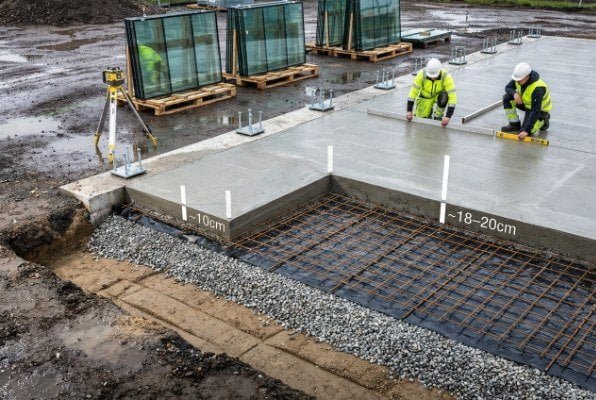
- The civil contractor should confirm the slab or foundation design, level tolerance, drainage plan, and anchor interface.
- The buyer should describe rainfall, humidity, temperature range, salt exposure, and other corrosion conditions.
- The operator should estimate daily use, coaching activity, competitions, and expected maintenance capacity.
- The logistics team should verify container access, unloading equipment, storage space, and final movement to the installation area.
- A licensed electrical professional should confirm the local voltage, frequency, circuit protection, earthing, and lighting rules.
Connect Each Condition to a Failure Mode
A useful quality check does not merely collect specifications. It connects each site condition to a possible technical and commercial consequence.
| Site factor | Possible failure mode | Commercial consequence | Verification method |
|---|---|---|---|
| High wind exposure | Excessive structural demand | Redesign, approval rejection, or safety risk | Local design criteria and structural calculations |
| Coastal environment | Accelerated corrosion | Early coating damage and higher maintenance | Corrosion category review and coating documentation |
| Poor drainage | Water retention around turf or base | Interrupted play and surface problems | Civil drawings, slopes, and drainage inspection |
| Uneven foundation | Misaligned frame and glass interfaces | Installation delays or glass stress | Survey report and tolerance check |
| Restricted access | Components cannot reach the site | Extra handling, cranes, or repacking | Access survey and unloading plan |
| Local electrical differences | Incompatible lighting installation | Rework or failed inspection | Licensed local electrical review |
I once handled a clarification in which the buyer initially requested a standard outdoor package. The later site information showed that the project was close to the sea and exposed to strong wind1. The important lesson was not that one standard solution always works. The lesson was that site data can change the appropriate court configuration2 before production begins.
Product certificates do not replace this process. A component may have CE-related documentation or another test report, but the local authority can still require project-specific calculations, stamped drawings, permits, or additional evidence3. I recommend that buyers treat certificates as documents to authenticate and review, not as automatic proof of complete local compliance.
2. Does the Padel Court Work as One Safe Structural System?
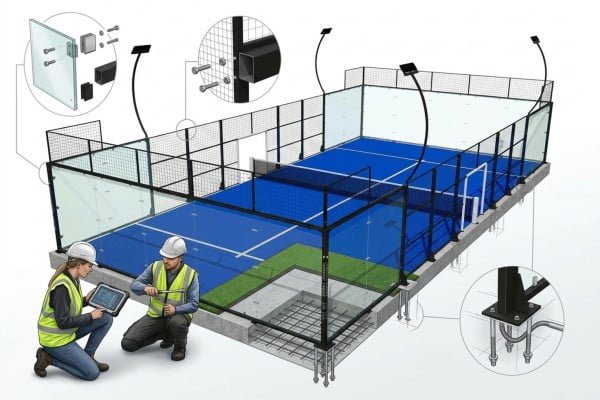
A supplier can present strong specifications for steel, glass, fasteners, and lighting while overlooking the connections between them. That gap matters because a court behaves as an integrated system4. I therefore inspect how the frame, foundation, glazing, fencing, hardware, and electrical components work together.
An integrated padel court assessment should review steel fabrication, corrosion protection, structural connections, tempered glass, fasteners, lighting supports, and foundation compatibility as one system. Buyers should compare drawings with actual components and verify material documents, dimensions, weld quality, coating, hole positions, and connection details before shipment and installation.
Review the Structural Interfaces
The frame does not stand independently from the foundation. The glass does not perform independently from its supports. The lighting posts also add loads and connection demands. I recommend that a qualified structural engineer evaluate the complete load path for the actual project location.
The technical review should cover at least:
- Foundation-to-frame interface: The reviewer should verify anchor positions, edge distances, base plates, embedment assumptions, and concrete requirements.
- Post-to-panel connections: The reviewer should check bolt sizes, hole alignment, connection plates, and installation access.
- Frame-to-glass interface: The reviewer should examine support details, clearances, protective pads, fastener arrangements, and glass documentation.
- Fence and mesh connections: The reviewer should confirm rigidity, weld quality, edge finishing, and safe player-contact areas.
- Lighting supports: The reviewer should assess brackets, poles, fixture weights, cabling routes, and local electrical requirements.
Inspect Fabrication Rather Than Reading Only the Specification
A drawing can specify a steel grade and tube dimension, but those values do not show whether production achieved accurate geometry. I look for evidence that the factory checks cutting, welding, drilling, surface preparation, finishing, and trial assembly where appropriate.
Buyers can request:
- Approved production drawings with revision numbers
- Raw-material records linked to the order
- Dimensional inspection reports
- Weld and surface-finish inspection records
- Coating thickness measurements when relevant
- Glass markings and supporting certificates or test reports
- Fastener identification and documentation
- Pre-shipment photographs tied to component numbers
- Records of corrective action for nonconforming parts
During production control, I have seen a small hole-position deviation create a much larger installation problem. A single panel can affect the alignment of the next post, the adjacent mesh section, and the glass interface5. The factory can often correct that deviation before finishing and packing. The same correction becomes slower and more expensive after export.
Verify Certificates Carefully
QHPADEL can provide documents associated with items such as an ISO 9001-certified factory, CE-related product documentation, artificial turf documentation, tempered glass reports, lighting documents, and fastener-related approvals. However, I advise buyers to apply the same verification process to any supplier:
- The buyer should confirm the issuing organization.
- The buyer should check the certificate number and validity.
- The buyer should match the named manufacturer to the actual supplier or production source.
- The buyer should compare the stated standard and product scope with the ordered component.
- The project’s qualified professional should decide whether the document supports the local approval process.
A genuine certificate can still have a limited scope. It may cover one product family, test condition, thickness, model, or manufacturing site. The buyer should never assume that a document shown in a catalog covers every configuration.
3. Will the Padel Court Turf Deliver the Required Playing Performance?
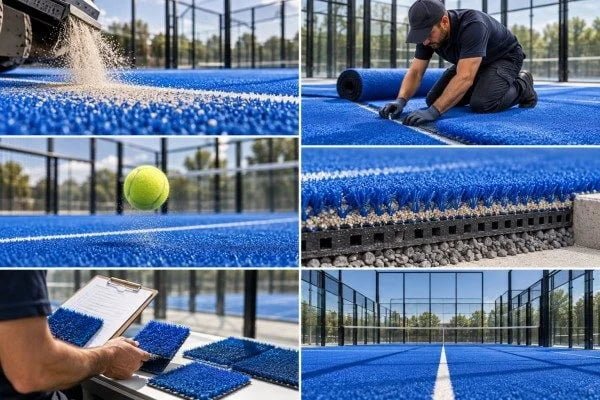
Artificial turf quotations often highlight one number, such as Dtex, pile height, or stitch rate. One parameter cannot predict total performance. I assess the surface according to its intended use, installation method, infill, drainage, maintenance plan, and interaction with the surrounding court system.
A padel court turf system should match the expected playing level, usage frequency, climate, drainage, infill specification, installation quality, and maintenance capacity. Buyers should compare complete turf specifications and samples rather than one headline figure. They should also confirm installation instructions, roll layout, seam methods, infill quantities, and maintenance requirements.
Compare the Whole Turf System
Dtex generally relates to yarn mass6, but a higher value does not automatically mean that a turf product will suit every court. Density also requires context because manufacturers can express it through stitch rate, gauge, tufting pattern, or stitches per square meter. Pile height, yarn shape, backing, coating, infill, and installation quality also affect the finished surface.
I recommend comparing turf proposals with a standardized table.
| Evaluation item | Why it matters | What the buyer should verify |
|---|---|---|
| Yarn type and shape | The yarn influences appearance, resilience, and interaction with infill | Technical data sheet and physical sample |
| Dtex | The value helps describe yarn mass | Test method and complete yarn specification |
| Pile height | The height affects infill relationship and maintenance | Tolerance and intended application |
| Tufting density | The density affects coverage and surface behavior | Gauge, stitch rate, and calculation method |
| Primary and secondary backing | The backing influences dimensional stability and drainage | Material description and drainage design |
| Roll dimensions | The dimensions affect seams, cutting, and waste | Roll plan for the court layout |
| Infill requirement | The infill affects ball response, stability, and upkeep | Material type, grading, and quantity |
| UV and chemical documentation | The documents support durability evaluation | Applicable reports and test scope |
| Maintenance plan | The plan affects consistency over time | Brushing, redistribution, cleaning, and inspection guidance |
Identify Application Mismatches
The cheapest surface can become expensive if it needs unexpected replacement, frequent correction, or additional labor. Several mismatches can cause poor results:
- An incorrect infill quantity can affect ball behavior and fiber support.
- Weak seam preparation can lead to visible or opening joints.
- Poor base drainage can cause water-related interruptions.
- An unsuitable roll layout can increase waste and create unnecessary seams.
- Limited maintenance capacity can allow infill movement, debris buildup, and uneven playing areas.
- An incompatible surface choice can disappoint operators who expected a different speed or feel.
In feedback that installers and customers have shared with me, many surface complaints initially described as “turf quality” were connected to a combination of turf selection, base condition, infill distribution, or maintenance. I do not treat that feedback as a laboratory conclusion. However, it shows why buyers should investigate the complete system before assigning responsibility.
Use Samples, Records, and Acceptance Criteria
I recommend that buyers approve a physical sample before mass production. The approved sample should have an identification code and should correspond to the confirmed data sheet. For larger or repeat projects, buyers can also retain a reference sample for later comparison.
An acceptance plan can include:
- The supplier should confirm the approved turf code and color.
- The quality team should check roll dimensions and visible consistency.
- The packing list should identify roll numbers and sizes.
- The installer should confirm the base condition before laying the turf.
- The project team should record seam materials and infill quantities.
- The operator should receive a realistic maintenance manual.
No supplier should promise identical playing performance under every climate, installation method, and maintenance routine. A qualified sports-surface consultant or experienced local installer should evaluate application-specific performance where the project requires formal testing or competition-level acceptance.
4. Is the Padel Court Package Complete Before Shipment?
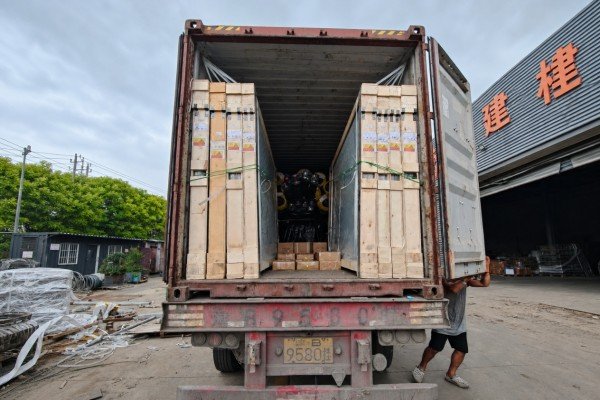
A missing bracket, fastener bag, glass accessory, or special tool can stop installation even when the main frame has arrived safely. International replacement shipments can also cost more than the missing item. I therefore treat system complementation, documentation, and packing as formal quality-control stages rather than warehouse administration.
A complete padel court package should have an approved bill of materials, numbered components, verified quantities, matched drawings, a detailed packing list, traceable accessory cartons, spare-parts provisions, and an unloading plan. Buyers should require a pre-shipment completeness check that links every packed item to the BOM and installation sequence.
Build a BOM That Matches the Commercial Scope
The phrase “complete court” can mean different things to different suppliers. One quotation may include the frame, glass, turf, lights, net, and accessories. Another may exclude anchors, electrical cabinets, cables, infill, installation tools, transport, or spare parts.
I advise buyers to convert the quotation into a line-by-line scope table.
| Package category | Items to clarify | Common commercial risk |
|---|---|---|
| Steel structure | Posts, frames, mesh, doors, brackets | A visual rendering may show items that the quotation excludes |
| Glass system | Panels, pads, bolts, protective parts | Accessories may be packed separately or omitted |
| Turf system | Turf, seam tape, adhesive, infill | The supplier may exclude consumables or local materials |
| Lighting | Fixtures, brackets, cables, controls | Electrical scope can vary by country |
| Playing equipment | Net, posts, tensioning hardware | Small hardware can stop final handover |
| Anchoring | Anchors, templates, base plates | Foundation assumptions may not match the site |
| Spares | Glass, fasteners, lamps, wear items | Replacement lead times can interrupt operations |
| Documentation | Drawings, manuals, certificates, packing list | Missing records can delay customs or handover |
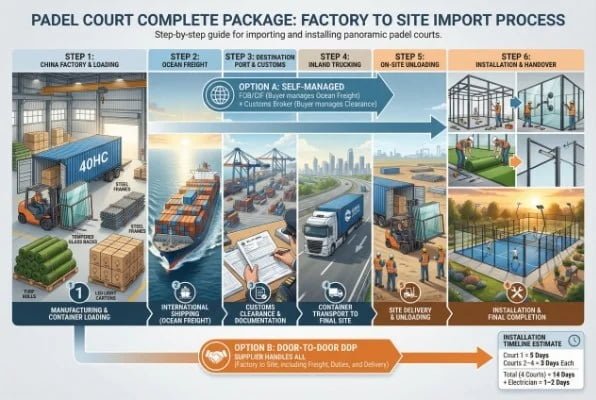
The buyer should also clarify Incoterms, taxes, destination charges, unloading, inland transport, installation, and civil work. These costs may be outside the equipment package, but they still affect the final project budget.
Use Component Numbering and Layered Verification
I prefer a three-way check between the BOM, drawings, and packing list. Each major component should have an identification number that the installer can find on both the drawing and the physical package.
A reliable process usually includes:
- The production team checks quantities after fabrication.
- The quality team inspects the parts against the approved drawings.
- The complementation team groups hardware by installation area or sequence.
- The packing team records crate and carton numbers.
- A second person verifies accessory quantities.
- The shipping team creates photographs or videos of completed packages.
- The buyer receives the final packing list before loading.
I learned a practical lesson from replacement-part cases: a bag labeled only “screws” provides little help at a busy job site. A label such as “M10 connection bolts for side frame, package 3 of 4” gives the installer a usable reference. Clear identification also helps the supplier determine whether an issue involves a shortage, a misplaced carton, or a misunderstanding of the assembly sequence.
Match Packing to the Logistics Route
Packing quality depends on the full journey. The supplier should consider container loading, sea transport, customs inspection, unloading equipment, temporary storage, and movement within the site.
Glass requires particular care. The buyer should verify the rack design, securing method, package weight, unloading direction, and available lifting equipment. The receiving team should inspect packages promptly and document visible transport damage. The sales contract should also explain notification periods and evidence requirements for claims.
5. Is the Padel Court Ready for Accurate Installation and Handover?
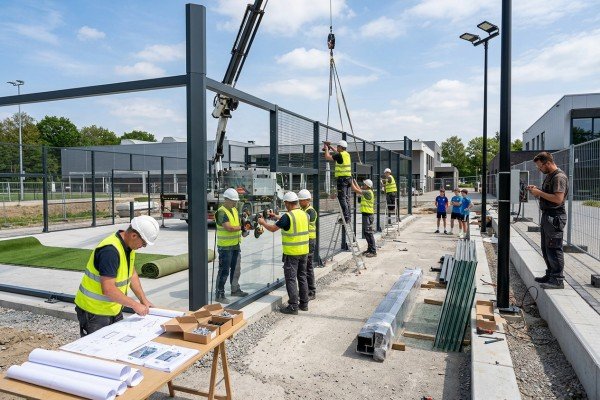
Even a well-manufactured system can fail its schedule if drawings arrive late, tolerances remain unclear, or site responsibilities overlap. Installation readiness connects the factory package to the local civil and installation teams. I check this stage before shipment because later clarification often creates expensive waiting time.
An installation-ready padel court requires coordinated foundation drawings, assembly drawings, component numbering, tolerance requirements, electrical information, unloading instructions, installation guidance, and defined responsibilities. The supplier, contractor, and local professionals should review these documents together before civil work, shipment, and assembly begin.
Freeze Drawings Before Civil Work
The foundation and equipment drawings must refer to the same approved court version. A buyer should not allow a contractor to build from an early sales sketch while the supplier produces from a later technical drawing.
The drawing package should identify:
- The court footprint and orientation
- The foundation or slab interface
- The anchor layout and relevant tolerances
- The drainage assumptions
- The post, mesh, door, and glass positions
- The lighting locations and cable routes
- The component identification system
- The installation sequence
- The required tools and lifting equipment
- The inspection and handover points
I have encountered cases in specification clarification where an installer used an old drawing revision. The physical parts were correct for the approved order, but the prepared interface followed an earlier layout. A clear revision-control process could have prevented the rework.
Define Tolerances and Hold Points
The word “level” does not provide enough information for acceptance. The project documents should state measurable tolerances where the design requires them. A qualified local professional should establish or approve project-specific foundation and structural tolerances.
Useful hold points can include:
- Before production: The buyer approves the configuration, finish, and drawings.
- Before foundation work: The local engineer and contractor review the final interface drawing.
- Before shipment: The supplier verifies the BOM, dimensions, packing, and documents.
- Before assembly: The installer surveys the foundation and confirms access.
- Before glass installation: The installer checks frame geometry and protective interfaces.
- Before turf installation: The installer checks the base, drainage, cleanliness, and dryness.
- Before handover: The project team checks fasteners, doors, glass, lighting, turf, net setup, and records.
Separate Product Defects From Installation Errors
The contract should explain who has responsibility for each stage. This distinction protects both the buyer and the supplier.
A material or production issue may include an incorrect fabricated dimension, damaged factory finish, wrong component, or verified shortage. An installation issue may include an out-of-tolerance foundation, incorrect assembly sequence, unsuitable lifting method, unapproved modification, or improper turf installation. Transport damage can form a third category, depending on the sales terms and evidence.
I recommend creating a simple issue-reporting template with:
- Project and court identification
- Drawing and component number
- Photographs and measured dimensions
- Package or crate number
- Date of discovery
- Installation status
- Requested action
- Urgency and schedule impact
Online guidance can help installers understand drawings and component relationships, but it does not replace qualified local installation supervision. The local project team should also verify structural, electrical, fire, accessibility, and occupational safety requirements.
Frequently Asked Questions
How much space does a padel court project need?
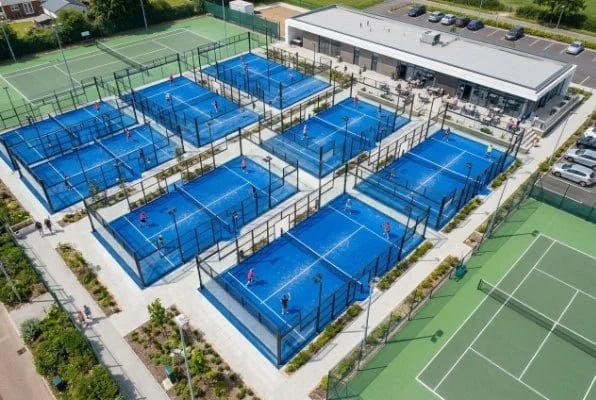
A standard playing enclosure is commonly based on a 20-by-10-meter court7, but the total site needs additional space for foundations, access, circulation, drainage, lighting, maintenance, and local safety requirements. I recommend that buyers obtain a coordinated site layout and ask qualified local professionals to verify required clearances.
Which documents should I request from a padel court supplier?
I recommend requesting the quotation scope, approved BOM, technical drawings, foundation-interface drawings, product data sheets, relevant certificates and test reports, quality records, packing list, installation manual, maintenance manual, warranty terms, and spare-parts list. Buyers should verify that every document applies to the actual ordered configuration.
Does a CE certificate guarantee local approval?
No. A CE-related document can support product evaluation within its stated scope, but it does not automatically prove that a complete project meets local building, structural, electrical, planning, or sports-facility requirements8. A qualified local engineer, consultant, or authority should determine which approvals and project-specific calculations are necessary.
What should I inspect when a court shipment arrives?
The receiving team should inspect container seals, package condition, glass racks, crate and carton numbers, visible damage, and quantities against the packing list. The team should photograph the unloading process and report discrepancies promptly. The installer should keep labeled components organized until the BOM check is complete.
Conclusion
A successful padel court or club begins with disciplined procurement, not a quick comparison of dimensions and headline prices. I recommend checking site suitability, integrated structural safety, turf performance, package completeness, and installation readiness before approving an order. Buyers should verify certificates, coordinate drawings, document responsibilities, and involve qualified local professionals in engineering and compliance decisions.
-
"Standard corrosion protection systems for buildings", https://steelconstruction.info/topics/corrosion-protection/standard-corrosion-protection-systems-for-buildings/. Corrosion-protection standards classify marine atmospheric environments as potentially severe for steelwork, and structural codes require wind actions to be considered in design. Evidence role: mechanism; source type: institution. Supports: Marine atmospheric exposure is associated with increased corrosion risk for steel, while wind actions are a fundamental structural-design load.. Scope note: The applicable corrosion category and design wind action must be determined from the actual location, structure, and governing code. ↩
-
"(PDF) Eurocode — Basis of structural design", https://www.academia.edu/16107606/Eurocode_Basis_of_structural_design. Structural-design standards treat wind actions, environmental exposure, and other site conditions as project-specific inputs that can affect a structure’s design and durability provisions. Evidence role: general_support; source type: institution. Supports: Engineering standards and guidance recognize that structural design actions and durability provisions depend on the project location, environmental exposure, and site conditions.. Scope note: This support establishes the general engineering principle; it does not prescribe a specific padel-court configuration for a particular site. ↩
-
"Authority Of Engineers And Architects To Stamp And Sign …", https://www.atg.wa.gov/ago-opinions/authority-engineers-and-architects-stamp-and-sign-drawings-submission-building-permits. Product conformity documentation, including CE marking where applicable, does not by itself replace the building-permit, design, and regulatory checks required for an individual construction project. Evidence role: general_support; source type: government. Supports: CE marking or comparable product-conformity documentation is distinct from compliance with national or local building-permit and project-design requirements.. Scope note: Specific permit, calculation, and professional-signature requirements are determined by the jurisdiction and project type. ↩
-
"Continuous Load Path Provided with Connections from the …", https://basc.pnnl.gov/resource-guides/continuous-load-path-provided-connections-roof-through-wall-foundation. Structural engineering evaluates a complete load path through members, connections, and supports; consequently, the adequacy of individual components depends on their interfaces within the assembled system. Evidence role: mechanism; source type: education. Supports: Structural performance depends on a continuous load path through members, connections, and foundations, so component performance cannot be assessed wholly in isolation.. Scope note: A general load-path principle does not substitute for project-specific analysis of a padel-court structure. ↩
-
"eTools : Steel Erection – Inspection Guide", http://www.osha.gov/etools/steel-erection/inspection-guide. Steelwork fabrication and erection guidance recognizes that dimensional tolerances affect fit-up, alignment, and the ability of connected components to be assembled as designed. Evidence role: mechanism; source type: institution. Supports: Fabrication and erection tolerances influence fit-up and alignment of connected structural elements.. Scope note: The magnitude and consequence of any deviation depend on the specified tolerances and the geometry of the particular court system. ↩
-
"Units of textile measurement", https://en.wikipedia.org/wiki/Units_of_textile_measurement. Decitex (dtex) is a textile linear-density unit expressing the mass in grams of 10,000 metres of fiber or yarn. Evidence role: definition; source type: institution. Supports: Decitex (dtex) expresses the linear density of textile fibers or yarns as mass per unit length.. ↩
-
"RULES OF PADEL INTERNATIONAL PADEL FEDERATION", https://www.padelfip.com/wp-content/uploads/2025/12/FIP_Rules-of-Padel-1.pdf. The International Padel Federation’s Rules of Padel specify a rectangular playing area 20 metres long and 10 metres wide. Evidence role: definition; source type: institution. Supports: The International Padel Federation’s rules specify a rectangular playing area measuring 20 metres by 10 metres.. Scope note: This defines the playing area; total project space also depends on structural, access, drainage, safety, and local regulatory requirements. ↩
-
"CE marking", https://en.wikipedia.org/wiki/CE_marking. CE marking concerns a product’s conformity with applicable EU requirements and its declared scope; it does not constitute automatic approval that a complete installed project satisfies all local construction and regulatory obligations. Evidence role: definition; source type: government. Supports: CE marking indicates that a product meets applicable EU requirements within the relevant regulatory framework; it is not a blanket approval of an entire construction project.. Scope note: The relevance of CE marking and the additional approvals required depend on the product, country, and applicable legislation. ↩