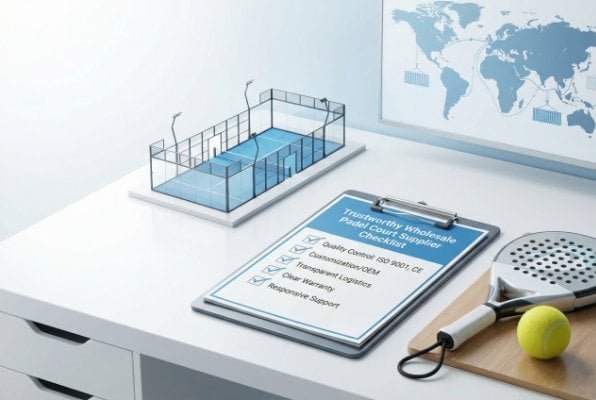
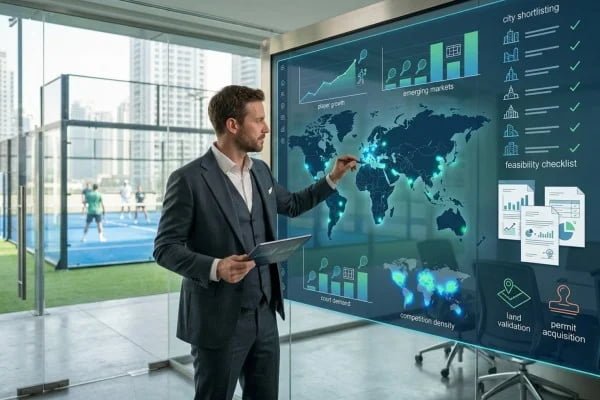
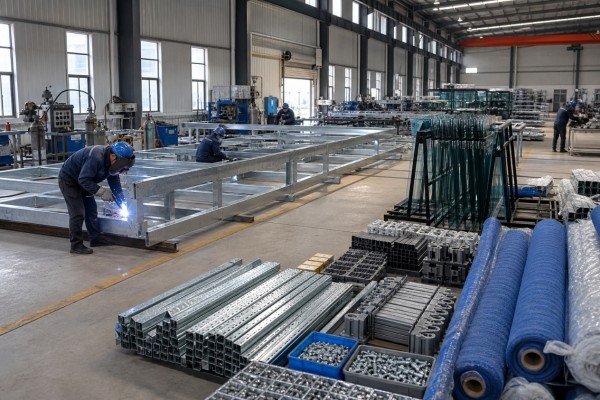
You are evaluating indoor vs. outdoor padel courts and quickly realizing this is the most critical decision for your new club. Choosing the wrong venue type exposes your business to crippling operational costs or devastating weather-related cancellations. Fortunately, understanding how environment dictates equipment procurement will secure your investment and ensure long-term profitability.
The choice between indoor vs. outdoor padel courts is fundamentally a risk-management decision. Standard equipment costs are virtually identical for both setups. The real financial differences stem from indoor warehouse retrofitting requirements, like vertical clearance and specialized lighting, versus the essential structural, anti-corrosion, and roofing upgrades required to protect outdoor courts from climate risks.
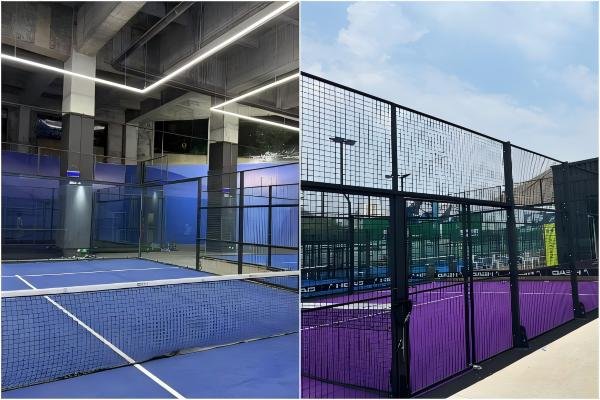
Deciding where to build requires looking beyond surface-level real estate prices. As a manufacturer evaluating daily global orders, I want to show you exactly how structural specifications, local climate data, and hidden installation variables shape your long-term commercial success.
Are the Equipment Costs for Indoor vs. Outdoor Padel Courts Really Different?
Many investors assume outdoor courts are inherently more expensive to build than indoor setups. This misconception causes buyers to misallocate their initial capital, leaving them short on funds for crucial site preparations. Let me clarify the actual bill of materials (BOM) you will evaluate.
Standard manufacturing costs for indoor vs. outdoor padel courts are essentially the same. A classic or panoramic court requires the exact same volume of artificial turf, tempered glass, and steel. Price disparities only emerge when outdoor courts require custom, location-specific upgrades like hurricane-resistant steel profiles or heavy-duty anti-corrosion treatments.
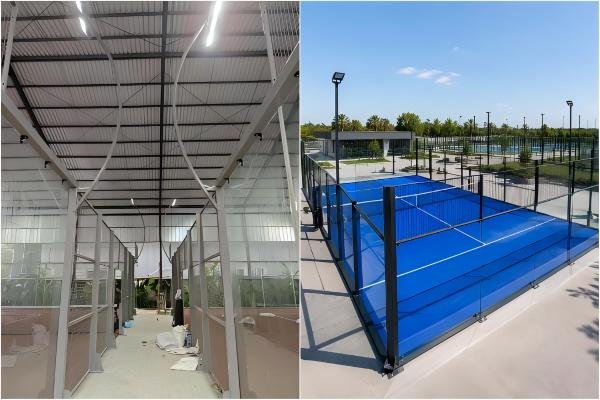
Over the last decade of manufacturing padel courts at QHPADEL, I have reviewed hundreds of procurement lists from club operators and engineering contractors. The base BOM for an indoor and outdoor court is nearly identical. You still need exactly 1,254 square meters of turf for a standard 6-court club. You require the same number of CE-certified 10mm or 12mm tempered glass panels. The standard steel frame structure carries a similar baseline production cost.
The "equipment cost illusion" happens when investors compare a baseline indoor court with a highly upgraded outdoor court. If you are building an outdoor club in a mild, predictable climate, your equipment costs will mirror an indoor facility.
However, if you are building outdoors in challenging climates, you cannot use base specifications. You must factor in targeted upgrades to protect the facility.
Typical Upgrades Impacting Capital Expenditure
| Component | Standard Indoor Specification | Required Outdoor Upgrade (Harsh Climate) |
|---|---|---|
| Steel Frame Structure | Standard powder coating over steel | Hot-dip galvanizing + marine-grade powder coating |
| Screws & Fasteners | Standard zinc-plated hardware | AD 2000 WO certified stainless steel |
| Artificial Turf | Standard density (e.g., 50,000 stitches/sqm) | High-drainage PU backing, advanced UV-stabilized yarns |
| Structural Posts | Standard classic/panoramic pillars | Reinforced twin-pillar hurricane-resistant system |
By isolating these specific variables, you can accurately compare supplier quotes without getting confused by venue-specific differences. Always request a transparent, itemized quote from your factory so you can see exactly where the material upgrades are applied.
What Are the Hidden Retrofit Costs for Indoor Padel Courts?
Renting an empty industrial warehouse seems like the perfect, weather-proof solution for a new club. Yet, operators often sign a lease only to discover the building fails basic structural requirements. Retrofitting an inadequate indoor space quickly destroys your initial budget.
The hidden costs of indoor padel courts usually involve architectural retrofitting. Warehouses often lack the strict 8-meter vertical clearance required for competitive play, forcing expensive ceiling modifications. Additionally, indoor courts require professional, anti-glare LED lighting systems to prevent player blindness and ensure a premium sporting experience.
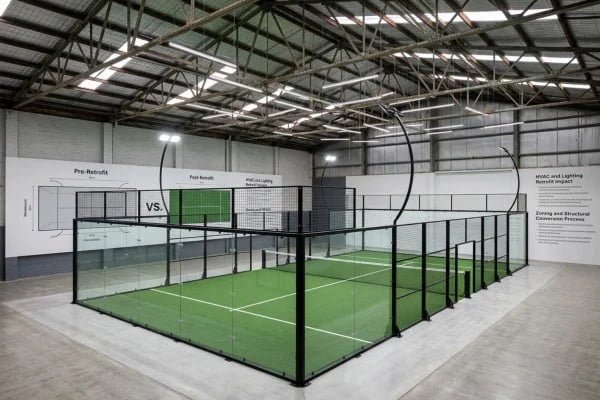
Indoor courts completely eliminate weather-related booking cancellations. This operational stability is their strongest commercial selling point. However, I never romanticize indoor setups to my clients because repurposing an old logistics or manufacturing warehouse is rarely a plug-and-play operation.
First, consider the strict vertical clearance requirements. The International Padel Federation (FIP) recommends a minimum ceiling height of 8 meters across the entire playing area to accommodate high lobs. Many standard commercial warehouses feature low-hanging HVAC ducts, fire sprinkler systems, or structural steel beams that interfere with the ball’s trajectory. Modifying these commercial building systems requires specialized civil engineering contractors and expensive municipal permits, which drives up your pre-opening costs significantly.
Second, professional lighting is a critical procurement focus. When comparing indoor vs. outdoor padel courts, indoor environments completely lack natural sunlight. Standard factory lighting creates harsh, overlapping shadows or blinding glare against the tempered glass walls. You must procure CE and AS 61347.2.13:2018 certified LED fixtures with specialized asymmetric lenses to distribute light evenly across the turf.
Key Indoor Retrofitting Considerations
- HVAC and Ventilation Capacity: Ten active players running across two courts generate immense heat and humidity. Does the building have adequate ventilation to prevent condensation from forming on the glass?
- Floor Tolerances: Padel court foundations require incredibly strict leveling. Uneven warehouse concrete floors must be professionally ground, patched, and leveled before your contractor can install the artificial turf.
- Acoustic Management: The sound of padel balls striking rackets and rebounding off glass inside a corrugated metal warehouse echoes aggressively. Soundproofing baffles may become a mandatory, unbudgeted expense.
Why Do Climate Factors Force Equipment Upgrades for Outdoor Padel Courts?
Building outdoors offers lower initial land lease costs, but exposes your physical assets to the destructive forces of nature. Blindly applying standard indoor specifications to an outdoor facility is a fatal mistake. Without proper climate assessment, your courts will suffer premature failure and skyrocketing maintenance bills.
Climate factors dictate outdoor padel court specifications because continuous exposure to rain, wind, and salt rapidly degrades standard materials. Historical after-sales data reveals that non-galvanized screws rust, standard turf floods, and weak frames buckle under high winds. Upgrading to high-drainage turf and hurricane-resistant structures is mandatory for harsh environments.
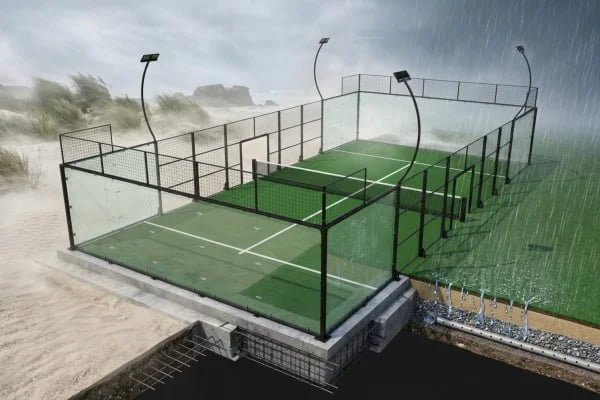
When a client from the Middle East, Southeast Asia, or coastal South America requests a factory quote, my first step is evaluating their local weather data. You simply cannot treat indoor vs. outdoor padel courts the same way during the procurement phase.
Let me share a common scenario we see in the industry. A buyer in a coastal city opts for standard indoor-spec screws to save a few dollars on the total BOM. Within six months, the humid, salt-rich air corrodes the fasteners1. The 12mm tempered glass panels loosen in their frames, creating a massive safety hazard for the players. To prevent this, QHPADEL mandates PED 2014/68/EU certified stainless steel accessories and hot-dip galvanized steel for regional projects located near the ocean.
Here are the primary climate-driven material failures we observe globally, and how targeted procurement prevents them:
Common Outdoor Climate Failures
- Poor Drainage: Standard artificial turf backings hold water long after a heavy storm passes. Upgrading to a highly permeable PU-backed artificial turf ensures the court drains rapidly. This allows the court to become playable within minutes of the rain stopping, saving your evening bookings.
- Wind Load Failures: Standard panoramic courts feature beautiful, large glass expanses with minimal structural pillars. In hurricane-prone regions, these visual features become structural liabilities.2 You must procure a specifically engineered Hurricane Resistant Court. Though this niche product represents less than 1% of our overall sales, it is a non-negotiable, life-saving upgrade for high-wind geographic zones.
- UV Degradation: In extreme, high-sun environments, standard artificial turf yarns become brittle, lose their color, and snap under foot traffic. Always verify that your turf carries a high-tier UV resistance certification to guarantee a durable 5-to-8 year lifespan under direct sunlight.
How Can Procurement Mitigate Operational Risks for Indoor vs. Outdoor Padel Courts?
Every rained-out evening represents lost revenue for an outdoor club. Meanwhile, high commercial rent constantly eats away at the profit margins of an indoor club. You must address these specific business risks during the equipment procurement phase, well before construction even finishes.
You can mitigate the operational risks of indoor vs. outdoor padel courts by strategically aligning equipment purchases with business vulnerabilities. For outdoor courts, purchasing a custom roofed structure protects against weather cancellations. For indoor courts, procuring highly standardized, modular panoramic courts ensures fast installation to minimize costly pre-opening rent periods.
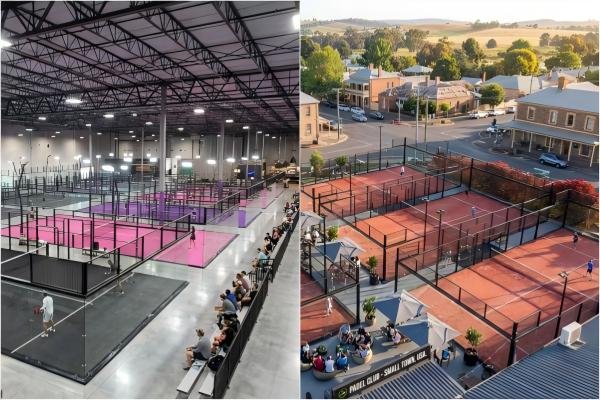
The ongoing debate between indoor vs. outdoor padel courts ultimately comes down to transforming operational risks into manageable procurement solutions. I advise club operators and investors to stop viewing their facility merely as real estate. Instead, start treating the club as an integrated hardware system.
If you choose the outdoor route, your primary enemy is weather-related booking cancellations. A rainy week can devastate your monthly cash flow. Rather than passively accepting this risk, you can solve it at the factory level. Our internal data shows a growing trend—currently making up 3% of our global sales—in Roofed Court systems. By investing upfront in a custom structural canopy, you convert an exposed outdoor plot into a weather-proof, 365-day revenue generator. The added equipment cost of the roof is easily offset over time by the total elimination of weather-related downtime.
Conversely, if you choose the indoor route, your biggest enemy is time. Every day your warehouse sits empty during the retrofitting and construction phase, you bleed high commercial rent without generating income. To combat this timeline risk, you should procure highly standard Panoramic Courts (which make up 50% of our sales) or Ultra Panoramic Courts (40%).
Why focus on standard SKUs? Because these standardized products have highly predictable, streamlined installation processes. At QHPADEL, we provide detailed pre-embedding drawings, precise component numbering, and complete foundation plans. This meticulous documentation ensures your local civil contractors can execute a rapid handover. Faster installation means your club opens weeks earlier, directly improving your initial capital efficiency by cutting down non-operational rental periods.
Do not leave your business viability to chance. Use your equipment specifications to deliberately counter your venue’s inherent weaknesses.
Frequently Asked Questions
Do indoor vs. outdoor padel courts use the same artificial turf?
They can, but outdoor courts highly benefit from specialized upgrades. Outdoor turf requires enhanced UV stabilizers to prevent sun fading and superior drainage backings to recover quickly from rain. Indoor turf focuses primarily on player grip and yarn density since weather is not a factor.
How long does it take to manufacture courts for my facility?
Standard factory lead times are very efficient. Two courts typically take 20 days to produce, while an order of four or more courts takes a maximum of 30 days. Custom-engineered styles or roofed setups may require up to 35 days.
Are panoramic courts safe for outdoor use?
Yes, provided they are structurally matched to the local climate. In standard weather conditions, normal panoramic designs are perfectly safe outdoors. In high-wind or coastal regions, you must upgrade the steel thickness and fasteners to ensure absolute safety.
Who handles the installation of the equipment?
Local engineering and civil contractors handle the physical site preparation and installation. As the manufacturing supplier, we provide the complete Bill of Materials, comprehensive installation drawings, foundation blueprints, and online guidance to ensure your team builds it accurately.
Conclusion
Deciding between indoor vs. outdoor padel courts requires looking far beyond the initial land lease or warehouse rental price. The core base materials for both setups cost roughly the same, but the true financial impact lies in hidden warehouse retrofitting versus climate-resilient outdoor upgrades. By treating weather-related cancellations and high indoor rent as strategic procurement challenges, you can select the exact equipment specifications needed to protect your investment.
If you need help analyzing your local climate and matching it with the right structural specifications, QHPADEL is here to assist. With 10 years of production expertise and global export experience, we deliver precision-engineered solutions. Contact us today to secure a reliable, factory-direct supply chain for your next padel club.
-
"Marine Atmospheric Corrosion of Carbon Steel: A Review – PMC", https://pmc.ncbi.nlm.nih.gov/articles/PMC5506973/. Corrosion science literature confirms that airborne chlorides in coastal environments rapidly break down the passive oxide layer on zinc-plated steel, leading to accelerated galvanic corrosion of the underlying metal. Evidence role: mechanism; source type: paper. Supports: Details the accelerated degradation of zinc coatings when exposed to atmospheric chlorides in coastal regions.. ↩
-
"Aerodynamic Devices for Mitigation of Wind Damage Risk", https://www.ihrc.fiu.edu/wp-content/uploads/2014/03/Lin_et_al2008_AerodynamicDevices.pdf. Structural engineering assessments of freestanding glass barriers indicate that large surface areas with minimal vertical mullions are highly susceptible to catastrophic failure under extreme dynamic wind loads. Evidence role: mechanism; source type: paper. Supports: Analyzes the aerodynamic pressures and stress concentrations on large, minimally supported glass facades during high-wind events.. ↩