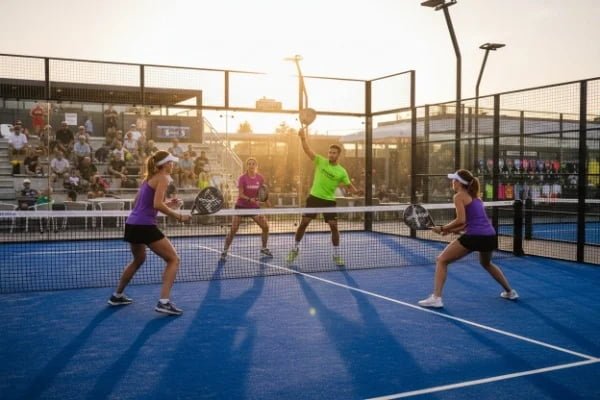
You want to build a profitable padel club, but choosing the wrong surface ruins the player experience. Poor flooring leads to joint injuries and customer complaints. I will help you pick the perfect material to ensure your success.
The best surface for modern padel courts is artificial turf filled with silica sand. It offers the perfect balance of grip, slide, and shock absorption to prevent injuries. While concrete and resin exist, artificial grass is the industry standard for durability and player safety.
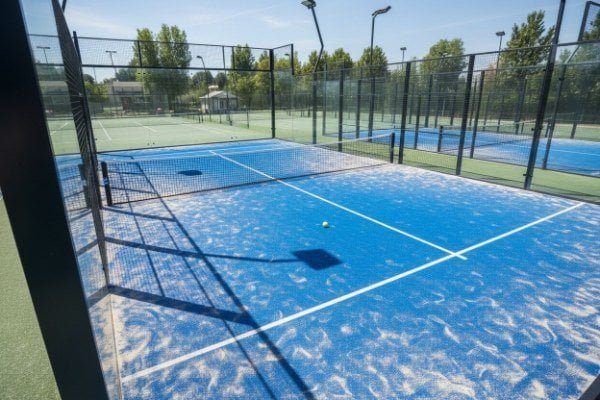
Many investors focus only on the steel structure or the glass walls when buying a court. However, the floor is where players interact the most during the game. A bad floor makes the game unplayable. Let’s look at the specific options available to you.
What Surface Options Are Available for Padel Courts?
Confusion exists because tennis uses many different surfaces, like clay and grass. You might think padel is the same. It is not, and making a mistake here costs you money and reputation.
Padel courts mainly use artificial turf, concrete, or acrylic resin. However, artificial turf with sand infill is the dominant choice for 99% of clubs due to its safety and performance. Natural grass and bare concrete are outdated and rarely used now.
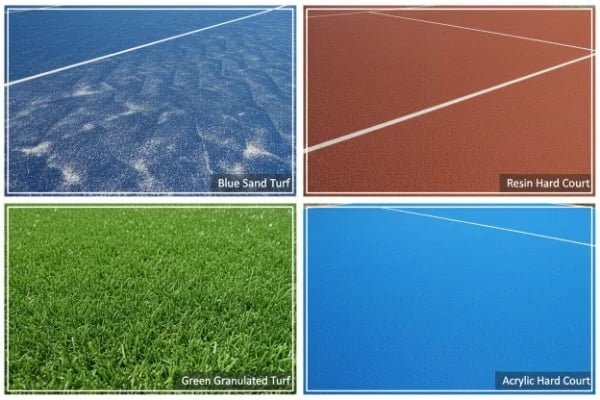
As an engineer in the artificial turf industry, I have analyzed every type of floor. There are four main categories you might hear about, but only one is the true winner.
First, we have Artificial Turf. This is the most frequently used material. It is used in all top events like the World Padel Tour. We install it with silica sand infill. This sand holds the turf down and allows players to slide safely. The turf provides shock absorption. This greatly reduces the risk of injury to knees and ankles.
Second is Concrete or Cement. This is a traditional material. You might see it in very old public parks. It is cheap, but the grip is poor. It has no cushioning properties. After long-term use, it is prone to cracks and unevenness. This makes the ball bounce in random directions.
Third is Resin or Acrylic (Hard Court)1. This is popular for tennis and pickleball. It gives a fast and stable bounce. However, the ground is very hard. Long-term exercise here causes damage to joints. If a player falls, they can suffer serious injuries.
Fourth is Natural Grass. Early padel courts used this. It feels nice, but the maintenance costs are extremely high. You need to spray pesticides and cut it constantly. It gets slippery in wet weather and dies easily.
Here is a comparison table to help you understand:
| Surface Type | Grip & Safety | Maintenance | Durability | Verdict |
|---|---|---|---|---|
| Artificial Turf | Excellent (Shock absorbing) | Low (Brushing) | High (5-10 Years) | Best Choice |
| Concrete | Poor (Hard impact) | Low | Medium (Cracks) | Avoid |
| Resin/Acrylic | Good Grip, Hard Impact | Medium | High | Risky for Joints |
| Natural Grass | Unstable (Slippery) | Very High | Low | Obsolete |
I strongly recommend artificial turf. It is the only surface that balances performance, safety, and cost effectively.
How to Choose the Right Padel Flooring?
You now know the types, but how do you identify good quality turf? Installing cheap turf leads to rapid wear and forces you to replace the floor within a year.
To choose the right flooring, prioritize player safety and durability. Artificial turf provides the best joint protection. For outdoor coastal areas, ensure high-quality UV resistance2. For indoor clubs, focus on turf density for a consistent ball bounce and speed.
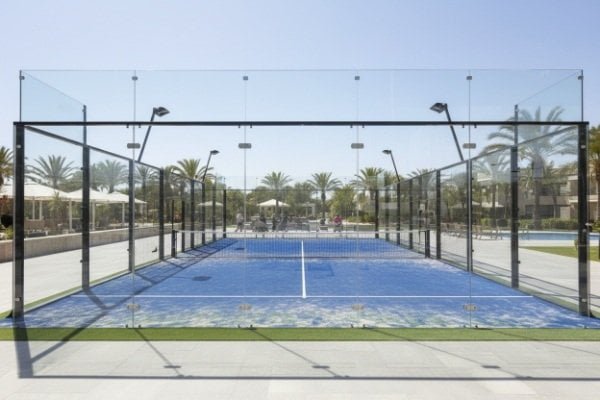
When I help clients select their flooring, I look at specific technical parameters. You do not need to be an engineer, but you should know these basics.
Durability is key. The artificial turf is the most wear-resistant component of the court. It needs to withstand at least 5 to 10 years of heavy foot traffic and abrasion. At QHPADEL, we usually recommend turf with 7500 dtex or higher. Higher dtex means the fiber is thicker and stronger. Also, look at the backing. We use a PU backing adhesive3 because it is strong and resists water better than latex.
Consider the Friction. The game of padel involves quick stops and turns. The floor must grip the shoe but also allow a little slide. This is why we fill the turf with quartz sand (silica sand). The sand supports the grass fibers. It creates a consistent surface. Without sand, the grass goes flat, and the ball rolls too fast.
Structure Matters. We use two-component polyurethane adhesive for installation. This is the minimum requirement for a professional court. It ensures the lines do not peel off after a few months. If you are in a coastal city or an island, salt and moisture are enemies. Just like we use zinc-rich primer for steel structures to stop rust, your turf must be UV resistant to stop fading.
Aesthetic Options. While green is standard, blue is very popular for the "Super Panoramic" look used in television broadcasts. We also offer custom colors like pink or black for unique branding.
Maintenance Requirements. Even the best turf needs care. You must brush the sand regularly to keep it even. If you choose natural grass, you are choosing a headache of watering and pesticides. Artificial turf frees you from this work.
How big is a padel court? And how does it compare to a tennis court?
Many people confuse padel dimensions with tennis dimensions. Buying the wrong land size ruins your project plan immediately and wastes your investment budget.
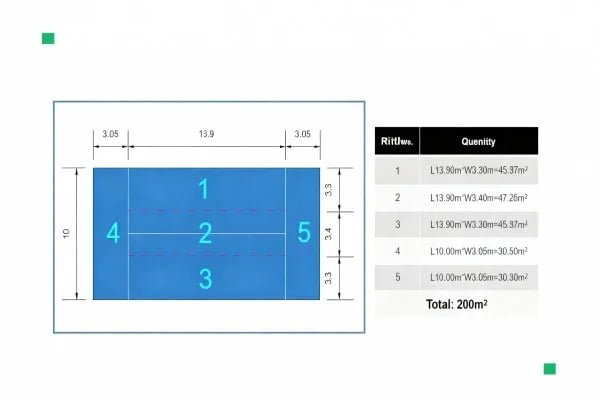
A standard padel court measures 20 meters long by 10 meters wide. Unlike tennis, the court is enclosed by glass and wire mesh, which are active parts of the game. Padel courts are roughly one-third the size of a tennis court, allowing more courts per square meter.
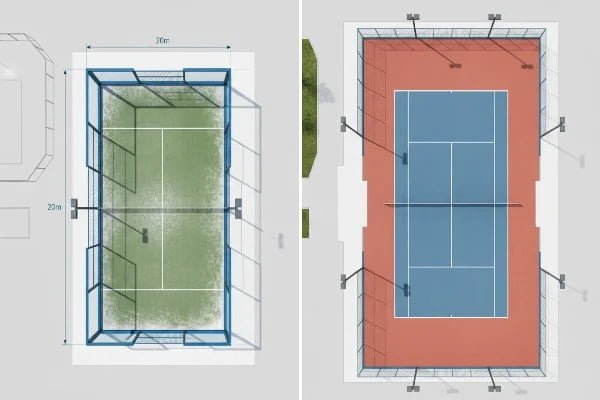
Understanding the size is crucial for your business model. I often see clients surprised by how compact a padel court is.
The Dimensions. The standard size is exactly 20 meters by 10 meters. This is the internal playing area. However, when we install a court, we need a little extra space outside for the structure. A tennis court is much larger, usually around 23.77 x 10.97 meters, plus huge run-off areas. You can fit approximately three padel courts in the space of one tennis court. This triples your potential revenue per square meter.
The Components. In tennis, the lines define the out-of-bounds. In padel, the fence and glass are all components of the game. The ball can hit the glass and remain in play. This changes the strategy completely. This is why the glass must be high quality. We use 12mm tempered glass with an impact resistance of at least 300 kg. It must handle players crashing into it.
Equipment Differences. Because the court is smaller, the game is faster. The rackets are solid with holes, not strung like tennis. The balls look the same but have slightly less pressure. This works together with the artificial turf to create the unique rhythm of padel.
Model Variations. While the 20x10m size is standard, the type of court varies.
- Panoramic Model: Has steel columns only at corners. It accounts for 50% of our sales.
- Ultra-Panoramic Model: Has no corner columns, just glass connectors. This is for high-end clubs and accounts for 45% of sales.
- Classic Model: Has double columns every 2 meters. It is very strong but blocks the view. It accounts for about 4% of sales.
All these models fit on the same 20x10m footprint. Your choice depends on your budget and wind conditions, not the size of the land.
Conclusion
Choosing the right surface is simple: use artificial turf with sand infill for the best safety and durability. Ensure you have a 20×10 meter space, and select a supplier like QHPADEL who understands quality control.
-
Discover the benefits and risks of using resin or acrylic surfaces for padel, especially regarding player health. ↩
-
Discover why UV resistance is essential for maintaining the quality and longevity of outdoor turf. ↩
-
Learn about PU backing adhesive’s benefits for durability and water resistance in turf installations. ↩