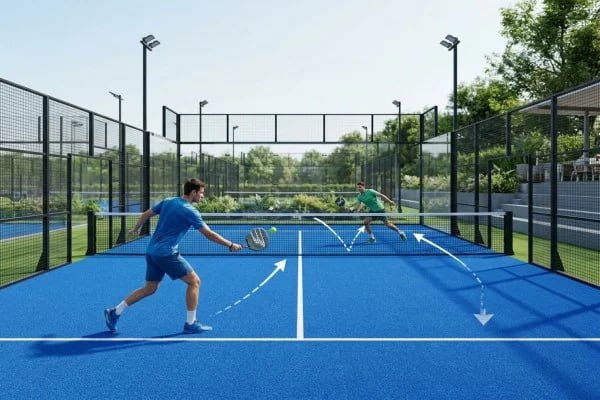
Rules for playing padel in winter can confuse players and venue operators because cold weather may change court conditions without changing the game itself. A wet or icy surface can turn an ordinary match into a safety and liability concern.1 We recommend separating official padel rules from the practical decision to open, pause, or close a court.
The rules for playing padel in winter are usually the same as the standard rules for scoring, serving, ball contact, and court use. However, clubs should only allow play when the court surface is consistently safe, clear of ice and snow, adequately drained, and suitable for current weather conditions. Local operating policies and governing-body guidance should always be checked.
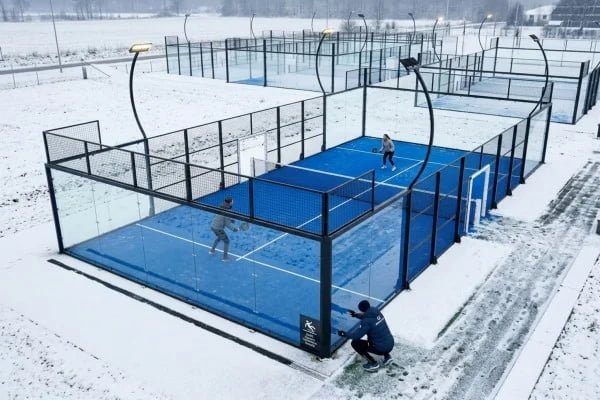
Winter padel is not simply a question of whether players can tolerate low temperatures. We see that clubs must evaluate the full court environment, including artificial turf, drainage, glass, fencing, wind, lighting, and access paths. A condition-based approach helps operators protect players while maintaining realistic winter availability.
Do Official Padel Rules Change in Winter?
Winter weather can make every rally feel different, especially when balls move differently in cold or damp conditions. Yet many players assume that difficult weather automatically creates new match rules. That assumption can lead to inconsistent decisions between clubs, players, and tournament organizers.
Official padel rules generally do not create a separate winter version of the game. Standard rules for scoring, serves, returns, ball contact, and use of the walls normally remain in place. Winter affects whether the court should be open and whether a match can continue safely, rather than changing the basic rules of play.
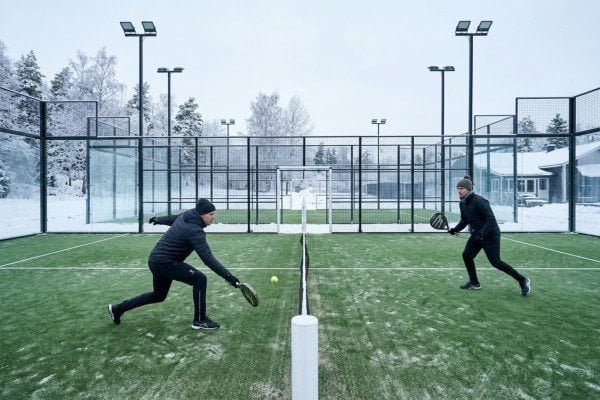
Game Rules and Operating Rules Are Different
We find it helpful to separate two decisions that are often mixed together:
-
How is the game played?
This question concerns the official rules of padel. It includes scoring, serving order, valid returns, use of the glass, and player conduct. -
Should the court be open?
This question concerns venue operations. It includes surface safety, visibility, weather exposure, drainage performance, and maintenance status.
A club may use the same official playing rules in July and January. However, the club may decide that winter conditions make play unsuitable at a particular time. For example, a court can have compliant dimensions, properly installed turf, and working lighting but still require temporary closure after frost, snowfall, or standing water.
Why Clubs Need Clear Winter Policies
A written winter operating policy gives staff a consistent way to respond when players ask, “Can we still play?” It also helps club operators avoid making decisions based only on a weather app or a single air-temperature reading.
We recommend that a policy state:
- Who inspects the court before opening.
- What surface conditions require closure.
- Who can authorize reopening.
- How staff record inspection and maintenance actions.
- How the club communicates cancellations or temporary closures.
- Whether players receive a refund, credit, or rebooking option.
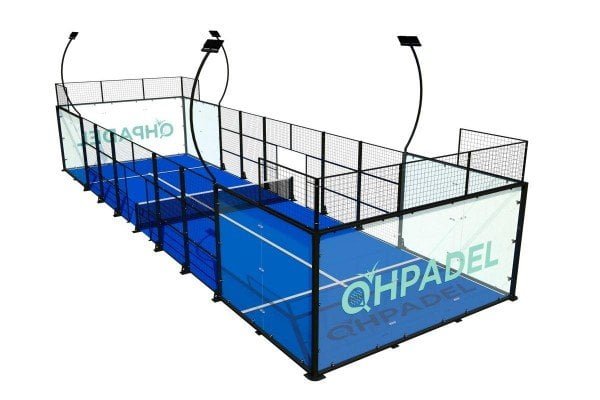
At QHPADEL, we receive questions from buyers who are planning facilities in cold, rainy, or mixed-weather regions. We do not frame the answer as “yes, padel can always be played in winter” or “no, winter play is impossible.” Instead, we encourage buyers to define a documented condition-assessment process before the facility opens.
Check the Relevant Governing Body
Tournament organizers, national padel federations, insurers, public authorities, and facility owners may have additional requirements. We recommend that clubs verify the current rules with the relevant governing body, especially for sanctioned matches, school facilities, or municipal venues.
A winter operating policy is not a replacement for official competition rules. It is a practical safety and facility-management tool.
Which Court Conditions Should Stop Winter Padel Play?
A court may look playable from a distance while remaining unsafe underfoot. This creates a difficult situation for staff because players may be ready to play and bookings may be scheduled. Still, a rushed opening decision can create avoidable risks.
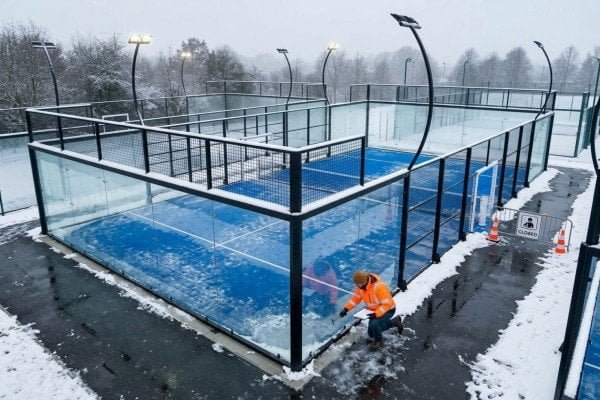
Clubs should stop or postpone winter padel play when the court has ice, frost, compacted snow, standing water, uneven slippery areas, poor visibility, or weather that continues to make conditions unsafe.2 Operators should assess the complete playing surface and surrounding access areas, not temperature alone.
Assess the Surface, Not Just the Weather Forecast
The air temperature alone does not tell a club whether a court is safe.3 A court may remain wet after rain has stopped. Frost may form in shaded areas even when other areas appear clear. Water may collect near an edge, gate, post, or low point. Wind can carry rain, snow, or debris into an otherwise protected court.
Before reopening, we recommend that trained venue staff inspect the court in person. The inspection should include the turf, playing lines, gate areas, perimeter zones, and player walkways.
| Condition | Why It Matters | Recommended Operational Response |
|---|---|---|
| Ice or frost | It can create sudden loss of traction. | Keep the court closed until it is cleared and reinspected. |
| Snow accumulation | It can conceal surface hazards and affect access. | Close the court and follow the turf supplier’s maintenance instructions. |
| Standing water | It can increase slip risk and indicate drainage issues. | Pause play, investigate drainage, and reopen only after safe drying or drainage. |
| Uneven wet patches | They can create inconsistent footing. | Inspect the cause and avoid reopening until conditions are consistent. |
| Poor lighting or visibility | Players may not see wet areas, balls, or boundaries. | Delay play until visibility is adequate. |
| Strong wind | It can affect player control, loose items, and exposed structures. | Follow local weather guidance and site-specific operating procedures. |
Four Questions Before Reopening a Court
We encourage operators to use four simple questions after winter weather:
-
Is the playing surface clear and consistently safe?
Staff should check the full court, not only the center area. -
Is snow, rain, ice formation, or strong wind continuing?
Conditions can deteriorate quickly after an initial inspection. -
How protected is the court?
An open-air court, roofed court, and more enclosed facility face different exposure levels. -
Have drainage, clearing, and reinspection been completed?
A court should not reopen simply because clearing has started.
In our experience, customers often ask us for one simple threshold, such as a specific temperature. We believe that approach is too limited. Surface condition, moisture, wind, solar exposure, drainage, and maintenance status are more useful indicators than temperature by itself.
Protect Players and Staff
Club managers should also consider entrances, stairs, changing-room approaches, and emergency access routes. A safe court does not solve the problem if players must cross an icy path to reach it.4
We recommend that operators obtain qualified local advice for site-specific safety requirements, weather protocols, and public-access obligations. Local building rules, insurance conditions, and occupational safety requirements can vary significantly.
How Can Clubs Apply Rules for Playing Padel in Winter Safely?
Winter bookings can be valuable for clubs, hotels, schools, and sports centers. However, pressure to maintain revenue can make staff hesitate before closing a court. A clear inspection process gives operators a practical way to make fair decisions without relying on guesswork.
To apply rules for playing padel in winter safely, clubs should use a documented open-or-close process based on inspection, maintenance completion, weather exposure, and reinspection. Staff should communicate that normal padel rules apply only after the venue confirms that the court and access areas are suitable for play.
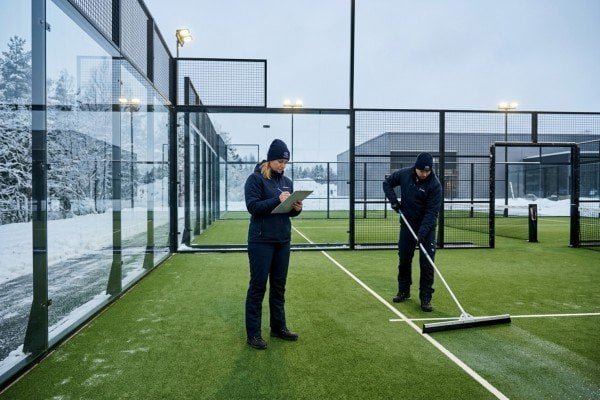
Create a Practical Winter Opening Checklist
A checklist does not need to be complicated. It needs to be clear enough that different staff members reach a consistent decision.
We suggest a checklist that covers the following areas:
- Court surface: Is the artificial turf free from ice, snow, standing water, and visibly slippery patches?
- Infill and turf condition: Does the turf appear even, secure, and free from material displacement caused by weather or cleaning?
- Drainage: Has water drained as expected, or are there recurring low spots?
- Glass and frame: Are glass panels, doors, mesh, posts, and fasteners visibly intact?
- Lighting: Is lighting sufficient for the scheduled playing period?
- Roof or cover: Is there any visible water accumulation, damage, or issue that requires qualified inspection?
- Access routes: Are entrances, walkways, and emergency routes safe?
- Current forecast: Is active weather likely to make the court unsafe during the booking period?
Use a Reinspection Step
A common operational mistake is to inspect once, clear a small area, and reopen immediately. We recommend a separate reinspection after any cleaning, drainage action, or weather pause. This step confirms that the court is consistently safe across the playable area.
For example, a staff member may see that the center of the court has dried. However, the corners, gate area, and shaded side may remain slippery. A reinspection reduces the risk of opening based on incomplete information.
Communicate With Players Before They Arrive
We recommend that clubs tell players how winter decisions are made. A short message can reduce frustration:
“Our team inspects court conditions before opening. Standard padel rules apply when the court is safe for play. We may delay, relocate, or cancel bookings if ice, snow, standing water, poor visibility, or other unsafe conditions are present.”
This wording is more realistic than promising year-round outdoor availability. It also reminds players that a closure is a safety decision rather than an arbitrary cancellation.
At QHPADEL, we believe procurement teams should ask suppliers what installation, maintenance, and technical documents they provide. Buyers should also ensure that local operators understand how to use those documents after handover.
Can Roofs, Drainage, Lighting, and Turf Improve Winter Padel Availability?
Many investors want to extend court use across rainy or colder months. They may assume that adding a roof solves every winter challenge. A roof can reduce direct exposure, but it cannot eliminate all weather, maintenance, or local compliance considerations.5
Roofs, effective drainage, suitable lighting, and maintained artificial turf can improve winter padel availability, but they cannot guarantee all-weather operation. Clubs still need to inspect the surface, manage moisture and debris, verify local requirements, and close the court when actual conditions are unsafe.
Roofing Changes Exposure, Not Responsibility
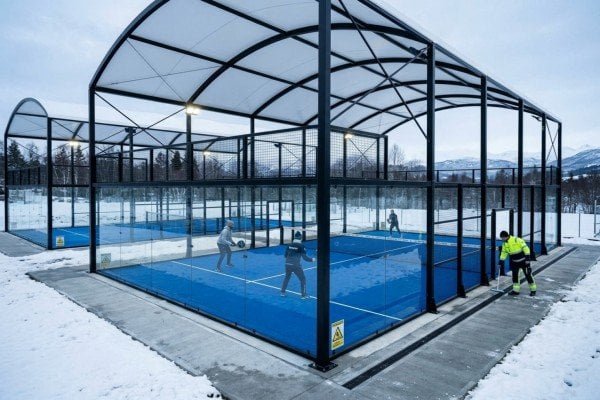
A roof may help reduce direct rainfall and snowfall on the playing area. It may also improve booking reliability in regions with frequent precipitation. However, open sides can still allow wind-driven rain, cold air, debris, and moisture to enter.
Buyers should also understand that a roof introduces additional design and approval considerations. These can include local planning requirements, wind conditions, snow-load considerations, drainage routing, foundation requirements, and structural review. We recommend that buyers consult qualified local professionals for site-specific engineering and permitting decisions.
QHPADEL offers roofed court configurations as part of its product range. However, we do not present any court configuration as a guarantee of uninterrupted year-round play. The final operating decision remains with the venue based on actual conditions and local requirements.
Drainage Is a Procurement Question
Drainage performance starts long before the first winter booking.6 It depends on site preparation, foundation design, slope, surrounding water management, and correct installation.
When evaluating a padel court supplier, buyers should request:
- Foundation drawings and required tolerances.
- Drainage assumptions or site-preparation guidance.
- Installation drawings and component layouts.
- Artificial turf specifications.
- Turf maintenance manuals.
- Clear responsibility boundaries between supplier, civil contractor, and installer.
QHPADEL provides installation drawings, foundation drawings, packing lists, and maintenance manuals for its court packages. Buyers should verify that these documents fit the local site and should have qualified contractors assess the civil works.
Artificial Turf Maintenance Needs Product-Specific Verification
Artificial turf can support winter operations when it is properly specified and maintained.7 Still, every turf system may have different yarn, backing, infill, drainage, and care requirements. We do not recommend generic snow-removal or de-icing methods without checking the relevant maintenance manual.8
Before using brushes, equipment, chemicals, heat, salt-based products, or other clearing methods, operators should verify:
- The artificial turf manufacturer’s written instructions.
- The infill supplier’s recommendations, where relevant.
- The local safety and environmental requirements.
- Whether a qualified maintenance professional should assess the surface.
A buyer should also request certification documents where relevant. For example, QHPADEL states that its artificial turf is supplied with CE and RoHS documentation, while its steel frame structure and tempered glass are supplied with stated certification documents. Procurement teams should verify the current documents, scope, applicability, and local acceptance requirements before purchase.
What Should Buyers Ask a Winter-Ready Padel Court Supplier?
A padel court purchase is not only a product decision. It is also an operational decision that affects maintenance, scheduling, player safety, and long-term facility costs. Buyers who focus only on the initial court price may miss winter-related requirements that appear later.
Buyers evaluating rules for playing padel in winter should ask suppliers for clear technical documentation, realistic maintenance guidance, drainage and foundation information, component specifications, and defined support responsibilities. A supplier should help buyers understand operational limits without promising weather-proof performance.

Supplier Evaluation Questions
We recommend that investors, contractors, and distributors include winter-operation questions in their supplier evaluation process.
| Procurement Area | Questions for the Supplier |
|---|---|
| Turf system | What are the turf yarn, density, Dtex, infill, and maintenance requirements? |
| Drainage and civil works | What foundation drawings, slopes, tolerances, and site assumptions are provided? |
| Roofed options | What is included, and what local engineering or permitting review is still required? |
| Lighting | What lighting specifications and certification documents are available? |
| Documentation | Are installation drawings, packing lists, maintenance manuals, and parts lists included? |
| Spare parts | Can the supplier provide spare glass, turf, lighting, fasteners, or other replacement items? |
| Packaging and delivery | How are glass, steel structures, turf, and accessories packed and identified? |
| After-sales support | How are missing parts, transport damage, and installation questions handled? |
Look Beyond Certificates
Certificates can be useful procurement documents, but they should not be treated as automatic proof that a court meets every local rule or performs safely in every climate. Buyers should review the certificate issuer, document scope, validity, product model, and applicable standard.9
For public-sector buyers, schools, universities, and municipal facilities, the documentation review may be especially important. Tender requirements can include specific safety, lighting, glass, structural, and traceability obligations.10
We encourage buyers to request documents early rather than after the order is confirmed. This gives project teams time to compare specifications, identify local gaps, and coordinate with installers and civil contractors.
Plan Winter Operations Before Handover
In our view, the best time to discuss winter maintenance is before installation begins. The operator should know:
- Who performs daily court checks.
- Who handles drainage and surrounding site maintenance.
- Where maintenance tools and spare parts are stored.
- How the club documents closures and re-openings.
- How players receive weather updates.
- When qualified external support is needed.
This preparation helps a venue move from reactive winter closures to a more controlled operating process.
Frequently Asked Questions
Can you play padel when it is cold outside?
We can usually play padel in cold weather if the court surface, access routes, visibility, and current weather conditions are safe. Cold air alone is not the main decision factor. Clubs should inspect for frost, ice, snow, standing water, and uneven slippery areas before allowing play.
Are there official winter padel rules?
Official padel rules generally do not create separate winter scoring or serving rules. Standard game rules usually remain in effect. However, clubs, tournament organizers, and local authorities may set operating requirements or decide that weather conditions require a delay, suspension, or closure.
Can players play padel on a wet court?
We do not recommend assuming that every wet court is playable. Light moisture and standing water can create very different traction conditions. Venue staff should inspect the entire surface, drainage areas, entrances, and visibility before deciding whether the court can safely remain open.
Does a roofed padel court stay open all winter?
A roofed padel court may improve availability by reducing direct rain or snow exposure, but it does not guarantee all-weather operation. Wind-driven moisture, condensation, access hazards, drainage issues, lighting, and local weather conditions can still require inspection or temporary closure.
How should artificial turf be cleared after snow or ice?
Operators should follow the specific artificial turf maintenance manual and obtain professional or product-specific advice where needed. We do not recommend using generic snow-removal or de-icing methods because tools, chemicals, and procedures can affect different turf and infill systems differently.
Conclusion
The rules for playing padel in winter usually remain the same as standard padel rules, but safe operation requires a separate court-condition decision. We recommend that clubs inspect for ice, snow, standing water, poor drainage, wind exposure, and inadequate visibility before opening or reopening. Roofs, drainage, lighting, and suitable turf can support winter availability, but none replaces routine inspection and responsible maintenance. If you are planning a padel facility, contact QHPADEL for court specifications, installation drawings, maintenance documentation, and supplier evaluation support.
-
"Slips, Trips, and Falls: Understanding, Preventing, and …", https://ehs.weill.cornell.edu/slips-trips-and-falls-understanding-preventing-and-mitigating-risks. Occupational-safety guidance identifies wet and icy surfaces as significant slip hazards and recommends inspection, maintenance, and access controls to reduce fall risk. Evidence role: general_support; source type: government. Supports: Government safety guidance identifies wet and icy walking surfaces as slip hazards and calls for their assessment and control.. Scope note: This guidance supports the safety rationale; whether a specific condition creates legal liability depends on applicable local law, contracts, and facts. ↩
-
"An evaluation method for safety applied to public sports … – PMC", https://pmc.ncbi.nlm.nih.gov/articles/PMC11957586/. Public-safety guidance treats ice, snow, standing water, and inadequate visibility as hazards requiring risk assessment and control before people are allowed to use affected areas. Evidence role: general_support; source type: government. Supports: Safety authorities recommend assessing and controlling slip hazards caused by ice, snow, water, poor surface conditions, and inadequate visibility before permitting access.. Scope note: The cited guidance may address premises generally rather than padel courts specifically; operators must apply local rules and site-specific risk assessments. ↩
-
"What Causes Frost?", https://www.weather.gov/arx/why_frost. Road-weather and meteorological guidance notes that surface temperature and moisture, which may vary with shading and exposure, can differ from air temperature and determine whether frost or ice forms. Evidence role: mechanism; source type: government. Supports: Meteorological and road-weather guidance explains that surface temperature and surface moisture can differ from measured air temperature and affect frost or ice formation.. Scope note: Evidence concerning roads or pavements is mechanistically relevant but does not establish a padel-specific court-opening threshold. ↩
-
"Winter Weather – Hazards/Precautions", http://www.osha.gov/winter-weather/hazards. Premises-safety guidance recommends controlling snow and ice hazards on pedestrian access routes, including entrances and walkways, rather than focusing only on the destination area. Evidence role: general_support; source type: government. Supports: Safety guidance identifies routes of access, including entrances and walkways, as areas that require management of snow and ice slip hazards.. ↩
-
"Managing Snow Loads on Roofs and Decks", https://basc.pnnl.gov/resource-guides/managing-snow-loads-roofs-and-decks. Building-science and structural-design guidance recognizes that roofs reduce direct precipitation while remaining subject to wind-driven moisture, drainage, condensation, and climate-related loading considerations. Evidence role: mechanism; source type: institution. Supports: Building and structural standards address roof exposure to wind, rain, snow loads, drainage, and condensation, showing that covering a space does not eliminate all environmental design considerations.. Scope note: The source supports the general design principle; the performance of a particular padel-court roof requires project-specific engineering review. ↩
-
"3.5 Integrated Stormwater Management Examples", https://water.phila.gov/development/stormwater-plan-review/manual/chapter-3/3-5-integrated-stormwater-management-examples/. Sports-surface drainage research indicates that water removal depends substantially on site grading, base and drainage-layer design, and construction quality established before the facility enters service. Evidence role: mechanism; source type: research. Supports: Sports-surface engineering literature explains that drainage performance is influenced by design variables such as grading, base construction, hydraulic layers, and drainage outlets.. Scope note: The exact drainage performance of a court also depends on local rainfall, soil conditions, upkeep, and the installed system. ↩
-
"The effect of synthetic grass sports surfaces on the thermal …", https://pmc.ncbi.nlm.nih.gov/articles/PMC11272752/. Artificial-turf research and maintenance guidance indicate that surface performance in wet or cold conditions depends on system design, drainage, infill condition, and appropriate maintenance. Evidence role: general_support; source type: research. Supports: Independent artificial-turf guidance and research describe how specification, drainage, infill condition, and maintenance affect surface performance under wet and cold conditions.. Scope note: This does not demonstrate that every artificial-turf padel court is safe in winter; individual systems require manufacturer instructions and site inspection. ↩
-
"MANUAL OF PRACTICE FOR AN EFFECTIVE ANTI-ICING …", https://highways.dot.gov/media/6236. Synthetic-turf maintenance guidance advises using system-appropriate snow and ice procedures because equipment and chemical treatments can affect turf fibres, infill, backing, and drainage. Evidence role: general_support; source type: institution. Supports: Synthetic-turf maintenance guidance describes system-specific procedures and cautions that unsuitable equipment or chemical treatments can affect turf, infill, or drainage.. Scope note: Applicable methods vary by product construction and warranty terms, so the relevant manufacturer’s current instructions remain controlling. ↩
-
"General Use Products: Certification and Testing | CPSC.gov", https://www.cpsc.gov/Business–Manufacturing/Testing-Certification/General-Use-Products-Certification-and-Testing. Conformity-assessment guidance indicates that product documentation should be checked for the identified product, applicable standard or regulation, assessment scope, issuer, and current validity. Evidence role: definition; source type: government. Supports: Conformity-assessment guidance explains that declarations and certificates must be interpreted in relation to the identified product, applicable requirements, assessment scope, and responsible issuer.. Scope note: Documentation review alone does not establish compliance with every project-specific building, procurement, or local-approval requirement. ↩
-
"Public procurement", https://www.oecd.org/en/topics/policy-issues/public-procurement.html. Public-procurement guidance recognizes that tender documents may set technical specifications and require evidence of compliance with relevant safety, quality, performance, and traceability conditions. Evidence role: general_support; source type: institution. Supports: Public-procurement guidance permits contracting authorities to specify technical requirements, standards, verification documents, and performance or safety conditions relevant to the contract.. Scope note: The particular obligations in a tender depend on the procuring authority, jurisdiction, contract value, and subject matter. ↩