Who made padel famous is a harder question than it first appears. Many people credit one celebrity, yet that view ignores decades of development across Mexico, Spain, Argentina, and other markets. I find that separating invention, regional promotion, professional competition, and celebrity exposure gives prospective club investors a much clearer answer.
No single person made padel famous worldwide. Enrique Corcuera is widely credited with creating the modern game in Mexico1, while Alfonso de Hohenlohe and other early promoters helped spread it2. Professional players, organized tournaments, club operators, and crossover celebrities then increased its visibility in different countries and periods.
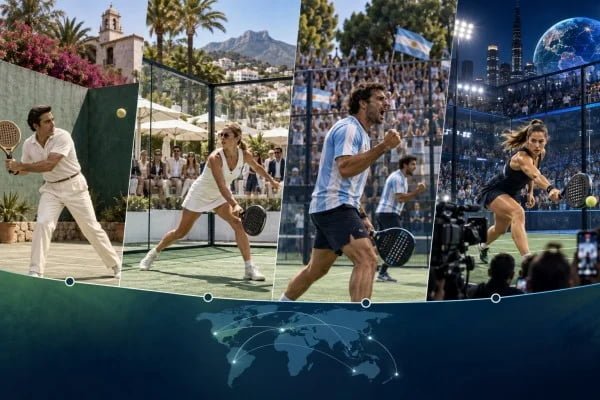
That history also carries a practical lesson. When I speak with prospective club owners, celebrity activity often explains why they first noticed the sport. However, publicity alone does not tell me whether a local market can support coaching, repeat bookings, leagues, tournaments, and profitable court utilization.
Who Made Padel Famous in Its Early History?
The origin story can become confusing because invention and promotion are often treated as the same achievement. This confusion gives one person too much credit and hides the networks that expanded the sport. A clearer timeline shows how an existing game moved from a private setting into clubs and regional sporting communities.
Enrique Corcuera is widely credited with inventing modern padel in Acapulco, Mexico, in 1969.3 Alfonso de Hohenlohe later helped introduce the game to Spain, particularly through the Marbella Club. Other players, entrepreneurs, and social networks then supported its early growth in Spain and Argentina.
The inventor was not the only promoter
Historical accounts generally identify Enrique Corcuera as the creator of the modern game. He adapted a playing area at his home in Acapulco by using surrounding walls and rules influenced by racket sports. The commonly reported date is 1969.
That achievement answers the question, “Who invented padel?” It does not fully answer who made padel famous.
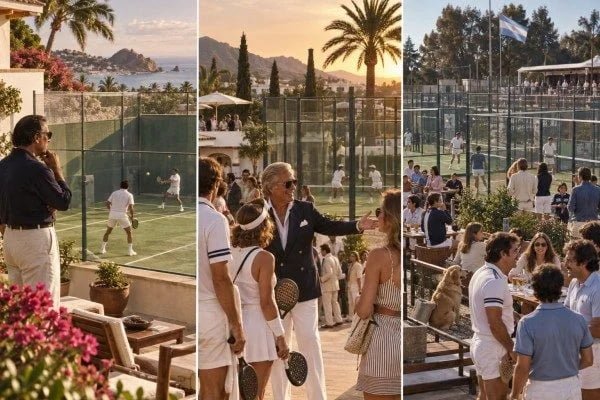
According to widely repeated historical accounts, Alfonso de Hohenlohe encountered the game in Mexico and introduced it to Spain. He built courts at the Marbella Club in the 1970s.4 Marbella attracted wealthy visitors, athletes, businesspeople, and public figures, giving the sport access to an influential social network.
Argentina then became another major center of early adoption. Julio Menditengui is often named among the people who helped introduce and promote the game there. Padel subsequently developed a broad recreational community in Argentina rather than remaining an exclusive club activity.5
| Contributor or group | Main contribution | What the contribution did not prove |
|---|---|---|
| Enrique Corcuera | Creation of the modern game | Global commercial demand |
| Alfonso de Hohenlohe | Early introduction and promotion in Spain | Immediate nationwide adoption |
| Argentine promoters | Regional expansion and community participation | Equal growth in every country |
| Early clubs | Access to courts and social play | A standardized global industry |
| Players and coaches | Skills, instruction, and repeat participation | Automatic profitability for new venues |
Historical labels require careful use
I do not treat every popular online timeline as a definitive historical source. Dates, spellings, and descriptions can vary between governing-body histories, press articles, and club accounts. Buyers preparing formal investment presentations should verify key details through sources such as the International Padel Federation, national federations, and established historical archives.
The important distinction remains consistent:
- Invention created the game.
- Early promoters moved it into new social circles.
- Clubs created places for repeat play.
- Coaches and players built sporting communities.
- Media and celebrities expanded public awareness.
When people ask me who made padel famous, I therefore avoid giving only one name. A single-name answer may be convenient, but it does not explain how a sport survives beyond its original court.
Who Made Padel Famous in Spain and Argentina?
A sport can exist for years without becoming a mass-participation activity. Padel needed accessible facilities, local advocates, regular opponents, and reasons for players to return. Spain and Argentina provided different growth environments, so neither market offers a perfect template for a new club in another country.
Padel became famous in Spain and Argentina through networks of clubs, players, coaches, promoters, and social communities. Early high-profile participants helped create awareness, but broad court access and repeat recreational play made the sport durable. Each country developed its own pathway rather than following one universal expansion model.

Spain combined social visibility with facility growth
Marbella gave the sport an influential starting point in Spain. However, exclusive visibility could not have created a national playing culture by itself. Growth required more courts, lower barriers to participation, organized instruction, and a reliable supply of opponents.
The sport later spread beyond private resort settings. Local clubs made it possible for ordinary recreational players to book courts, take lessons, join leagues, and compete in amateur events. This transition mattered because racket sports depend on repeat behavior. A viral video may reach millions of people, but a court needs a smaller group of people who book every week.
Spain eventually became one of padel’s most established markets. That development came through an ecosystem rather than a single publicity moment. The ecosystem included:
- Local and national federations
- Purpose-built padel clubs
- Tennis facilities adding padel courts
- Coaches and junior programs
- Amateur leagues and social competitions
- Professional players and tournament organizers
- Equipment brands, court suppliers, and installers
- Media coverage and online booking platforms
Argentina developed a deep playing culture
Argentina followed its own path. Social play, a strong racket-sport culture, and a growing network of courts helped padel reach a wide audience. The country also produced influential professional players who later competed internationally.
That player pipeline is important. Professional stars can demonstrate the speed, tactics, and athletic demands of the game. They also give recreational players people to follow. Yet professional success usually becomes commercially useful only when local people can access courts and suitable entry-level instruction.
I see the same distinction in supplier conversations. A buyer may mention that padel is popular in Spain or Argentina, but I still ask who will play at the proposed venue, how often they will return, and how the operator will introduce beginners.
Investors should avoid copying mature markets blindly
I advise prospective operators to study established markets without assuming that their results can be reproduced immediately. A city with few courts may represent an opportunity, but it may also lack coaches, awareness, or convenient player-matching systems.
Before using Spain or Argentina as a benchmark, I would compare:
| Market factor | Mature padel market | Early-stage padel market |
|---|---|---|
| Player awareness | Broad and established | Limited or concentrated |
| Coaching availability | Many qualified coaches | Few experienced instructors |
| Booking behavior | Familiar and recurring | Requires education |
| Amateur competition | Regular leagues and events | Occasional trial events |
| Player matching | Clubs and apps support it | Operator may need to organize it |
| Court utilization | Based on existing demand | Dependent on market development |
This analysis explains why the answer to who made padel famous changes by region. In some places, early social promoters mattered most. In others, coaches, professional players, expatriate communities, or local entrepreneurs led the first sustainable wave.
Did Football Stars Make Padel Famous Worldwide?
Footballers and other celebrities have introduced padel to large audiences.6 Their posts can cause sharp increases in searches, social engagement, and investor inquiries.7 However, that attention can disappear quickly. It does not create suitable sites, trained coaches, recurring players, or an operating model for a club.
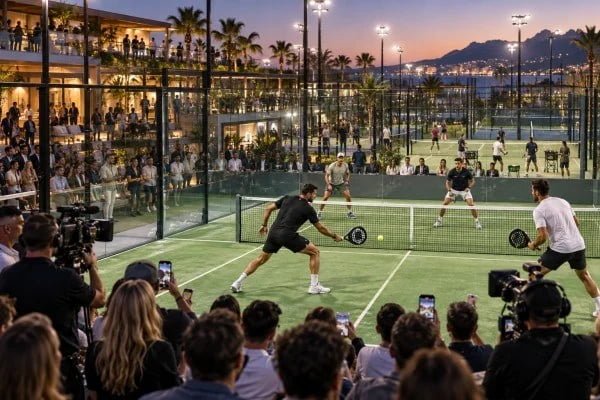
Football stars did not single-handedly make padel famous worldwide. High-profile athletes accelerated mainstream awareness by playing, investing, or appearing at events. They amplified an established sport that already had courts, federations, professional competitions, and player communities, particularly in Spain, Argentina, and other developing markets.
Celebrity exposure is an accelerator
Football has a global audience, so a well-known player holding a padel racket can introduce the sport to people who have never visited a racket club. Public attention also travels quickly through short videos, interviews, and social posts.
Famous footballers and other athletes have been seen playing padel, attending tournaments, or becoming involved in related investments. Their influence can produce several useful effects:
- New audiences learn the sport’s name.
- Existing fans become curious about trying it.
- News outlets publish introductory content.
- Sponsors notice the audience overlap.
- Property owners consider adding courts.
- Investors begin requesting feasibility information.
I have received inquiries in which a prospect specifically referred to a celebrity video, a professional tournament, or a new venue associated with a famous athlete. That pattern tells me what prompted the inquiry. It does not prove that the publicity caused lasting local demand.
Professional players contributed a different type of credibility
Professional padel players made another contribution. Athletes such as Fernando Belasteguín and other leading competitors demonstrated what the game looks like at its highest level. Professional tours also created rankings, rivalries, broadcast content, and recurring events.
These players did not necessarily provide the same mass reach as globally recognized football stars. However, they gave the sport its own identity. Without professional players and competitions, padel could have remained a recreational novelty in the eyes of many observers.
Organized circuits, including the World Padel Tour era and the later expansion of Premier Padel, increased international visibility.8 Investors should verify current tour structures, ownership arrangements, and schedules through official sources because professional competition has changed over time.
Visibility is not the same as market depth
I separate publicity metrics from operating metrics when discussing a possible project.
| Early attention signal | Stronger commercial evidence |
|---|---|
| Celebrity social post | Repeat participation over several months |
| Rising search interest | Paid bookings from identifiable local users |
| Many launch-event visitors | Stable off-peak and peak-time utilization |
| Investor inquiries | Completed financing and site commitments |
| Tournament views | Local leagues and coaching enrollment |
| Social-media engagement | Customer retention and repeat bookings |
A celebrity post may generate the first column. A viable club needs evidence from the second.
If an operator expects celebrity attention to fill courts automatically, the project carries substantial demand risk. The operator still needs pricing, coaching, player acquisition, booking management, maintenance, staffing, and community programming.
How Can Investors Tell Whether Padel Fame Has Become Local Demand?
Publicity creates urgency, and urgency can lead investors to order equipment before testing basic assumptions. That sequence increases the risk of poor utilization or an unsuitable site. I prefer to evaluate whether visible interest has become measurable player behavior before discussing a final court quantity or installation schedule.
Investors can test whether padel’s fame has become durable local demand by measuring repeat play, peak-time bookings, coaching enrollment, league participation, customer acquisition cost, and retention. Inquiries and social views are early indicators only. Stronger evidence comes from paid trials, recurring bookings, community growth, and realistic utilization forecasts.

Start with a staged demand test
I recommend collecting local evidence before relying on international growth stories. A basic test can include surveys, paid pop-up sessions, partnerships with existing sports venues, and pre-opening membership offers.
A practical sequence looks like this:
-
Define the catchment area.
I would map likely customers by travel time rather than using the city’s entire population. Convenience strongly affects recreational bookings. -
Identify initial player groups.
Tennis players, squash players, expatriate communities, corporate groups, schools, and social sports participants may behave differently. -
Run paid trial sessions.
Free events measure curiosity. Paid sessions give a better indication of willingness to spend. -
Track repeat participation.
A person who returns three or four times provides more useful evidence than hundreds of video views. -
Test coaching demand.
Beginner instruction can reduce the intimidation barrier and create recurring revenue. -
Build a player-matching system.
Padel normally requires four players. Clubs often need WhatsApp groups, apps, ladders, or organized social sessions to help individuals find games. -
Model peak and off-peak use separately.
Evening demand can be strong while daytime courts remain empty. A single average utilization rate may hide this imbalance.
Use measurable thresholds, not enthusiasm alone
No single benchmark works in every country because prices, rent, climate, labor costs, and operating hours vary. However, an investor can define decision gates before committing capital.
| Indicator | Question to test | Evidence to collect |
|---|---|---|
| Paid trial conversion | Will interested people spend money? | Trial sales and attendance |
| Repeat rate | Will first-time players return? | Customer booking records |
| Peak-time demand | Can prime hours support target pricing? | Reservations by time slot |
| Coaching uptake | Do beginners want structured support? | Lesson enrollment |
| Community activity | Can players find regular games? | League and group participation |
| Acquisition cost | Is marketing financially sustainable? | Advertising cost per paying user |
| Retention | Does interest survive the launch period? | Cohort data over several months |
I would also conduct downside scenarios. The financial model should test what happens if construction costs rise, opening is delayed, average booking prices fall, or utilization develops more slowly than expected.
Court procurement should follow the operating model
Once demand evidence becomes credible, court selection can begin. The chosen system should fit the site, local regulations, expected usage, environmental exposure, and maintenance capability. A visually impressive panoramic design cannot compensate for an unsuitable foundation or an incomplete business plan.
I encourage buyers to request and review:
- A complete bill of materials
- Foundation and pre-embedding drawings
- Structural documentation for local professional review
- Glass, steel, turf, lighting, and accessory specifications
- Packing lists and component numbering
- Installation procedures and tolerances
- Spare-parts recommendations
- Warranty terms and exclusions
- Relevant certificates and test reports
Buyers should treat certifications as documents to verify, not as universal approval for every project. Local engineers, building authorities, electrical professionals, and qualified installers should assess application-specific requirements, including structural loads, drainage, lighting, foundations, and safety compliance.
Who Made Padel Famous Through Professional Tournaments?
Professional events solved a visibility problem because recreational players could finally follow elite competition consistently. Still, a tournament broadcast cannot create a local playing community on its own. The strongest markets connect professional inspiration with accessible courts, coaching, amateur competitions, and regular opportunities to participate.
Professional players, promoters, broadcasters, sponsors, and tournament organizations collectively made padel more visible internationally. Tours created recurring stories, rankings, and high-level matches, while streaming and social media carried them across borders. Their impact reinforced earlier club development rather than replacing the need for local participation infrastructure.

Tournaments made the sport easier to understand
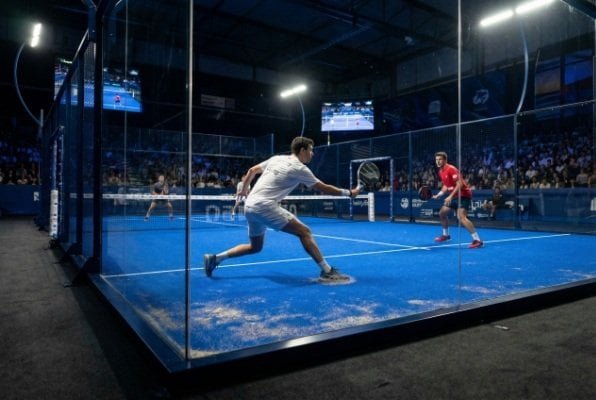
A new viewer can grasp many features of padel within a short match clip. The enclosed court, glass rebounds, doubles format, and rapid net exchanges make the game visually distinct. Professional broadcasts turn these features into repeatable media content.
Tournament systems also help build:
- Recognizable professional players
- Seasonal schedules
- Rankings and competitive narratives
- Sponsor inventory
- Destination events
- Coaching and tactical content
- Short-form highlights for social platforms
These factors make the sport easier to market. They also give club operators event themes for local programming. A venue can organize viewing sessions, amateur tournaments, coaching workshops, or competitions linked to major professional events.
Professional awareness must connect to beginner access
Elite play can also create a misleading impression. Professional matches look fast and technically demanding. New players may assume that the sport has a steep entry barrier, even though many recreational users find it socially accessible after basic instruction.
A club therefore needs to convert spectator interest into a comfortable first experience. I would look for an onboarding process that includes:
- Clear beginner sessions
- Racket rental
- Simple booking instructions
- Coach-led introductions
- Balanced player matching
- Social competitions
- Follow-up offers after the first session
When I discuss projects with new investors, I often find that they have studied famous tournaments but have not yet planned their first-month coaching schedule. I treat that gap as an operating issue rather than a court-equipment issue.
The professional game can inspire demand. The local club must capture, educate, and retain that demand.
Frequently Asked Questions
Who invented padel?
Enrique Corcuera is widely credited with inventing the modern form of padel in Acapulco, Mexico, in 1969. Historical summaries usually describe a home court enclosed by walls and rules adapted from other racket sports. Formal publications should verify dates and details through federation or archival sources.
Did a footballer make padel famous?
No single footballer made padel famous. Football stars and other celebrities expanded awareness among their followers, but they promoted a sport with decades of history. Clubs, coaches, professional players, tournaments, federations, and recreational communities had already built the foundation for broader growth.
Why did padel become so popular?
Padel combines social doubles play, relatively accessible beginner rallies, compact court dimensions, and strong visual appeal.9 Its popularity also depends on court availability, coaching, booking systems, local communities, and organized competition. The relative importance of each factor varies by country and development stage.
Does celebrity interest make a padel club a safe investment?
No. Celebrity interest can support awareness, but it does not guarantee bookings or profitability. Investors should test paid demand, repeat participation, local pricing, peak-time utilization, coaching enrollment, site costs, and customer retention before committing to construction or equipment procurement.
What should an investor verify before ordering padel courts?
An investor should verify demand, land rights, planning requirements, foundations, drainage, structural loads, electrical work, installation responsibilities, and the complete bill of materials. Qualified local professionals should review safety and building requirements. Buyers should also authenticate relevant supplier certificates, test reports, warranty terms, and technical drawings.
Conclusion
The best answer to who made padel famous is a network, not one name. Enrique Corcuera created the modern game, early promoters carried it into new regions, clubs and coaches built participation, professional players created sporting credibility, and celebrities accelerated awareness. Investors should now ask whether that fame has produced paid, repeat local demand.
If your market research supports a viable project, contact QHPADEL to discuss court specifications, documentation, production planning, and supplier evaluation with Alice Chen at alice@grass-supplier.com or +86 185 7566 0746.
-
"Enrique Corcuera García y Pimentel", https://es.wikipedia.org/wiki/Enrique_Corcuera_Garc%C3%ADa_y_Pimentel. International and federation histories commonly credit Enrique Corcuera with creating the modern form of padel in Acapulco, Mexico, while historical accounts may differ in their terminology for earlier related racket games. Evidence role: historical_context; source type: institution. Supports: The source should document the commonly accepted attribution of modern padel’s creation to Enrique Corcuera in Acapulco, Mexico.. ↩
-
"Alfonso De Hohenlohe And The History Of Padel", https://www.head.com/en_US/rs/stories/hohenlohe-history. Historical accounts of padel’s expansion identify Alfonso de Hohenlohe as an early figure in introducing the game to Spain after encountering it in Mexico. Evidence role: historical_context; source type: institution. Supports: The source should establish Alfonso de Hohenlohe’s role in bringing padel to Spain and promoting it through Marbella.. ↩
-
"Enrique Corcuera García y Pimentel – Wikipedia, la enciclopedia libre", https://es.wikipedia.org/wiki/Enrique_Corcuera_Garc%C3%ADa_y_Pimentel. Reference histories generally date the creation of modern padel to Enrique Corcuera’s court in Acapulco in 1969; the date reflects the conventional origin account rather than a complete history of all predecessor games. Evidence role: historical_context; source type: encyclopedia. Supports: The source should confirm the standard historical account linking Corcuera, Acapulco, and 1969 to modern padel.. ↩
-
"Prince Alfonso of Hohenlohe-Langenburg", https://en.wikipedia.org/wiki/Prince_Alfonso_of_Hohenlohe-Langenburg. Contemporary club histories and accounts of padel’s Spanish expansion describe early courts at the Marbella Club as a vehicle through which Alfonso de Hohenlohe promoted the game in Spain. Evidence role: case_reference; source type: other. Supports: The source should document the establishment of early padel courts at the Marbella Club and Hohenlohe’s involvement.. Scope note: A club history can document the venue’s role but may not independently establish the full national impact of those courts. ↩
-
"Motivational Determinants of Recreational Padel Participation", https://pmc.ncbi.nlm.nih.gov/articles/PMC12656352/. Studies and historical accounts of Argentine padel describe substantial recreational diffusion through local courts and social play, indicating that the sport extended beyond an exclusive-club setting. Evidence role: general_support; source type: research. Supports: The source should show that padel achieved widespread recreational participation in Argentina beyond elite or resort clubs.. Scope note: Historical descriptions of broad participation may not provide directly comparable national participation counts for every period. ↩
-
"Measuring the popularity of football players with Google Trends", https://pmc.ncbi.nlm.nih.gov/articles/PMC10431623/. Research on celebrity endorsement and athlete social-media communication indicates that high-profile figures can increase audience awareness and attention toward associated sports or activities. Evidence role: mechanism; source type: research. Supports: The source should explain how celebrity endorsement or athlete social-media exposure can increase awareness of a sport among followers.. Scope note: General endorsement research supports an awareness mechanism but does not establish the size or durability of padel demand in a particular local market. ↩
-
"Perceptions of celebrity athletes involved in social cause …", https://pmc.ncbi.nlm.nih.gov/articles/PMC11521901/. Event-study research on celebrity and athlete endorsements has found that high-profile social-media activity can generate short-term increases in online attention and consumer response. Evidence role: mechanism; source type: paper. Supports: The source should provide event-based evidence that celebrity posts can produce short-term changes in online attention or consumer inquiry behavior.. Scope note: Such evidence does not directly prove that any particular padel post caused investor inquiries or sustained local bookings. ↩
-
"Premier Padel", https://en.wikipedia.org/wiki/Premier_Padel. Official circuit and federation records document the internationalization of elite padel through recurring tournament calendars, player rankings, and event distribution across multiple countries. Evidence role: historical_context; source type: institution. Supports: The source should document the international tournament calendars, governance, and distribution of the World Padel Tour and Premier Padel.. Scope note: International event expansion indicates increased opportunities for visibility but does not independently measure changes in recreational participation. ↩
-
"Motivational Determinants of Recreational Padel Participation", https://pmc.ncbi.nlm.nih.gov/articles/PMC12656352/. Participant research commonly identifies social interaction, enjoyment, and accessible recreational play among motivations reported by padel players, while official rules specify the sport’s compact enclosed-court format. Evidence role: general_support; source type: paper. Supports: The source should report player motivations or characteristics associated with padel participation, including social interaction and perceived accessibility.. Scope note: Motivational findings are population- and survey-dependent and cannot establish that these characteristics are the primary cause of popularity in every country. ↩