Investors often struggle to balance premium aesthetics with structural safety when building an outdoor sports club. Choosing the wrong glass and steel structure for coastal or windy regions leads to shattered glass, delayed openings, and massive maintenance bills. A half panoramic padel court solves this problem by combining wide player views with heavy-duty weather resistance.
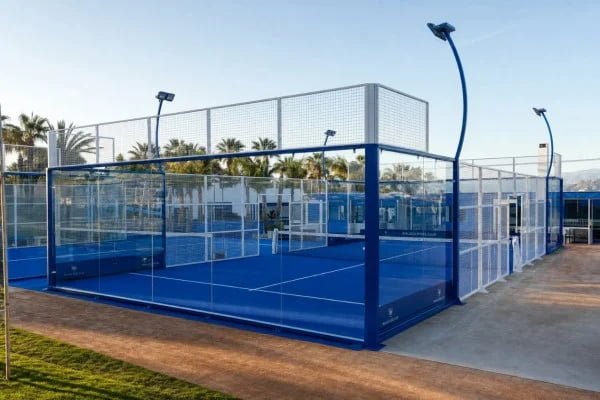
A half panoramic padel court is a commercial court design featuring structural pillars between the rear glass panels to provide maximum stability. While buyers commonly call it "half panoramic," manufacturers typically refer to this model as a "Panoramic Court," distinguishing it from the completely pillarless "Ultra Panoramic" indoor model.
Before you finalize your procurement plans or place a large order, you need to understand exactly what you are buying. Let’s clarify the industry naming conventions and explore why this specific structural design dominates outdoor installations globally.
How do factory names differ from buyer terms for a half panoramic padel court?
Purchasing terminology can be frustratingly vague across different global markets. If you order a "panoramic" court without confirming the structural drawings, you might receive a completely pillarless design that is structurally unsuitable and dangerous for your high-wind outdoor site.
In the manufacturing industry, a buyer’s "half panoramic padel court" is officially categorized as a "Panoramic Court." It features four metal corner pillars and vertical supports between the glass panels. The completely pillarless version is classified as an "Ultra Panoramic Court," which is designed strictly for premium indoor environments.
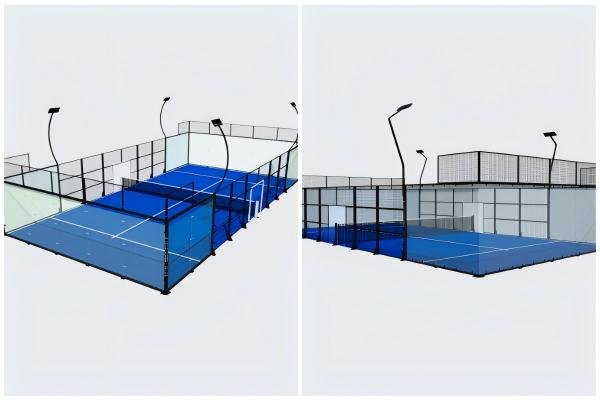
To make smart procurement decisions, I always advise club operators and engineering contractors to use a simple decision tree based on their site environment. Over my decade in manufacturing and exporting these systems, I have seen too many buyers purchase the wrong model simply because of a naming misunderstanding.
At our factory, the half panoramic padel court (our standard Panoramic model) accounts for over 50% of our total production volume. It is the undisputed workhorse of the industry. The Ultra Panoramic makes up about 40%, and the traditional Classic court sits at around 5%.
Here is how you should evaluate which model fits your specific project:
The Environment Decision Tree
- Premium Indoor Venues: Choose the Ultra Panoramic. Because there is no wind load indoors, you can safely remove the structural pillars between the glass panels. This provides a 100% unobstructed 360-degree view, perfect for high-end clubs and televised indoor tournaments.
- Mainstream Outdoor Venues (Moderate to High Wind): Choose the half panoramic padel court. You get excellent visibility that modern players demand, but with the necessary structural pillars to brace the glass against wind and physical impact.
- Extreme High-Wind or Hurricane Zones: Choose the Classic Court or a specialized Hurricane Resistant Court. These feature heavy, continuous steel framing around every single piece of glass and wire mesh, prioritizing brute strength over aesthetics.
Quick Comparison Table
| Feature | Half Panoramic Padel Court | Ultra Panoramic Court | Classic Court |
|---|---|---|---|
| Pillars Between Glass | Yes | No | Yes (Thick framing) |
| Ideal Environment | Outdoor / Semi-outdoor | Strictly Indoor | Outdoor (Extreme Wind) |
| Aesthetic Appeal | High | Very High | Basic |
| Wind Resistance | Excellent (Up to Level 10) | Low | Maximum |
When requesting a quotation from a supplier, always ask for the 3D drawings and structural layouts first. This ensures that the "panoramic" model they are quoting matches the structural integrity your site actually requires.
Why does a half panoramic padel court excel in structural safety?
Shattered glass is a club operator’s worst nightmare and a massive liability. When heavy winds hit a weakly supported court, the large glass panels warp, bend, and eventually explode, causing safety hazards and shutting down your facility for weeks.
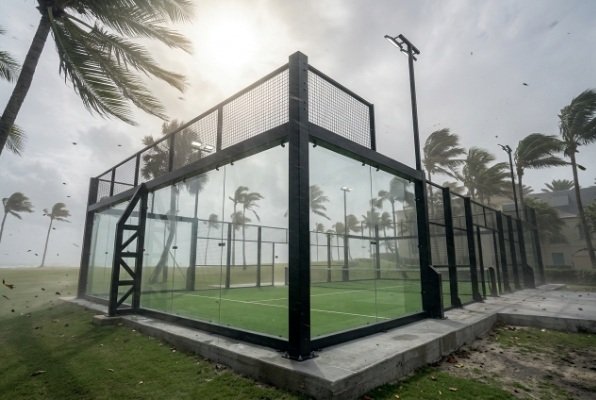
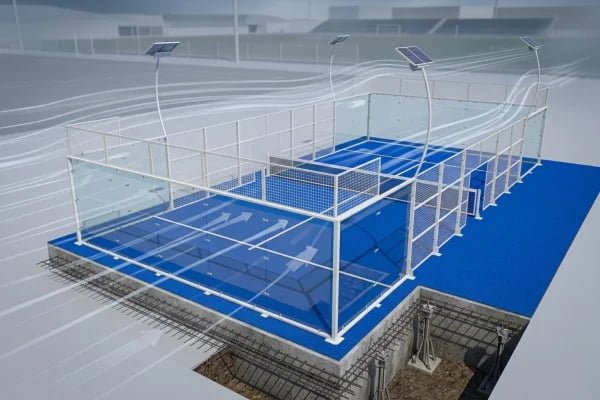
A half panoramic padel court excels in structural safety because it incorporates heavy-duty corner pillars and steel supports between every tempered glass panel. This robust structural frame ensures even force distribution, preventing glass warping and allowing the court to withstand up to Level 10 winds.1
Many buyers mistakenly believe that the more glass they have, the more premium their club will be. However, you cannot ignore physics. Glass is rigid, and when wind hits a massive wall of flat tempered glass, that energy has to go somewhere.
The Engineering of Force Distribution
In an ultra-panoramic (pillarless) setup, the glass panels are often bolted directly to each other or rely on very minimal bottom brackets. The wind load is borne almost entirely by the glass itself. If you install this outdoors, a strong gust of wind will cause the glass to flex. Over time, this micro-flexing weakens the panel until it shatters.2
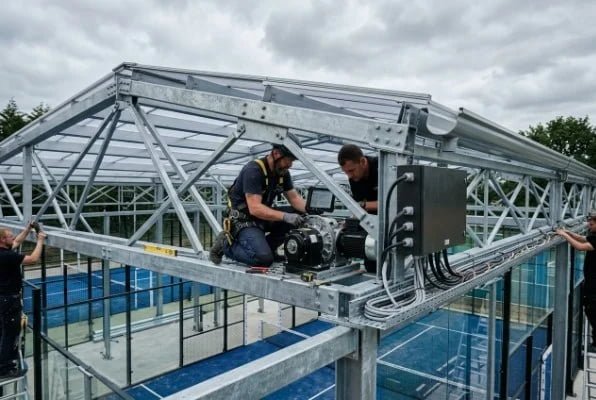
In a half panoramic padel court, the engineering is entirely different. The inclusion of four robust corner pillars and vertical metal struts between the glass sections acts as a skeleton. When wind or a player impacts the glass, the kinetic energy transfers from the glass into the steel frame, and then down into the concrete foundation. The glass does not have to bear the structural load.
Built for Harsh Climates
Our factory exports extensively to South America, the Middle East, and Southeast Asia. These regions face intense coastal winds, sudden storms, and aggressive weather fluctuations. We design our half panoramic padel courts specifically for these conditions.
When evaluating a supplier’s safety standards, you should demand to see their compliance documentation. The structural steel frame should meet CE standards, while the tempered glass must comply with rigorous international safety norms, such as CE, AS/NZS 2208:1996, and AS/NZS 4666:2012. Furthermore, check the hardware; even the screws and accessories should carry industrial approvals (like AD 2000 WO or PED 2014/68/EU)3 to ensure they will not shear under the intense pressure of a Level 10 windstorm.
Is a half panoramic padel court the highest ROI option for investors?
Building a profitable padel club requires strict budget discipline and smart capital allocation. Spending extra capital on ultra-premium indoor courts for an outdoor venue wastes money and creates risk, while buying cheap classic courts may fail to attract high-paying modern players.
Yes, a half panoramic padel court offers the highest return on investment for outdoor clubs. It delivers the premium, modern aesthetic that players expect, without the severe structural fragility and higher manufacturing and maintenance costs associated with ultra-panoramic outdoor models.
It is a common misconception that the half panoramic model is a "budget compromise." In reality, it is the most commercially intelligent choice you can make for an outdoor or semi-outdoor venue.
The Aesthetic Advantage
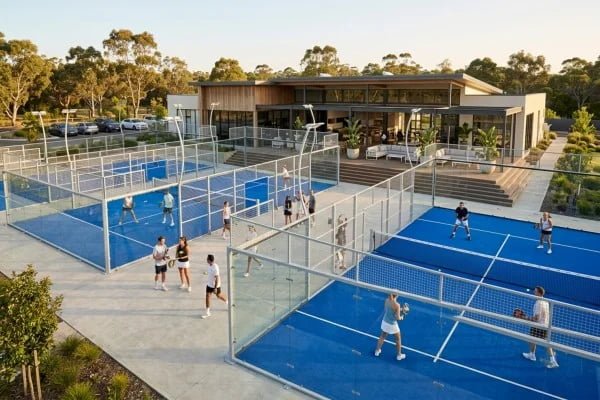
Padel is a highly social sport. Players want a court that looks modern, feels open, and allows for great photos and videos. Spectators want clear sightlines to watch the matches. The heavy metal cages of the older Classic courts feel enclosed and outdated. A half panoramic padel court utilizes large panes of clear tempered glass that provide an open, premium feel, dramatically elevating the perceived value of your club. This allows operators to justify higher hourly rental rates.
Lower Total Cost of Ownership (TCO)
From a procurement standpoint, the Ultra Panoramic court is significantly more expensive to manufacture and ship. Because it lacks a supporting steel skeleton, it requires vastly thicker glass (often 12mm or more) and specialized heavy-duty bottom brackets to hold the panels upright.
By contrast, the half panoramic padel court uses standard, highly reliable steel framing to do the heavy lifting. This keeps manufacturing costs reasonable. Furthermore, because it is structurally safer outdoors, your long-term maintenance costs plummet. You are not constantly paying to replace shattered glass or realigning warped brackets after a heavy storm.
Distributor and Wholesale Benefits
If you are an equipment distributor or an importer, standardizing on the half panoramic padel court makes perfect business sense. It is a highly resaleable SKU. Because it balances safety and aesthetics so well, it fits the needs of about 80% of your local buyers—whether they are building at a hotel, a public park, or a dedicated sports complex. It also packs efficiently into shipping containers, helping you manage freight costs and maintain healthy profit margins.
How do installation and foundation impact half panoramic padel court stability?
Even the heaviest, best-engineered steel frame will fail if it is bolted to an uneven or weak foundation. Contractors who ignore precise factory measurements often face misaligned glass panels, leading to dangerous structural tension and voided warranties.
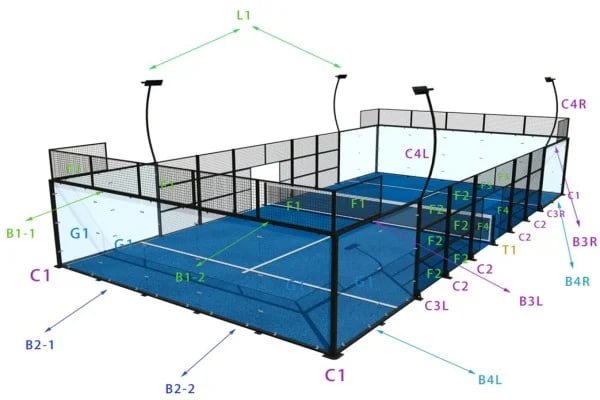
A half panoramic padel court requires a perfectly leveled concrete foundation and strict adherence to factory layout drawings. Proper installation ensures the corner pillars and glass panels align precisely, maintaining the even force distribution required to resist high winds and heavy impacts.
A major part of my job involves working with civil engineering contractors and local installers. Factory-grade stability is useless without professional on-site execution.
The Foundation is Everything
You cannot install a half panoramic padel court on loose dirt, asphalt, or a thin layer of concrete. The dynamic loads created by players crashing into the glass, combined with static wind loads, require a reinforced concrete ring beam or a full concrete slab.4
The surface must be perfectly level. If the foundation is uneven, the steel pillars will sit at an angle. When you try to install the rigid tempered glass between these angled pillars, you introduce unnatural tension into the glass. A tiny rock hitting that tensioned glass—or a slight temperature change causing the metal to expand—can cause the panel to explode instantly.
Documentation and Contractor Support
As a buyer, your supplier’s responsibility does not end when the container leaves the port. You must ensure your manufacturer provides a comprehensive documentation package. For every half panoramic padel court we export, we supply:
- Detailed foundation drawings indicating exact concrete thickness and reinforcement requirements.
- Precise installation drawings with side elevations and clear component numbering.
- Pre-embedding requirements or expansion bolt specifications.
- A complete packing list with zero missing parts.
Contractors love standardized half panoramic models because the installation process is predictable. When the hole positions on the steel posts are laser-cut accurately at the factory, the on-site assembly is fast and smooth, keeping your project timeline strictly on schedule.
Frequently Asked Questions
Can a half panoramic padel court be installed indoors?
Yes, you can absolutely install this model indoors. However, if your budget allows and you want the most premium look possible, an Ultra Panoramic (pillarless) court is generally preferred for indoor venues since wind resistance is not a concern.
What thickness of glass is used in a half panoramic padel court?
Most commercial courts use either 10mm or 12mm tempered glass.5 The glass must be structurally sound, highly impact-resistant, and compliant with safety certifications like CE and AS/NZS to ensure player safety.
How long does it take to manufacture these courts?
Standard lead times depend on volume. A reliable factory can produce two courts in 20 days, four courts in 20-25 days, and larger multi-court orders in under 30 days. Custom paint or turf requests may extend this to 35 days.
Do I need special turf for this type of court?
The structural model of the court does not change the turf requirement. You should use high-quality, dense artificial grass designed specifically for padel, which offers anti-slip properties and excellent bounce mechanics.
Conclusion
Choosing the right court structure is the most critical decision you will make for your sports facility. The half panoramic padel court stands out as the ultimate solution for outdoor and semi-outdoor venues. By providing the structural integrity needed to survive harsh weather and Level 10 winds, while maintaining the wide, premium sightlines that modern players demand, it offers the best return on investment on the market.
If you are a club operator, investor, or contractor looking for reliable, export-ready padel courts, my team is here to help. We provide complete BOM packages, transparent pricing, and rigorous quality control for every project. Contact me, Alice Chen, at alice@grass-supplier.com or via WhatsApp at +86 185 7566 0746, and let’s ensure your next padel project is built for long-term success. Visit us at www.qhpadel.com to learn more.
-
"Beaufort scale – Wikipedia", https://en.wikipedia.org/wiki/Beaufort_Scale. A Level 10 wind on the Beaufort scale, classified as a ‘storm,’ involves wind speeds of 89-102 km/h (55-63 mph), which exert significant dynamic pressure on vertical structures. Note that modern building codes typically use specific wind speed metrics (e.g., m/s) rather than the Beaufort scale for structural design. Evidence role: statistic; source type: encyclopedia. Supports: Provides the definition and wind speed parameters of a Level 10 wind on the Beaufort scale, contextualizing the structural load.. Scope note: Note that modern building codes typically use specific wind speed metrics (e.g., m/s) rather than the Beaufort scale for structural design. ↩
-
"[PDF] STATIC AND DYNAMIC FATIGUE BEHAVIOR OF GLASS FILAMENT …", https://ntrs.nasa.gov/api/citations/19700017983/downloads/19700017983.pdf. Research on the cyclic loading of tempered glass indicates that repeated micro-flexing can exacerbate microscopic surface flaws, leading to delayed structural failure over time. However, tempered glass is generally highly resistant to fatigue compared to annealed glass. Evidence role: mechanism; source type: paper. Supports: Supports the concept that cyclic loading and micro-flexing from wind can cause fatigue and eventual failure in tempered glass.. Scope note: However, tempered glass is generally highly resistant to fatigue compared to annealed glass. ↩
-
"Pressure Equipment Directive (EU)", https://en.wikipedia.org/wiki/Pressure_Equipment_Directive_(EU). PED 2014/68/EU and AD 2000 WO are European directives and standards that certify the material quality and traceability of components like fasteners under high stress. It should be noted that these standards are primarily designed for pressure vessels, and their application to sports court wind loads represents an extrapolation of material quality rather than their primary intended use. Evidence role: definition; source type: institution. Supports: Defines AD 2000 WO and PED 2014/68/EU as rigorous European standards for materials and fasteners used in high-stress environments.. Scope note: It should be noted that these standards are primarily designed for pressure vessels, and their application to sports court wind loads represents an extrapolation of material quality rather than their primary intended use. ↩
-
"Numerical Studies on Impact Loaded Reinforced Concrete …", https://repository.lib.ncsu.edu/bitstreams/00d5f921-a118-4629-84a8-c3e9f264a834/download. Civil engineering guidelines for sports infrastructure emphasize that structures enduring simultaneous dynamic human impacts and static environmental loads require reinforced concrete foundations to ensure stability and prevent anchor pull-out. The specific depth and reinforcement of the concrete depend on local soil conditions. Evidence role: general_support; source type: research. Supports: Confirms that structures subjected to combined dynamic impact loads and static wind loads require reinforced concrete foundations to prevent structural failure.. Scope note: The specific depth and reinforcement of the concrete depend on local soil conditions. ↩
-
"Official FIP Padel Court | PadelGroup", https://padelgroup.com.ua/en/court/fip-official-court/. According to the International Padel Federation (FIP) regulations and standard manufacturing practices, the tempered glass panels used for court enclosures are typically required to be either 10mm or 12mm thick to ensure adequate bounce and safety. Local building codes may occasionally require thicker glass depending on extreme wind conditions. Evidence role: statistic; source type: institution. Supports: Verifies that 10mm and 12mm are the standard thicknesses for tempered glass used in commercial padel courts according to international sports standards.. Scope note: Local building codes may occasionally require thicker glass depending on extreme wind conditions. ↩