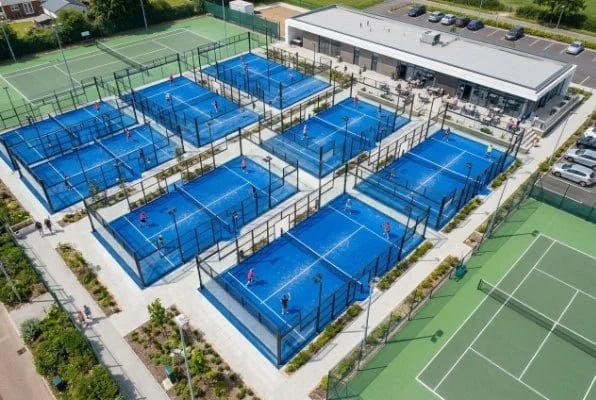

Building a padel club requires heavy capital investment. You want to control your procurement costs, but buying direct overseas feels incredibly risky. If you are missing one structural bracket or miscalculate import taxes, your entire timeline stalls, and your budget completely collapses.
Choosing a reliable Chinese padel court manufacturer allows you to secure engineering-grade materials at factory-direct pricing without cross-border risks. Top suppliers act as supply chain integrators, providing a 100% accurate Bill of Materials (BOM), certified components, logistics support, and precise structural blueprints to ensure flawless local assembly.
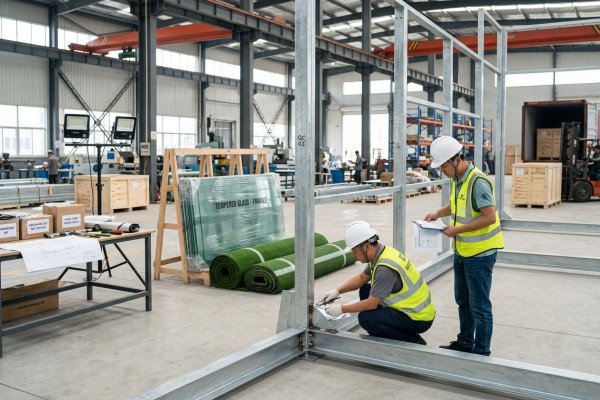
You do not need to be a seasoned import expert to source directly from the factory floor. Let’s break down exactly how you should evaluate a supplier to eliminate hidden costs, secure high ROI, and prevent cross-border engineering nightmares.
What makes a true Chinese padel court manufacturer?
Many buyers search endlessly for a single factory that makes every single component in-house. The truth is, no facility independently produces artificial turf, tempered glass, galvanized steel, and LED lights under one roof.
A premium Chinese padel court manufacturer operates as a core-component source factory and a rigorous supply chain integrator. They manufacture key elements like the artificial turf while stringently controlling the quality, CE/AS certifications, and precise pre-assembly of steel, glass, and lighting components.
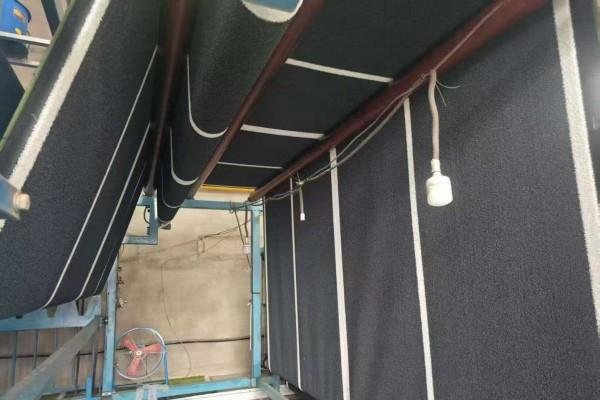
To understand the real value of a top-tier Chinese padel court manufacturer, you must understand supply chain integration. I frequently speak with club operators who want to buy directly from a "100% manufacturer." I always emphasize radical transparency: we are a source factory for artificial turf, but we do not forge our own steel or blow our own glass. No one does.
Our competitive moat at QHPADEL is our 10-year history as a turf manufacturer combined with our role as an engineering-level integrator. We produce over 1.5 million square meters of artificial turf monthly across 10 production lines. For the structural components, we partner with vetted, highly specialized factories to deliver a unified, certified package.
When you evaluate a supplier, you should look for evidence of integration control, not just cheap prices. Here is how a true integrator protects your investment:
- Strict Certification Standards: We ensure the tempered glass meets CE and AS/NZS 2208:1996 standards1, while the LED lights comply with AS 61347.2.13:20182.
- Pre-Assembly Testing: A reliable factory physically tests frame connections before mass production to ensure all laser-cut holes align perfectly.
- A 100% Accurate BOM: The biggest risk in buying cross-border is a missing box of fasteners. We utilize precise BOM management so you receive exactly the right number of screws (certified to AD 2000 WO standards3), clips, and brackets.
Here is a quick comparison of how a basic assembler differs from a true supply chain integrator:
| Capability | Basic Assembler | True Integrator |
|---|---|---|
| Component Sourcing | Buys cheapest available parts | Partners with certified, long-term suppliers |
| Quality Control | Visual inspection only | Pre-assembly tests and exact structural tolerances |
| Documentation | Basic commercial invoice | Full BOM, foundation blueprints, packing lists |
| Accountability | Blames component factories | Single point of accountability for the entire system |
By acting as a strict integrator, your Chinese padel court manufacturer ensures you get a market-tested, commercial-grade product without the headache of managing five different component factories yourself.
How does a Chinese padel court manufacturer simplify importing?
The phrase "cross-border logistics" causes intense anxiety for 95% of first-time club investors. You likely fear hidden port fees, complex customs delays, and container unloading disasters when the goods finally arrive.
A professional Chinese padel court manufacturer simplifies importing by operating as your procurement consultant. They offer flexible shipping terms like DDP or DDU, recommend local customs agents, and deliver highly detailed packing lists and unloading guides so international freight feels like local delivery.
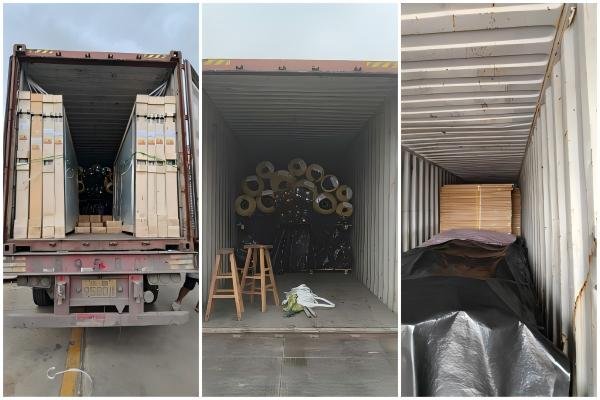
Do not let a lack of import experience stop you from sourcing directly. While cross-border procurement is not as simple as clicking a button on Amazon, a competent Chinese padel court manufacturer makes the process highly systematic and predictable. At QHPADEL, we export over 600 containers annually, primarily to South America, the Middle East, and Southeast Asia. Because we largely supply local importers and wholesale distributors, our logistical processes are heavily refined and market-tested.
We act as a "procurement nanny" for our clients. Here is exactly how a strong manufacturing partner eliminates logistics friction:
- Transparent Shipping Terms: If you have zero import experience, a good supplier can quote DDP (Delivered Duty Paid) or DDU (Delivered Duty Unpaid) terms.4 This means the factory handles the ocean freight and coordinates with freight forwarders to bring the container directly to your club site. You do not have to navigate port authorities alone.
- Meticulous Packing Lists: Unloading heavy glass and steel is dangerous if disorganized. We provide highly specific packing lists and component numbering. You will know exactly which crate holds the panoramic glass panels and which pallet holds the LED light fixtures before the truck even arrives.
- Customs Documentation: Public sectors, schools, and strict municipalities require extensive paperwork. We provide all necessary CE, RoHS5, and structural test reports so your local customs broker can clear the goods smoothly.
By organizing the logistics transparently, your manufacturer ensures there are no hidden costs eating into your initial budget.
Can a Chinese padel court manufacturer guarantee easy local installation?
Your biggest operational fear is buying a massive pile of scattered metal and glass that local civil contractors cannot figure out how to assemble. You need the structural accuracy to be absolutely perfect before it leaves the factory floor.
While a Chinese padel court manufacturer will not install the court for you, they guarantee success through extreme structural precision and remote empowerment. They provide dummy-proof 3D installation demos, precise foundation drawings, and responsive online technical guidance to support your local civil contractors.
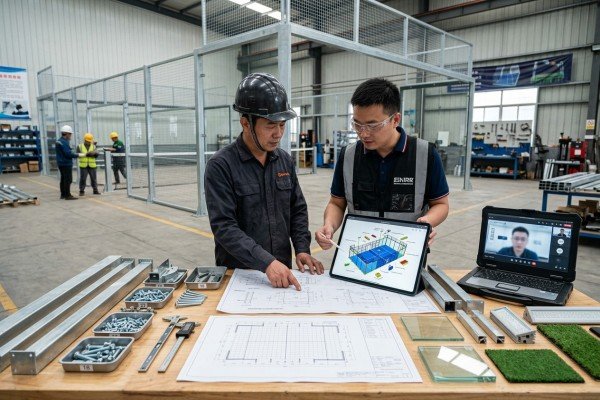
Let me be very clear: a legitimate Chinese padel court manufacturer will not fly a team across the world to install your court. Beware of suppliers who make this promise cheaply, as it is often a logistical nightmare regarding work visas and local labor laws. Our role is to supply top-tier materials and remote engineering support. Your role is to hire qualified local civil contractors.
However, we bridge the physical gap between our factory and your site through extreme structural accuracy. When engineering and civil contractors buy from us, they demand precise pre-embedding drawings and specific tolerance requirements. We deliver on this by providing:
- Foundation Blueprints: Detailed concrete specifications, including depth, drainage requirements, and exact locations for embedded structural plates.
- Dummy-Proof Demos: We supply clear, step-by-step 3D installation drawings and maintenance manuals. Every component is numbered to match the packing list.
- Remote Technical Support: If your local team encounters an issue, our technical staff provides online guidance to ensure the installation stays on schedule.
When the structural accuracy is highly controlled—meaning hole positions are laser-cut precisely and all fasteners are accounted for—the physical assembly becomes a straightforward mechanical process for any competent local construction team.
What installation pitfalls should you avoid with your Chinese padel court manufacturer?
Even with perfectly manufactured materials, poor local execution can completely ruin a padel club project. I have seen buyers purchase premium panoramic courts only to face structural failures because they ignored basic civil engineering rules on-site.
To succeed with your Chinese padel court manufacturer, you must avoid three critical on-site mistakes: rushing foundation work and ignoring tolerance drawings, hiring cheap general labor instead of structural experts, and disregarding the factory-provided 3D manuals and specific installation sequencing.
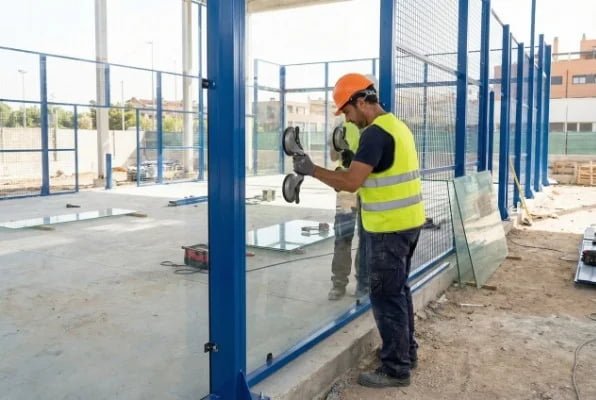
A successful padel court is 50% premium manufacturing and 50% rigorous local installation. The materials we export are heavy, structural, and engineered to withstand intense dynamic loads from players and wind. You cannot cut corners during the final assembly.
If you want to protect your investment, avoid these three fatal mistakes during installation:
1. Sloppy Foundation Work
The most common disaster I see is local contractors pouring concrete without respecting the exact tolerance requirements of our foundation drawings. If the concrete is uneven or the pre-embedded anchor points are misaligned by just a few centimeters, the steel structural posts will not sit vertically. This puts immense stress on the tempered glass, leading to potential breakage. Always verify the concrete level before accepting the foundation work.
2. Hiring Unqualified General Labor
A complete padel court includes massive sheets of tempered glass (certified to AS/NZS 4666:2012) and heavy galvanized steel frames. Do not hire cheap, unskilled day labor to assemble this. You need contractors who have experience with heavy glass curtain walls, steel structures, and lifting equipment. Spending slightly more on professional glaziers and structural riggers will save you from catastrophic accidents and material damage.
3. Ignoring the Installation Sequence
Your Chinese padel court manufacturer provides specific 3D manuals for a reason. Sometimes, local contractors assume they know better and assemble components out of order, only to realize later that they cannot fit the turf or the safety nets properly. Enforce strict adherence to the provided installation manuals and BOM checklists. If a contractor is confused, utilize the manufacturer’s online technical guidance rather than guessing.
By managing your local civil team effectively and leveraging the documentation provided by your factory, you can easily achieve a professional, commercial-grade finish.
Frequently Asked Questions
How long does it take a Chinese padel court manufacturer to produce an order?
Production times are very efficient. Standard orders of two courts take about 20 days. Four courts take 20–25 days, and larger standard orders take no more than 30 days. Custom-designed courts take up to 35 days.
Are the materials from a Chinese padel court manufacturer certified?
Yes, a reputable supplier ensures all components are certified. For example, our artificial turf holds CE and RoHS certifications, steel frames and glass are CE certified, and LED lights meet AS 61347.2.13:2018 standards. Buyers should always request documentation.
Do I need import experience to buy from a Chinese padel court manufacturer?
No prior experience is necessary. Premium suppliers offer door-to-door (DDP) or delivered-duty-unpaid (DDU) logistics, handle the complex shipping documentation, and provide localized customs agent recommendations to simplify your procurement process.
Can I customize my padel courts?
Yes, OEM and ODM customization is highly common. You can customize the steel frame colors and the artificial turf specifications (color, Dtex, and density), though custom turf usually requires a minimum order quantity (MOQ) of about 6 courts (1,254 sqm).
Conclusion
Choosing the right Chinese padel court manufacturer is about looking past raw material prices and evaluating their capability as a rigorous supply chain integrator. By partnering with a factory that guarantees a 100% accurate BOM, provides localized logistics support, and delivers precise 3D engineering blueprints, you eliminate cross-border procurement risks entirely. You gain the ability to build premium, commercial-grade padel clubs while controlling your bottom line and preventing hidden installation costs.
-
"AS:NZS 2208 Safety Glazing Standard", https://www.elitesafetyglass.com/as-nzs-2208-safety-glazing-standard/. AS/NZS 2208:1996 is the joint Australian and New Zealand standard specifying requirements for safety glazing materials used in buildings to reduce the risk of cutting and piercing injuries. Evidence role: definition; source type: institution. Supports: The definition and scope of the AS/NZS 2208:1996 standard for safety glass.. ↩
-
"Buy AS 61347.2.13:2018", https://www.intertekinform.com/en-us/standards/as-61347-2-13-2018-1131502_saig_as_as_2626152/?srsltid=AfmBOopoEZc6y9FMU305rlkY-17KCiTQ-7Um1qBC87rAuKs-ArDbDQvE. AS 61347.2.13:2018 outlines the particular safety requirements for d.c. or a.c. supplied electronic controlgear for LED modules. Evidence role: definition; source type: institution. Supports: The regulatory focus of the AS 61347.2.13:2018 standard regarding LED lighting.. ↩
-
"AD 2000 Merkblatt", https://www.forginal-industrie.com/en/quality/ad-2000-merkblatt/. The AD 2000-Merkblatt W0 standard establishes the general principles for materials, including steel and fasteners, ensuring manufacturers meet strict quality and testing requirements. Evidence role: definition; source type: institution. Supports: The definition of the AD 2000-Merkblatt W0 certification for manufacturing materials.. Scope note: While originating in Germany for pressure vessels, its rigorous material traceability is frequently applied to high-stress structural fasteners globally. ↩
-
"Know Your Incoterms", https://www.trade.gov/know-your-incoterms. According to the International Chamber of Commerce (ICC) Incoterms, Delivered Duty Paid (DDP) places the maximum obligation on the seller to handle all costs and risks, including import duties, whereas Delivered Duty Unpaid (DDU)—largely replaced by DAP in recent revisions—requires the buyer to handle import customs. Evidence role: definition; source type: institution. Supports: The official definitions of DDP and DDU Incoterms.. Scope note: DDU is technically a legacy term from Incoterms 2000, though it remains in common commercial use. ↩
-
"RoHS", https://en.wikipedia.org/wiki/RoHS. The CE mark indicates conformity with health, safety, and environmental protection standards for products sold within the European Economic Area, while the RoHS Directive restricts the use of specific hazardous materials found in electrical and electronic products. Evidence role: definition; source type: government. Supports: The regulatory definitions of CE marking and RoHS compliance.. ↩